


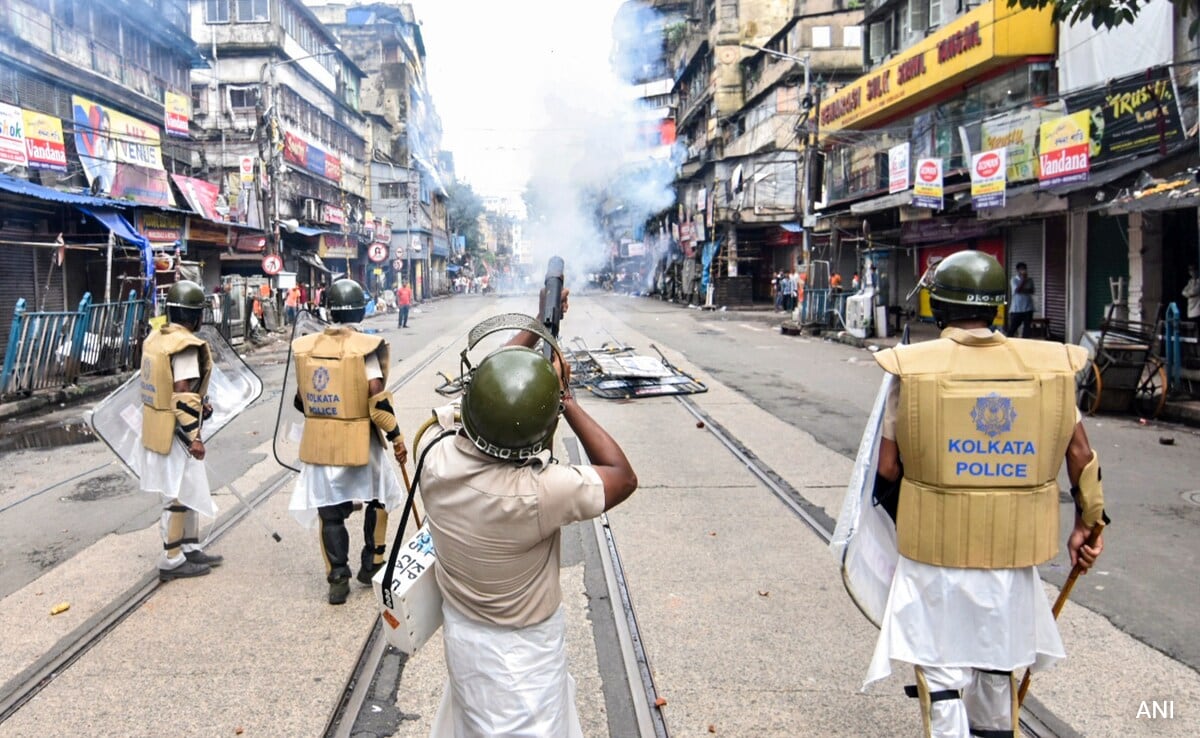
President Donald Trump initiated a blockade of the Strait of Hormuz to pressure Iran into a deal—one nation exerting pressure on another. In West Bengal during the 2026 Assembly elections, a different kind of blockade unfolded: one by the Union against its own constituent state. While the former continues without resolution, the latter, despite electoral resistance, ultimately prevailed under conditions that raise profound questions about the state of democracy—questions that must be addressed before democratic institutions are reduced to mere formality.
What unfolded was not an overt coup. Democracy was not overthrown; it was undermined through files, classifications, tribunals, enforcement agencies, and calibrated administrative decisions. Institutional architecture remained intact, but its functioning did not. Participation was not openly denied—it was filtered, constrained, and, in many cases, extinguished before polling day.
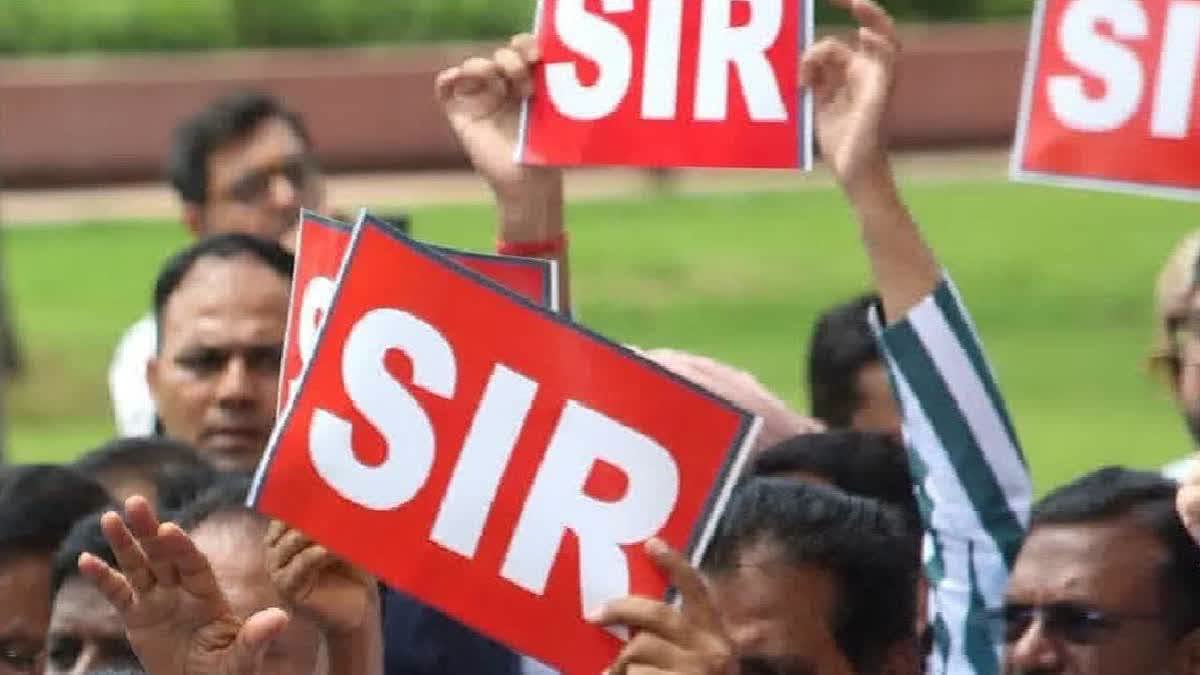
The filtering began with the Special Intensive Revision (SIR). Over 9.1 million voters—nearly 12% of the electorate—were removed from the rolls. The justification was routine: removing duplicates, deceased voters, illegal entries, and updating rolls. But this explanation collapses under scrutiny. A new category, "logical discrepancy," was introduced without a statutory basis or clear criteria, accounting for approximately 2.7 million deletions. This inverted the burden of proof—rather than the state justifying deletion, citizens were required to justify their inclusion, effectively treating voters as administrative subjects.
The electoral consequences were decisive. In 44 constituencies, the number of deleted voters exceeded the previous victory margins. When exclusions surpass margins, outcomes are shaped not by voter choice but by prior filtration. Reporting by The Indian Express indicates that in 187 constituencies where over 5,000 names were deleted, the Bharatiya Janata Party (BJP) either won or was leading in 119 (at the time of reporting). While correlation does not establish causation, the pattern raises legitimate questions about electoral impact.
The distribution of these exclusions deepens the concern. Those most affected were least equipped to navigate bureaucratic systems—marginalised communities, migrant populations, and other vulnerable groups. In several constituencies, up to 40% of voters were removed, marking a significant demographic shift in the electorate.
For those who contested their removal, the tribunal system offered the appearance of a remedy without its substance. Of the lakhs of appeals filed, only 1,607 voters were restored—less than 0.01%. Citizens were directed into a process that could not realistically deliver relief within an election's timeframe.
The judiciary offered no effective alternative. Observations by Justice Joymalya Bagchi—that affected voters could "vote next time"—reflect a failure to enforce constitutional rights. Voting is not deferrable; missing one election means losing representation for an entire legislative cycle. At the High Court level, petitions against officials such as Ajay Pal Sharma—already embroiled in prior controversies—were not entertained during the election period, and the court declined to intervene until polling concluded. Accountability deferred cannot correct the process.
With legal remedies constrained, the character of electoral administration itself shifted. IPS officers were appointed as election observers for the first time, moving oversight from civilian neutrality toward enforcement. The controversy surrounding Ajay Pal Sharma—marked by allegations of intimidation, protests, FIRs, and legal challenges—remained unresolved.
This shift was reinforced by the scale of enforcement deployment.
Approximately 250,000 security personnel were deployed across the state—far exceeding deployments in conflict zones such as Manipur, where around 18,500 personnel operate statewide. Over 13,700 were concentrated in the Diamond Harbour area alone. Pre-poll raids by the Enforcement Directorate and the presence of the National Investigation Agency compounded the effect. Security is necessary in elections; the scale of deployment altered the environment from civic participation to compliance, shaped by caution.
The consequences on the ground were direct. A polling agent was attacked and hospitalised. A Dalit MLA from the All India Trinamool Congress was beaten. A councillor's wife was assaulted. Candidates reported intimidation by observers exceeding their mandate. When elected representatives themselves are attacked, the pressure on ordinary voters speaks for itself.
Operational irregularities compounded concerns. Reports of Electronic Voting Machines (EVMs) in unauthorised locations, alongside allegations of malfunction and questionable official conduct, weakened confidence. Even individually explainable incidents, taken together, erode trust.
Mass arrests further reshaped the political field. Over 1,500 TMC workers were detained. Public statements by Union Home Minister Amit Shah were widely perceived as threatening opposition workers. Restrictions on movement—including limits on motorcycle use—further constrained mobilisation. Viewed cumulatively, these measures produced a controlled electoral environment.
The process did not end cleanly at the counting stage. Outgoing Chief Minister Mamata Banerjee alleged that over 100 seats were "stolen," that she was physically assaulted inside a counting centre, and that her agents were forcibly removed while central forces remained passive. Reports of a party office set on fire and multiple camps vandalised followed. Even if each allegation is subject to verification, the broader atmosphere surrounding the final phase itself exerted pressure.
Taken individually, many of these measures admit plausible justification. Taken together, they describe something more deliberate: a controlled electoral environment in which the architecture of democracy remained intact while its substance was systematically hollowed out.
This is what defines the "blockade." It was not physical but procedural—reshaping the electorate before a vote was cast and constraining participation within the framework of democracy itself.
The implications extend beyond West Bengal. If unchallenged, such practices will be refined and replicated. Democracy erodes not through collapse but through precedent.
The Bengal episode raises fundamental questions: Can voter eligibility be redefined through opaque categories? Can millions be excluded without a timely remedy? Can enforcement agencies shape electoral outcomes? These are not abstract concerns—they go to the core of democratic legitimacy.
Earlier, the Supreme Court had observed that, where approximately 2.7 million deletions remained unadjudicated, cases in which victory margins fell below the number of deleted voters would warrant scrutiny. It must now live up to that standard; failure to do so only deepens doubts about electoral integrity.
The response must also be structural. Electoral processes require transparent scrutiny. Administrative categories must be legally grounded. Tribunal systems must deliver timely relief. Judicial intervention must be enforceable within electoral timelines. Enforcement agencies must demonstrate neutrality in conduct, and policing must return to its role as an impartial guarantor of democratic order.
Above all, one principle must be reaffirmed: the right to vote is fundamental and cannot be conditioned by administrative interpretation. Its erosion shaped the perception of a "blockade"—not an election within a state, but a confrontation between a state and the Union.
If these mechanisms are not dismantled, they will not remain exceptional—they will become precedent. And once precedent takes hold, democracy will continue to exist—in form, in ritual, in process—but its substance will already have been undercut.
.jpeg)
 A. J. Philip
.jpg)
.png) Jacob Peenikaparambil
Jacob Peenikaparambil
.jpg)
.png) John Dayal
John Dayal
.jpg)
 Pachu Menon
.jpg)

.png)
.png)
.png) Robert Clements
Robert Clements
.jpg)