

.png) Ram Puniyani
Ram Puniyani
One of the major issues during the last General Elections (April-May 2024) was conducting a caste census. The INDIA Alliance put it forward very strongly, while the BJP opposes it. This opposition is unambiguous. The issue of caste has been the core issue in strengthening Hindu right-wing politics. The awareness of exploitation by the downtrodden was recognised by the likes of Jyotirao Phule and Bhimrao Ambedkar. In response, the upper caste formations started articulating the glorious past, the concept of a Hindu nation, and Manusmriti's values formed the core of their agenda. In due course, particularly during the last few decades, the narrative promoted by RSS was that all castes were equal, and their ideologues came out with a number of books on different castes showing their past history of being equal.
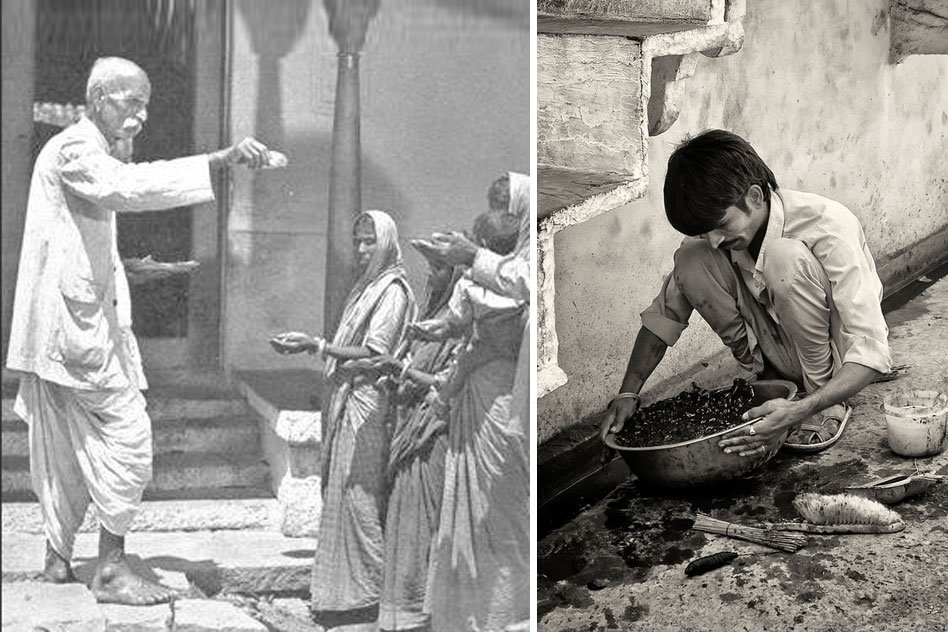
The RSS leaders claimed that these castes had come into existence due to atrocities by foreign invaders and did not exist in the Hindu religion earlier. "Three top RSS leaders have sought to attribute the genesis of Dalits, tribals and many other groups to "Muslim invasion" in medieval times." According to Bhaiyyaji Joshi, a top leader in the RSS hierarchy, 'Shudras' were never untouchables in Hindu scriptures. 'Islamic atrocities' during the medieval age resulted in the emergence of untouchables and Dalits. Joshi further elaborated, "To violate Hindu swabhiman (dignity) of Chanwarvanshiya kshatriyas (a caste in Hinduism), foreign invaders from Arab, Muslim rulers and beef-eaters, forced them to do abominable works like killing cows, skinning them and throwing their carcasses in deserted places. Foreign invaders thus created a caste of charma-karma (dealing with skin) by giving such works as punishment to proud Hindu prisoners."
Now, carrying on from here, there is a renewed attempt to present the caste system in a positive light and as a saviour of this nation (Hindu). As the demand for caste census is picking up, RSS mouthpiece Panchjanya (August 5, 2024) has published an article by Hitesh Shankar (HS), "A Netaji: Kaun Jaat Ho" (Oh Leader, to which caste you belong). This article argues that the foreign aggressors could not break the caste curtains and could not do the conversions. The caste has the major basis of Hindu society and has kept the nation in the pink of health despite the foreign aggressors. This article approvingly quotes an Anglican Bishop of Bombay, Louis George Mylne's book, 'Mission to Hindus: A Contribution to the Study of Missionary Methods.' The quote is "…then it [caste] is necessarily a part of social structure. Still for all practical purposes it constructs religion for millions…It acts as a link between one's nature and Religion." (Translated from Hindi Article).
As per the author, what was pinching the Missionaries then is pinching the Indian National Congress (INC), which is the inheritor of East India Company and Lord AO Hume, now. Further, it points out that as the aggressors could not break the caste fortress, they (Muslims) forced the uptight castes into manual scavenging; as such, there is no mention of this system in earlier society. As per the missionaries, they attribute the backwardness of society to the caste system. As per HS, like the British, INC also looks at the caste as a thorn in the system.
This article is a compilation of a bundle of lies. To begin with, the caste system was articulated strongly in Manusmriti (2nd Century AD, much before foreign aggressors came), and many "holy" books stated that the low caste should remain away from the upper caste, and this was the root of untouchability, and manual scavenging is the ex
Dr Ambedkar viewed caste as a Brahminical imposition on society. The whole article of RSS's mouthpiece praises the caste system. Radical Dalit intellectuals and activists have seen this as a major ill of Hindu society. It is here that Ambedkar, in several of his writings, calls for the 'annihilation of caste.'
While proportionate representation and caste census are an eyesore for Hindu Nationalists, led by RSS, they have their beginnings in the Poona Pact between Gandhi and Ambedkar and later found their place in the Indian Constitution. To oppose this in subtle and direct forms, there were riots in Ahmedabad in 1980 and then in 1985. The Ram Temple movement became more aggressive when Mandal Commission recommendations were implemented in 1990.
As far as INC being an inheritor of East India Company and Hume's legacy is concerned, this is a concoction which only those who were against the Freedom Movement and now are opposed to the idea of India as a plural, diverse country can brew. INC from Tilak to Gandhi was totally against British rule, of which Hume was a part. Hume conceived of it as a safety valve, it is alleged. Going deeper, one will see that emerging Indian national organisations like Madras Mahajan Sabha (founded by Panapakkam Anandacharlu), Bombay Association (founded by Jagannath Shankarshet) and Poona Sarvajanik Sabha (founded by MG Ranade) were looking for a political platform to reach their demands for British rule. They responded to INC's call as they saw it as a national platform to put forward the demands of emerging India. This initially called for the opening of centres of ICS in India; INC called for restrictions on landlords so that the captive labour power would be released and demanded more facilities for rising industrialisation.
The same organisation (INC) eventually called for 'Total Independence' and 'British Quit India!' The same Congress whom Panchjanya is targeting led the national movement, taking along the issue of social justice, which Ambedkar strongly put forward.
As such, the contrast between Ambedkar, who represents the values of the Indian Constitution, and RSS, which represents Hindu Nationalism, is stark. Ambedkar burnt the Manusmriti, and the RSS upholds the values of caste inequality given in this book. Ambedkar drafted the Indian Constitution, and RSS opposed it directly for a long time and indirectly today!
.jpg)
.png) Cedric Prakash
Cedric Prakash
 ICPA
ICPA
 ICPA
ICPA
 ICPA
ICPA
 ICPA
ICPA
 ICPA
ICPA
 ICPA
ICPA
.jpg)
 A. J. Philip
.jpg)
.png) Jacob Peenikaparambil
Jacob Peenikaparambil
.jpg)
.png) John Dayal
John Dayal