
 Joseph Maliakan
.jpg)
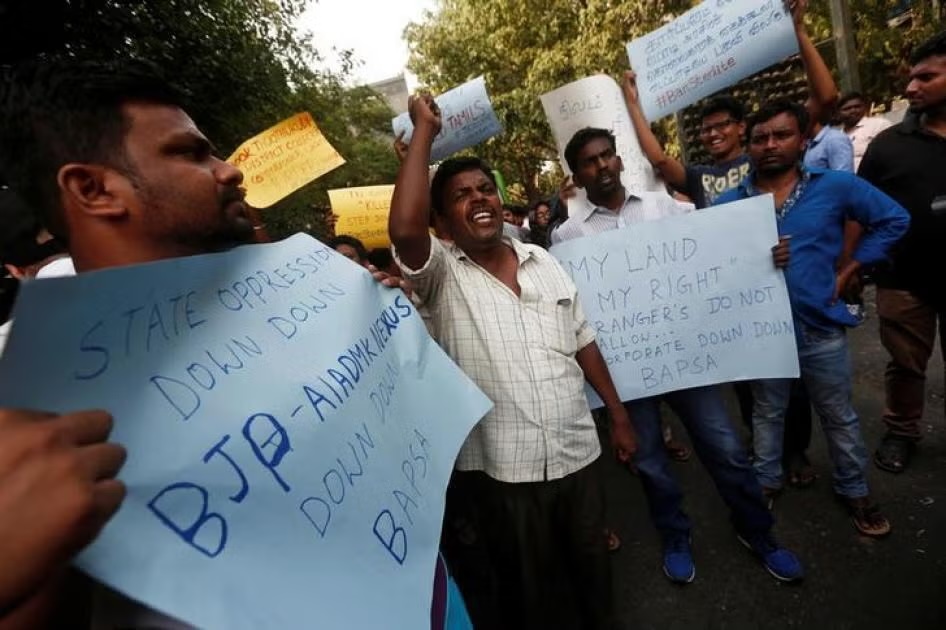
Despite the Godi media singing his paeans day and night for the last 12 years, Modi has resorted to large-scale censorship of any criticism of his government. Until July 2026, massive protests at Delhi's Jantar Mantar, led by the Cockroach Janata Party (CJP), had gripped the country's otherwise free press with fear, and criticism of the Modi government was subdued.
However, the Jantar Mantar protest by Gen-Z blew the regime's fear out of people's minds, especially journalists, cartoonists, YouTubers, and social media users. Journalists, cartoonists, comedians, and even ordinary people started making fun of the Prime Minister, other people in power, and his government's policies, without fear.
This happened even though the regime made criticism of it impossible after corporate-friendly outlets took over print and television channels. Censorship under the Modi government operated through automated digital takedown systems, strict compliance timelines, and financial and regulatory pressure on media outlets.
The government set rules requiring platforms to remove flagged content within three hours, down from the earlier 72 hours. The government integrated tech platforms such as Meta with its Sahyog portal, automating machine-to-machine content removals without human intervention.
Social media reels, parody videos of the Prime Minister, political memes and posts critical of government policies are routinely blocked. Independent journalists, stand-up comedians and cartoonists have continuously faced content removals, account suspensions, police raids, seizure of media equipment and even arrests under false charges during Modi's rule, some of which the courts have set aside.
Currently, the Modi government fears three things: first, making fun of Modi; second, references to protests; and third, the Special Intensive Revision (SIR), which the Election Commission arbitrarily carried out.
The Indian Express reported that the Union Government issued a whopping 195,000 content-blocking orders to platforms like Instagram, Facebook, and YouTube between March and July 2026.
Stand-up comedians and political cartoonists like Satish Acharya and Manjul have faced frequent content removals for parodying the Prime Minister, criticising government policies or covering public protests.
Laws like the Information Technology Amendment Rules, 2023, the Telecommunications Act, 2023, and the Digital Personal Data Protection Act, 2023, have significantly increased the State's power to restrict online communication.
For example, stand-up comedian Brijesh Jha posted a parody video on Instagram on September 29, 2026, to protest the removal of his name, together with his father's and sister's names, from the voters' list in West Bengal, where the Bharatiya Janata Party registered a massive victory in the Assembly elections held this year.
The video charged Gyanesh Kumar, the Chief Election Commissioner of India, with disenfranchising millions of voters through the blatantly unconstitutional SIR at the behest of Prime Minister Narendra Modi. The video, posted on September 29, garnered 1.7 million views. Two days later, Instagram took it down, citing "local laws" without explaining why.
Following an exposé by The Indian Express reporter Ritika Chopra that two Election Commissioners had expressed serious concern about Chief Election Commissioner Gyanesh Kumar's unilateral decisions on implementing the Special Intensive Revision, a series of articles, cartoons, and reels have questioned the Election Commission's conduct.
On September 27, cartoonist Manjul said in a post that Indians were blocked from seeing his cartoon about the Election Commission. "When satire gets censored, perhaps the cartoon has made its point," he added.
According to the notice Instagram issued, access to the cartoon has been restricted in India "pursuant to a notice from the Government of India, Law Enforcement" and under local laws. The cartoon is still visible outside India.
On October 17, the government blocked yet another cartoon by Manjul in India under the IT Rules. There was no clear explanation or meaningful transparency about the blocking. Cartoons, humour and satire are essential parts of a healthy democracy. Cartoonists and satirists must be free to question those in power, challenge authority and hold governments accountable.
Yet, under the Modi government, even cartoons face increasing restrictions. When satire becomes a target and cartoons are silenced, it is not just the cartoonist who loses his voice; democracy itself suffers.
On October 21, Raihan Vadra, the son of Congress leader Priyanka Gandhi, said he was asked to remove all "PROTEST" photographs from his exhibition hours before it was to open at Bikaner House in New Delhi.
The photographs were part of his exhibition, "No Idea is Final," which featured wildlife and street photography. Vadra said he was asked to remove images documenting recent protests in the capital against question paper leaks and the arbitrary and unconstitutional SIR, under which lakhs of people have been disenfranchised by the Election Commission.
.jpg)
 Cedric Prakash
.jpg) Elsa Lycias Joel
.jpg)
 A. J. Philip
 Jacob Peenikaparambil
.jpg)
 John Dayal
.jpg) Joseph Maliakan
.png)
 Robert Clements
.jpg) Cedric Prakash
 ICPA