

 Jacob Peenikaparambil
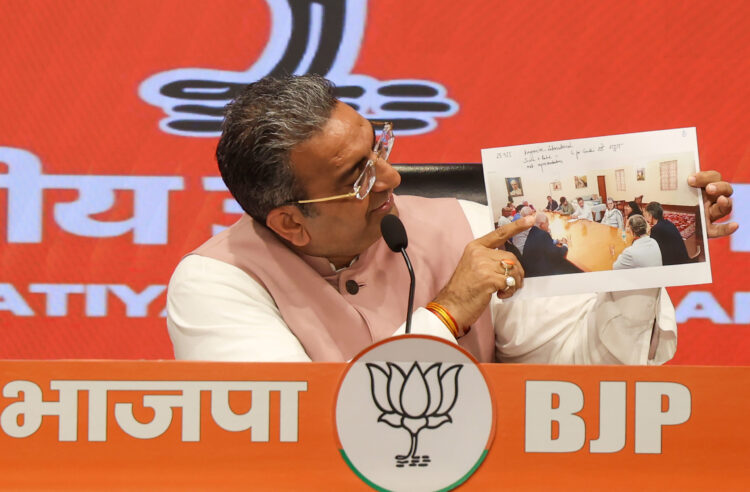
When confronted with protests over corruption, manipulation, and governance failures, dictatorial regimes often resort to allegations of foreign interference. Former Prime Minister Indira Gandhi repeatedly invoked the "foreign hand," primarily implying the American CIA, as a political mechanism to deflect mounting domestic criticism, suppress political dissent, and justify the imposition of the Internal Emergency in June 1975. Rattled by large-scale protests against the SIR process and the Chief Election Commissioner (CEC), the BJP government has begun alleging that the protesters are receiving foreign funding.
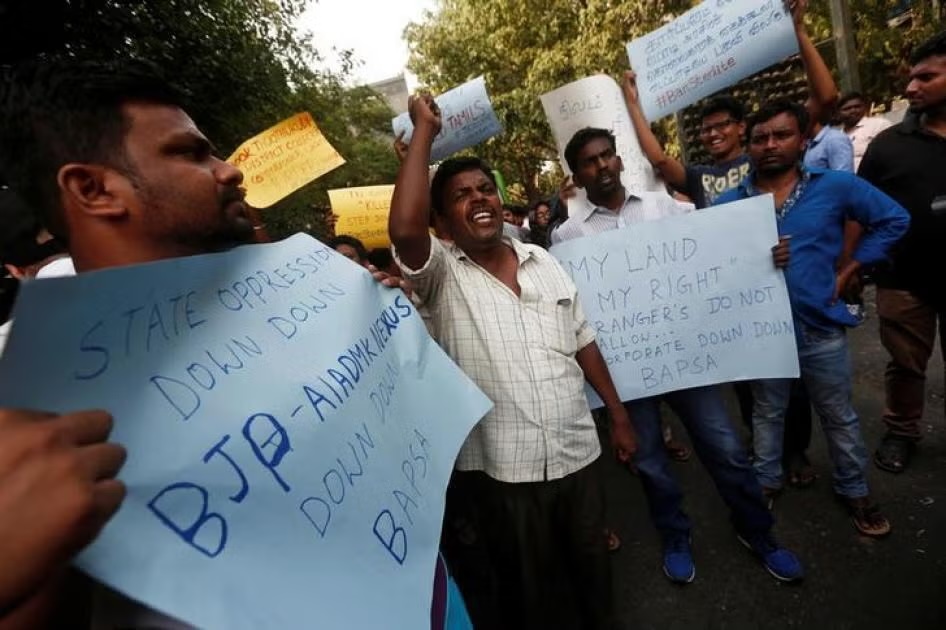
Nationwide demonstrations against the Special Intensive Revision (SIR) of electoral rolls, sparked by allegations of mass disenfranchisement of over 13 crore (130 million) voters, have sparked widespread public outrage. Led by youth groups, civil society organisations, and the opposition INDIA bloc, the movement has seen several major events and focal points since October 2, 2026.
Shaken by the continuing protests, the Modi-Shah government has resorted to various methods to suppress the non-violent democratic movement against the SIR process and the alleged illegalities committed by Gyanesh Kumar. These measures include large-scale deployment of security personnel, restrictions on protest sites, including prohibitions at Jantar Mantar, detentions, the use of brute force, and attempts to shift the narrative through counter-accusations.
Neither the Election Commission of India (ECI) nor the Modi government has adequately answered the protesters' questions. The corrective measures announced by the ECI, such as releasing searchable text PDFs of electoral rolls, allowing voters to re-enrol without an ancestry declaration, bypassing "Logical Discrepancy" and roll-mapping checks, capping objections through Form 7, and substituting door-to-door verification, appear to constitute an implicit admission of serious flaws and irregularities in the earlier processes of voter deletion and verification.
To conceal these failures and the alleged misdeeds of the CEC, BJP leaders and media managers have developed a narrative frequently employed by authoritarian regimes. Senior BJP leaders, including Defence Minister Rajnath Singh and party spokesperson Sudhanshu Trivedi, have accused the opposition of using student demonstrations to incite anarchy and destabilise a democratically elected government.
The BJP has argued that the real objective of the protests is an unlawful, foreign-inspired attempt at regime change rather than genuine electoral reform. It has pointed out that certain opposition figures have drawn inspiration from anti-government protests in Bangladesh.
Union Home Minister Amit Shah has directly targeted Leader of the Opposition Rahul Gandhi, alleging that the protests are part of a calculated strategy to conceal other motives. Shah stated that the public understands "the Congress' strategy of protecting infiltrators under the pretext of opposing the SIR."
The BJP has also argued that the ongoing demonstrations lack broad public support. Amit Shah observed that a gathering of only a few thousand people representing 14 political parties could not claim to speak for the entire country. In addition, the party has raised concerns about the economic consequences of prolonged protests in central Delhi during the crucial festive season between Navratri, Diwali, and Chhath. It has warned that road blockades and disruptions could adversely affect local commercial activities and businesses.
Leaders of the opposition INDIA bloc, student organisations such as the All-India Students' Association (AISA), and other activists have vigorously countered the BJP's narrative. They maintain that their movement is neither an attempt to create "anarchy" nor a campaign for "regime change" outside the democratic process. Rather, they describe it as a constitutional struggle to safeguard the sanctity of the vote against targeted institutional subversion. The activists maintain that they are exercising their right to peaceful assembly, guaranteed under Article 19 of the Constitution, while carrying copies of the document as a symbol of their commitment to constitutional values.
BJP leaders have not produced any credible evidence of foreign funding or foreign interference in the protests. The government has several investigative agencies at its disposal, including the Central Bureau of Investigation (CBI), the National Investigation Agency (NIA), the Directorate of Enforcement (ED), and the Directorate of Revenue Intelligence (DRI). Why does the government not ask these agencies to investigate the alleged foreign sources of funding or identify the foreign forces supposedly supporting the protesters in their attempt at regime change? The government should make these agencies' findings public to substantiate BJP leaders' allegations.
Amit Shah frequently speaks about infiltrators. The BJP has been in power for more than 12 years. If a large number of infiltrators have entered India and remain in the country, it raises serious questions about the efficiency and effectiveness of the BJP government, particularly the Union Home Ministry. Why doesn't the Election Commission publish data on infiltrators identified through the SIR process? Are the 13 crore people whose names have been deleted from the electoral rolls being treated as infiltrators? The government and the ECI owe the public clear answers.
Senior Congress leader Jairam Ramesh has countered allegations of a Bangladesh-style "regime change" conspiracy, saying the opposition has the democratic right and responsibility to "oppose, expose, and depose" the ruling government through elections. In a democracy, no political party can expect to remain in power indefinitely. The opposition has a responsibility to expose the government's failures and misdeeds and seek regime change through the electoral process.
Regime change through democratic means is entirely legitimate. Moreover, unlike the protests in Bangladesh and Nepal, opposition parties, youth groups, and civil society organisations have used non-violent methods of protest. They have asserted that they will not abandon the Gandhian path, however brutal the government's suppression may become. The police have used brute force against the protesters, who have endured suffering in the spirit of Mahatma Gandhi's philosophy of non-violent resistance.
Protesters see the alleged manipulations by CEC Gyanesh Kumar, which he has indirectly acknowledged through a series of corrective measures, as an attempt to perpetuate the BJP's hold on power. In August 2017, while addressing party workers in Madhya Pradesh, Amit Shah asserted that the BJP had not come to power merely for five or ten years but would remain in power for at least 50 years. Shah reiterated this vision at the BJP National Executive meeting in Delhi in September 2018, stating that if the party won the 2019 Lok Sabha elections, "no one can throw us out for the next 50 years."
The 2024 Lok Sabha election results came as a rude shock to the BJP, which had expected to win around 400 seats. The party failed to secure an absolute majority and had to depend on the Telugu Desam Party and Nitish Kumar's Janata Dal (United) to form the government. The BJP realised that staying in power for 50 years would not be easy through normal democratic processes.
Therefore, the BJP appears to have decided to use the Election Commission as a tool to achieve its political objectives. The party may have planned to use the ECI to realise its ambition even before the 2024 elections. Otherwise, why did the Chief Election Commissioner and Other Election Commissioners (Appointment, Conditions of Service and Term of Office) Act, 2023, grant legal immunity to members of the Election Commission? This law provides a privilege that even the President of India does not enjoy.
Under this law, the selection committee is a three-member panel comprising the Prime Minister as its chairperson, the Leader of the Opposition in the Lok Sabha, and a Union Cabinet Minister nominated by the Prime Minister. This arrangement replaced the Supreme Court's suggestion to include the Chief Justice of India, giving the executive a majority on the committee. This change was deliberately made to facilitate the appointment of Election Commissioners willing to follow the government's directions rather than function as members of an independent and impartial constitutional body. The Indian Constitution envisions the Election Commission as a neutral umpire overseeing elections.
When the CEC's misdeeds came under public scrutiny and nationwide protests erupted against the SIR process, demanding Gyanesh Kumar's resignation, the BJP, the principal beneficiary of his actions, had little choice but to defend him. Instead of adequately addressing the protesters' questions, the party has resorted to a familiar political tactic: invoking the bogey of a "foreign hand."
.jpg)
 Cedric Prakash
.jpg) Elsa Lycias Joel
.jpg)
 A. J. Philip
Jacob Peenikaparambil
.jpg)
 John Dayal
.jpg)
.jpg)
 Joseph Maliakan
.png)
 Robert Clements
.jpg) Cedric Prakash
 ICPA