

.png) John Dayal
John Dayal
.jpg)
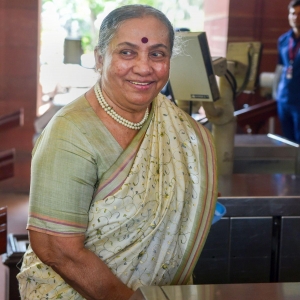
Long gone are the days when Margaret Alva graced the political stage in New Delhi as a member of the Union Council of Ministers, with the ear of the Congress High Command and proximity to the Gandhis.
Three years after promising to repeal the anti-conversion law, the Congress government in her home state, Karnataka, has yet to act. For the Christian community, the issue is no longer simply about legislation but about political trust, representation, and whether an electoral promise still means anything once power has been secured.
The meeting on September 14, 2026, between a delegation led by Bangalore Archbishop Peter Machado and Congress president Mallikarjun Kharge carried the accumulated weight of three years of waiting, repeated assurances and growing disappointment.
The Christian delegation met Kharge with a clearly defined charter seeking the repeal of Karnataka's anti-conversion law, imposed by the then BJP government; the nomination of a Christian to the Legislative Council; a one per cent exclusive reservation; and representation on government boards and corporations.
Kharge and his state minister son Priyank, who was also present during the meeting, listened, acknowledged the concerns and promised to take them up with the state leadership.
The Karnataka Protection of Right to Freedom of Religion Act was passed by the BJP government led by Basavaraj Bommai in 2022 and quickly became one of the most contentious pieces of legislation affecting Christians, who argued that its provisions could be used to harass clergy, social workers and individuals engaged in legitimate religious or charitable activity.
Congress opposed the legislation politically, its 2023 Karnataka election manifesto promising to repeal "all unjust laws and anti-people laws" enacted by the previous BJP government within one year.
After Congress came to power in May 2023, the state Cabinet decided in June to repeal the law and said it would introduce a repeal Bill in the legislature.
For a brief period, the Christian community had reason to believe the matter was settled and that the new government would follow through on its manifesto, but the proposed repeal was put on hold when, in July 2023, the government decided not to table the Bill during the Budget Session.
Reports at the time suggested that Congress feared giving the BJP an opportunity to mobilise politically around the issue and portray the government as being "pro-conversion" or excessively sympathetic to Christian demands.
That calculation may have seemed electorally prudent to Congress strategists, but it carried a serious political cost: the law's continued existence was not symbolic; it had practical consequences for individuals and institutions, even though false cases would not result in convictions.
According to a June 2026 Newslaundry investigation, 25 cases had been filed under the law during the Congress government's tenure, taking the statewide total to 46 since its enactment, but without convictions.
But even without a conviction, a criminal case, a police investigation, or a public allegation of forced or fraudulent conversion can damage reputations, disrupt institutions, and create fear among people who work in churches, schools, hospitals, and social-service organisations, as the process becomes the punishment.
Newslaundry reported cases involving Muslims and examined how the police had used the legislation. In July 2025, the Karnataka High Court quashed one case involving a Muslim complainant, observing that the circumstances did not establish an attempted conversion merely because religious literature had been distributed.
That judgment matters because it shows the danger of treating ordinary religious activity as evidence of criminal intent. It also reinforces the argument that the law can be used in ways that extend beyond the narrow purpose its supporters claim.
Congress therefore cannot argue that the law has become irrelevant simply because it has not resulted in convictions, as its continued presence matters, as does the uncertainty it creates for religious minorities and civil-society organisations.
More importantly, the law remains in force despite the fact that Congress itself declared it unjust enough to promise its repeal.
There is an obvious political calculation behind the delay, as the BJP can mobilise sections of the electorate around allegations of religious conversion, and Congress knows that repealing the law could give the opposition an opportunity to accuse the government of appeasing Christians or weakening protections against conversion.
But no political party can indefinitely ask a minority community to support it while telling that community that its legitimate demands must wait because the BJP or the RSS might exploit them. That is not a principled minority policy; it is political risk management. It tells the community that its rights and concerns are negotiable whenever the ruling party fears an adverse reaction from the majority.
The irony is that Congress itself created the expectation it is now reluctant to fulfil when it asked voters to believe that a change of government would mean a policy change.
Christians supported Congress rather enthusiastically, believing the new government would reverse laws they regarded as discriminatory or intimidating.
The party won; its Cabinet approved the repeal, which then disappeared from the legislative agenda.
The concerns of Karnataka's Christians extend beyond the anti-conversion law; in recent years, they have repeatedly complained about inadequate or political representation in the Legislative Council or on government boards, corporations and other public institutions.
Christians form a small minority in Karnataka, but their institutional contribution is considerably larger than their numbers might suggest, as they run schools, colleges, hospitals, social-service institutions, and charitable initiatives across the state, serving people from every religious and social background and contributing significantly to education, healthcare, and welfare.
A broader question also concerns representation within government bodies. The Karnataka State Christian Development Corporation was established to address the Christian community's economic and educational needs. Though government schemes and budgetary allocations exist, access, implementation and political participation do not match expectations.
For years, Christian voters in Karnataka have generally regarded Congress as the more dependable political alternative to the BJP on questions of minority rights, constitutional protection, and social inclusion.
That political alignment has given Congress a degree of goodwill that the party has often treated as permanent.
The 2023 election created considerable expectations because Congress had promised a different approach to laws passed under the BJP government.
The anti-conversion law was one of the clearest examples of that promised change, yet three years later, it remains in force, and the government has offered no clear timeline for repeal.
Governments may have competing priorities, and legislative time is limited, but Christians say a manifesto promise is also a political commitment which cannot be quietly abandoned simply because fulfilling it may create political discomfort.
The Christian community is also entitled to ask why representation should remain a matter of repeated delegations, memoranda and petitions, recalling they have again met senior Congress leaders, approached the Chief Minister and the state party leadership, and repeated demands made for years.
The community feels the Congress should not underestimate the political significance of this frustration. While minority communities do not always change their political loyalties dramatically from one election to another, political relationships can weaken gradually as disappointment becomes distrust, disengagement and eventually leads voters to consider alternatives.
This process is particularly serious for Congress because the party's appeal to minorities rests largely on its promise of constitutional protection, equal citizenship, and opposition to discriminatory policies; if it cannot act on a law it promised to repeal, the credibility of those broader claims is inevitably affected.
For the Congress, there is still time to repair the relationship, and it can do so with a clear public position on the anti-conversion law instead of relying on private assurances or general statements of sympathy.
If the government remains committed to repeal, it should introduce the necessary legislation before the Karnataka legislature and complete the process, unless it truly believes retaining a BJP-era law best serves its political strategy.
The government should also address the question of political representation, and though a solitary Christian voice in the Legislative Council would not solve every problem, it nonetheless would send a clear message that the community is not invisible and that its concerns deserve a place within the formal political system.
Similarly, appointments to boards and corporations should reflect the diversity of Karnataka's Christian community, with different denominations, regions, women, young people, and representatives of educational, healthcare, and social-service institutions getting meaningful opportunities to participate.
It is also important that welfare schemes for Christians are implemented transparently and monitored publicly. The Christian Development Corporation should be strengthened as an institution rather than treated merely as a budget announcement, and its programmes should be assessed by outcomes, accessibility, and fairness, not simply by the amount allocated.
Most importantly, Congress should stop asking the community to wait without a timetable.
The September 14 meeting with Mallikarjun Kharge offers an opportunity, but it should not become another chapter in the history of meetings, memoranda and assurances. The delegation has already made its demands clear.
Christian leaders say the community in Karnataka is not asking Congress to do it a favour, but to honour a political commitment.
For Congress, patently, the issue is no longer simply the anti-conversion law but a matter of its own credibility.
.jpeg)
 A. J. Philip
.jpg)
.png) Jacob Peenikaparambil
John Dayal
Jacob Peenikaparambil
John Dayal
.jpg)
 Pachu Menon
.jpg)

.png)

.png)
.png) Robert Clements
Robert Clements
.jpg)