

.png) John Dayal
John Dayal
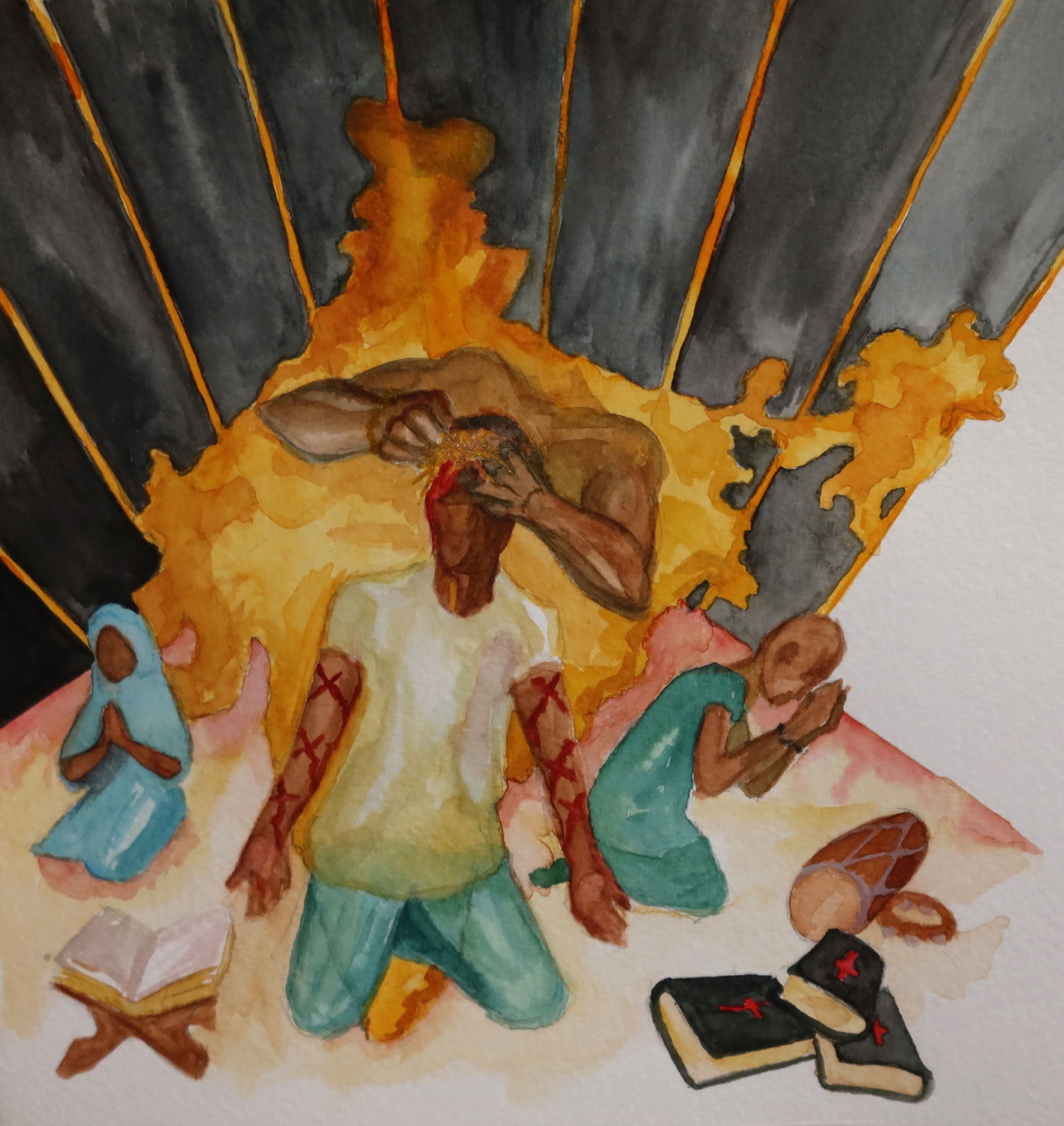
More than 20 years ago, Mrs Sonia Gandhi, then the Congress president, told this correspondent and Catholic priest Fr S Lourduswamy that hope for Dalit Christians getting the protection of the Schedule Caste cover lay with the Supreme Court, and not with politicians as most of them, in all parties, seemed to be very hostile to the idea of Christians and Muslims getting political empowerment and reservation benefits.
The first fear was that the more educated Christians would eat into the "cake" of jobs and educational scholarships, and though she did not say it, the real fear was of large-scale conversion of Dalits to Christianity, and to a lesser extent, to Islam.
The Presidential Order 1950 was introduced as a camouflaged anti-conversion law to make the march into a liberating faith feel painfully punitive. The converts would pay the penalty by losing panchayat seats, jobs, and scholarships. The open anti-conversion laws, now in 13 states, also punish pastors involved in the proselytising process, or the bridegroom in case of a Muslim who marries a Hindu girl.
But this week, Christian Dalits discovered they could not trust the courts.
A pall of gloom descended on the Dalit Christian community across India, unofficially and wildly estimated to be anywhere from 1 crore to 5 crore strong, when on March 24, 2026, a Supreme Court bench of Justices Prashant Kumar Mishra and Manmohan in a clear ruling in the case of Pastor Chinthada Anand against the State of Andhra Pradesh said no one could claim SC benefits if they left Hinduism. Sikhs and Buddhists were deemed to be of the Hindu group and enjoyed all the benefits.
This is really not a new ruling; the old Supreme Court decision in the case of the Tamil Adi Dravida cobbler Soosai said the same thing in 1985, a decision that touched the lives of millions.
Anand, born into the Madiga community listed as a Scheduled Caste in Andhra Pradesh, had converted to Christianity and worked as a pastor for years. When he faced an alleged assault linked to his caste background, he turned to the special protections under the Scheduled Castes and Scheduled Tribes (Prevention of Atrocities) Act.
The High Court said no. Once a person openly practices a faith outside Hinduism, Sikhism, or Buddhism, they lose their Scheduled Caste status right away, with no room for overlap.
Upholding the High court, the Apex judges laid out seven guiding ideas to shape future cases: there is an absolute bar based on religion for anyone converting beyond those three faiths; benefits end automatically the moment conversion happens; claiming Scheduled Caste status and professing another religion simply cannot go together; any return to the original faith for benefits must be genuine, with solid proof of the person's birth caste, true intent, and acceptance by the community; tribal status works differently and has no such religious limits; "professing" a religion means openly declaring and living it in public; and no state government can change the central presidential rules on this.
The bench stressed that this upholds the Constitution's original plan without touching the basic right to choose one's faith.
But this question is moot. A dozen or more petitions are before the Supreme Court challenging the very basis of the law, charging that the Presidential order of 1950, made by the Jawaharlal Nehru cabinet under duress of Hindu right-wing politicians, went against the basic tenets of the Constitution, which guarded the right to profess, practice and propagate one's religion.
The chief justice of the time referred these petitions to a bench that is yet to commence regular hearings in the matter. Another bench is hearing a clutch of petitions challenging the actual anti-conversion laws, including those filed by the Catholic Bishops Conference of India, the All India Catholic Union, the National Council of churches, and several individuals, including this writer.
India gained Independence from the British on August 15, 1947, in a bloody partition of the subcontinent, which saw millions of Hindus, Sikhs, and Muslims killed or displaced on both sides of the Border. A republican constitution was enacted in 1949 when the memories of the Partition and the assassination of Mahatma Gandhi in January 1948 were still fresh in the national memory.
In 1950, President Rajendra Prasad, acting under Article 341 of the Constitution, issued the Constitution (Scheduled Castes) Order, in 1950 limiting Scheduled Caste recognition to Hindus alone as their social order was built over centuries through customs of purity, pollution, and exclusion, popularly known to be parts of the Code of Man. Paragraph 3 of the order made it plain: no one professing a religion different from Hinduism could be considered a Scheduled Caste.
But clearly, the motives were majoritarian. Under political pressure and the fear of major agitations, Parliament made two careful changes over time. In 1956, it brought in Sikhs from Dalit backgrounds. In 1990, Buddhists were added to the list.
Much like Christianity, Buddhism and Sikh tenets brook no caste or class divide, with equality and fraternity as core beliefs. But it was argued that these faiths were reform movements or close extensions of the original system, where converts from Hinduism often carried forward the same social disabilities despite their new teachings of equality. The contradictions and flawed logic were glossed over.
A Dalit Christian in rural Tamil Nadu or Kerala might still face separate burial grounds, blocked access to shared wells, or quiet exclusion from community events, just as before conversion.
Dalit Muslims in parts of Uttar Pradesh or Bihar encounter similar barriers inside their own circles, where older social ranks linger despite Islam's emphasis on equality.
They have been protesting since the day the order was passed. By 1990, major agitations were mounted in various parts of the country. The biggest rally was in Delhi, with Mother Teresa of Calcutta blessing the hundreds of thousands of people from the gates of the Sacred Heart Cathedral not far from the Indian Parliament.
Paragraph 3 of the 1950 Order, they argue, violates the Constitution's guarantees of equality under Articles 14, 15, and 16, plus the freedom of religion in Article 25.
Religion has no place in Article 341's text, which lets the President list castes based on backwardness; using it to draw religious lines amounts to unfair discrimination and cannot override fundamental rights.
There seems to be very little chance that the petitions will come up for daily hearings anytime soon, perhaps not at all till the present BJP regime is in power with its repeated policy of not accepting the Dalit Christian and Pasmanda Muslim claims to equal SC rights.
Unless a larger bench issues a ruling, the Anand decision keeps lower courts in line and maintains the status quo. A commission led by former Chief Justice KG Balakrishnan continues its work, gathering fresh data on whether converts still lag behind, with extensions pushing its report into the coming months.
Decades earlier, the National Commission, headed by former Justice Ranganath Misra, had ruled that the use of casteism crossed barriers of religion, and a Dalit was equally vulnerable in whichever religion he or she professed. The National Commission for Scheduled Castes, headed by former Union Home Minister Buta Singh, accepted the premise but said the government must increase the quota, which remains frozen at 15%.
These matters are closely connected to another set of cases before the court. Petitions from groups like Citizens for Justice and Peace question state "freedom of religion" laws in nine states, including Uttar Pradesh, Madhya Pradesh, Chhattisgarh and Gujarat.
These rules, strengthened and weaponised since 2020, make it a crime to convert someone through force, cheating, or tempting offers, with stiff penalties, especially if the target belongs to vulnerable groups like the Scheduled Castes.
The Supreme Court postponed full hearings earlier in 2026 due to its schedule, but issued notices to the central government and states, referring the matter to a three-judge bench.
Dilemma for the Sikhs
For Sikh and Buddhist communities, the picture carries its own unique shade. Their Dalit members gained inclusion through the 1956 and 1990 changes, so groups like Mazhabi Sikhs in Punjab or Neo-Buddhist Mahars in Maharashtra can still claim Scheduled Caste benefits.
In India, this arrangement places them under the same legal framework as Hinduism. Elsewhere in the world, the story differs sharply. Sikhs are a separate, independent religion, and their gurdwaras in Britain or Canada, or Buddhist temples in Thailand and Japan, operate without any caste labels or state reservations tied to birth.
Only in India does Sikhism get grouped this way for affirmative action purposes. It may help in jobs and education, yet it can blur the clear identities that the religion has built as a protest against hierarchy. Sikhism's founding message and Ambedkar's mass Buddhist conversions in 1956 both stressed equality before God or self.
Members of these communities have suffered extreme violence for their faith identity - the massacre of some 5,000 Sikhs was the most brutal since Independence.
The rulings also turn a spotlight on Hinduism itself and the work still needed inside it. For many, untouchability remains a reality, and violence a daily threat.
The pressure grows to open temples fully, ease barriers in marriages, and tackle discrimination in villages and workplaces. Progress remains uneven.
Seventy-five years on, the country has urbanised, educated more people, and seen faiths mix in new ways. Change is slower than the proverbial snail's pace. Caste thinking still shapes daily realities across lines, as studies continue to show.
The Anand ruling brings clarity under today's law, while the larger challenges wait. For Dalit Christians and Muslims, it prolongs the wait for full recognition that their struggles deserve the same remedies.
.jpg)
.png) Cedric Prakash
Cedric Prakash
 ICPA
ICPA
 ICPA
ICPA
 ICPA
ICPA
 ICPA
ICPA
 ICPA
ICPA
 ICPA
ICPA
.jpg)
 A. J. Philip
.jpg)
.png) Jacob Peenikaparambil
Jacob Peenikaparambil
.jpg) John Dayal
John Dayal