

 A. J. Philip
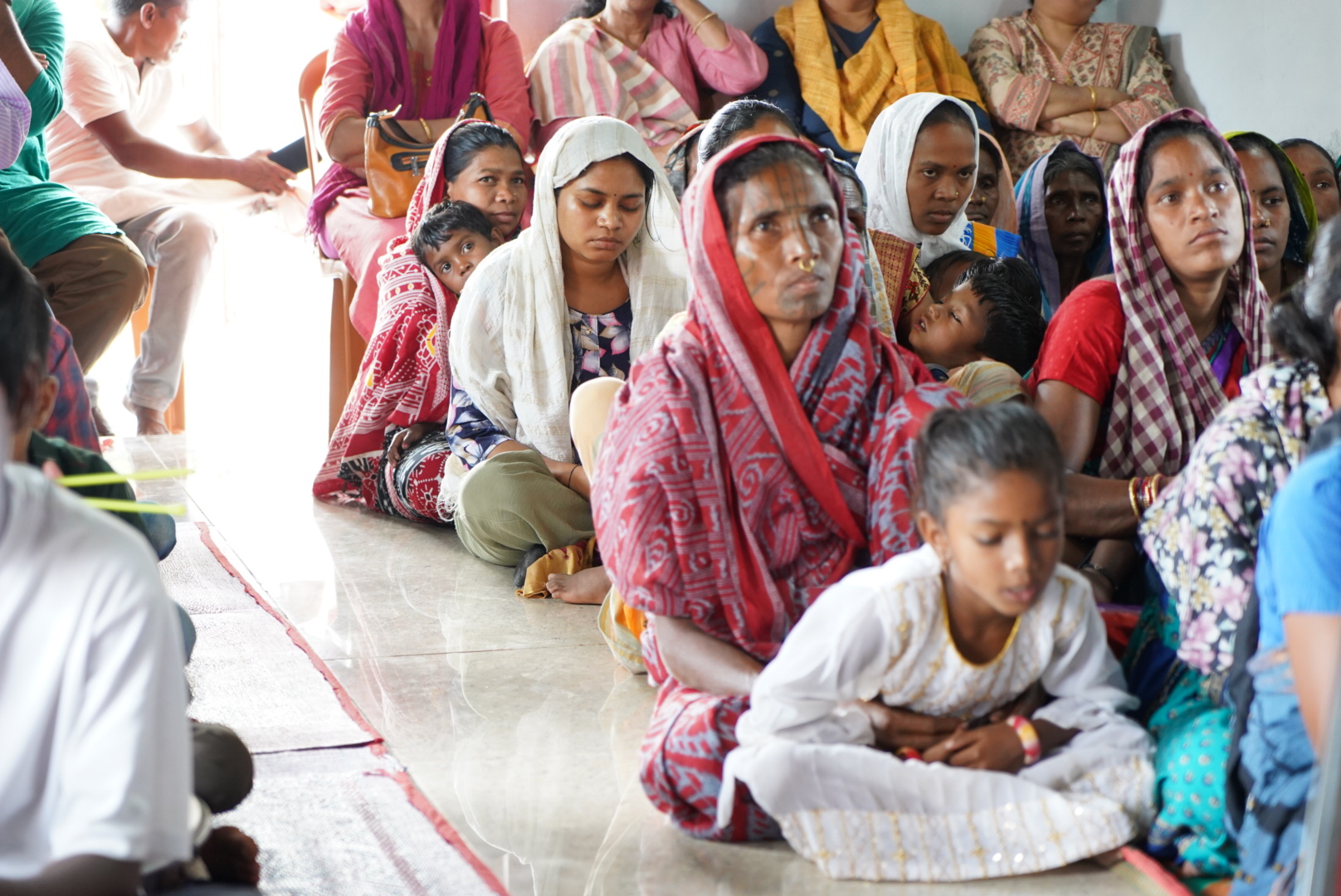
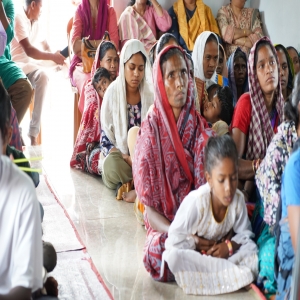
The recent verdict of the Supreme Court of India on whether Dalit Christians can claim Scheduled Caste status would have been less troubling had it merely erred in law. What makes it profoundly disquieting is that it appears to endorse, almost uncritically, a historical wrong that has long masqueraded as constitutional wisdom. The case turns on a simple but deeply consequential question: Does caste oppression vanish upon religious conversion? The Court's answer, implicit if not explicit, seems to be yes—or at least, not enough to warrant constitutional protection.
This conclusion does not merely strain logic; it contradicts lived reality. By refusing to interrogate the continuing social disabilities faced by Dalit Christians, the judgment risks rendering invisible a form of discrimination that has merely changed vocabulary, not substance.
To understand the gravity of this failure, one must return to what can only be described as one of the earliest frauds on the Constitution: the Presidential Order of 1950. Issued soon after the Constitution came into force, it confined the Scheduled Caste status to Hindus, later extending it to Sikhs and Buddhists but steadfastly excluding Christians and Muslims.
This was no minor administrative clarification; it was an act that effectively amended the Constitution without parliamentary debate, without constituent sanction, and without moral justification. The Constituent Assembly, after exhaustive deliberation, had enshrined equality, non-discrimination, and freedom of religion as foundational principles. Nowhere did it suggest that these rights would be contingent upon one's faith.
Indeed, the Assembly included distinguished Christian leaders and Anglo-Indian representatives who sought no special privileges—only the freedom to practise their religion and run their institutions. That such a community should later be penalised for exercising that very freedom is a paradox that borders on the absurd.
The defenders of the Presidential Order have long relied on a convenient fiction: that religions like Christianity and Islam are inherently egalitarian and therefore incapable of sustaining caste-based discrimination. This argument, which the Court appears reluctant to discard, collapses under the weight of empirical evidence.
Conversion may alter theology, but it does not instantly dissolve centuries of social hierarchy. A Dalit who embraces Christianity does not shed his social identity at the church door; he carries it into the pew, the workplace, and the marketplace. His occupation, his social networks, and his lived experiences remain largely unchanged.
The notion that his children can now compete on equal footing with those historically privileged is not merely optimistic—it is wilfully blind. In effect, the law demands that the victim of discrimination first perform the miracle of social transformation before claiming protection against it. What the Court has failed to acknowledge is that caste is not a theological category but a sociological one.
It is a system of graded hierarchy, hereditary occupation, and ritual exclusion that survives independently of the religious beliefs of its practitioners. To argue that conversion severs one from caste is to mistake the symptom for the cause.
The irony is compounded when one considers the historical anxieties that informed the 1950 Order. There was, among certain sections, a palpable fear that if Dalits were allowed to convert freely while retaining access to affirmative action, large numbers would leave the Hindu fold. This was not a concern rooted in constitutional morality but in demographic arithmetic.
The example of Kerala's Ezhava community is instructive. When faced with entrenched discrimination, leaders like C. Kesavan openly contemplated mass conversion as a path to dignity. The mere possibility of such a shift was enough to provoke a policy response designed not to eliminate discrimination but to contain its consequences.
Reservation, instead of being a tool for social justice, was weaponised as a means of religious containment. The Presidential Order was, therefore, never a neutral administrative exercise; it was a calculated intervention to ensure that the benefits of affirmative action would serve as a disincentive to conversion. In one stroke, the executive rendered the fundamental right to religious freedom contingent upon the forfeiture of constitutional protections against caste oppression.
The Court's recent ruling, far from correcting this historical distortion, appears to perpetuate it. By treating the Presidential Order as a settled principle rather than a contested anomaly, it elevates executive expediency over constitutional morality. This is particularly troubling given the Court's own jurisprudence, which has repeatedly emphasised that fundamental rights cannot be curtailed by executive fiat.
If an order issued in 1950 can continue to dictate the contours of equality in 2026, one must ask: what, then, is the role of constitutional interpretation? Is the Court a guardian of rights or a custodian of inherited inequities? The judgment reveals a jurisprudence of convenience—one that selectively invokes textual fidelity when the outcome aligns with majoritarian sentiment, yet remains flexible when the rights of other marginalised groups are at stake.
This inconsistency exposes a deeper truth: the law's protection of Dalit identity is conditional, extended only to those who remain within a prescribed religious boundary.
The judgment also reflects a deeper discomfort with the idea that caste can transcend religious boundaries. This discomfort is not new; it has long informed public discourse as well as policy. Yet, it stands in stark contrast to the lived experiences of millions. Sociological studies, government reports, and even judicial observations in other contexts have acknowledged the persistence of caste among Christians and Muslims.
Separate burial grounds, endogamous marriage practices, and occupational segregation are not relics of a bygone era; they are present realities. To deny reservation on the ground that these communities are "casteless" is to substitute ideology for evidence.
The National Commission for Minorities has repeatedly recommended the extension of Scheduled Caste status to Dalit Christians, and successive governments have sat on these recommendations not because of constitutional impediments but because of political expediency. The Court, by declining to intervene, has effectively ratified this political inertia.
Consider the absurdity of the situation. A person engaged in manual scavenging—a practice the Constitution itself seeks to abolish under Article 17—decides to convert to Christianity. His occupation does not change overnight; his social status does not improve; his economic condition remains precarious. He continues to clear human waste with his bare hands, his children remain excluded from education, and his community remains confined to segregated settlements.
Yet, in the eyes of the Lordships of the apex court, he has undergone a transformation so complete that he no longer requires the protections afforded to Scheduled Castes. His children, who inherit the same disadvantages, must now compete with those who have enjoyed generations of privilege. This is not equality; it is a cruel parody of it. The Constitution does not permit such arbitrary classifications, yet the Court has chosen to uphold precisely such an arbitrariness.
The selective application of the law further exposes the inconsistency of the system. Environmental degradation of sacred rivers goes largely unpunished, despite its scale and visibility. Yet minor infractions by marginalised communities invite swift, disproportionate action. Such disparities are not merely administrative lapses; they reflect a deeper bias in the way law is enforced and interpreted. When the same system denies reservation to Dalit Christians on the assumption that they no longer face discrimination, it reveals a troubling disconnect between legal reasoning and social reality.
The law, in this instance, has become an instrument not of liberation but of erasure—erasing the continued suffering of communities whose only transgression was to exercise the right to religious freedom guaranteed by the very Constitution that now abandons them.
It is worth recalling that the Constitution was not drafted in a vacuum. It was the product of intense debate, shaped by competing visions of India's future. There were those who sought to anchor the nation in religious identity, to infuse its symbols and institutions with theological significance. They were resisted by leaders who believed in a secular, inclusive republic—figures influenced by the ideas of Jawaharlal Nehru and BR Ambedkar.
The triumph of that vision was not merely political; it was moral. It affirmed that citizenship would not be mediated by faith, that rights would not be contingent upon belief. The Presidential Order of 1950, and the jurisprudence that has sustained it, represent a departure from that vision. They reintroduced religion as a condition for constitutional protection, thereby undermining the very secular fabric the framers laboured to weave.
The Court had, in this case, an opportunity to realign the law with constitutional principles. It could have recognised that caste is a social reality that does not dissolve with conversion, that affirmative action is a remedy for historical injustice rather than a reward for religious affiliation. It could have read the Constitution in light of its transformative promise rather than through the narrow lens of executive orders issued in a different political context. Instead, it has chosen a path of continuity, preserving a framework that is increasingly difficult to justify on any ground other than political convenience.
This is not judicial restraint; it is judicial abdication. When the highest Court of the land refuses to interrogate a manifest injustice on the grounds that it has persisted for seven decades, it betrays its constitutional duty to be the conscience of the republic.
None of this is to suggest that the issue is devoid of complexity. Extending Scheduled Caste status to Dalit Christians would require careful consideration of administrative, political, and social implications. It would necessitate a re-examination of existing categories and criteria, perhaps even a reconfiguration of the reservation system itself. Questions of creamy layers, income ceilings, and the precise modalities of inclusion would demand rigorous deliberation. But complexity cannot be an excuse for inaction, nor can it justify the perpetuation of injustice.
The Constitution does not promise easy answers; it demands principled ones. The Court's reluctance to engage with this complexity, hiding instead behind the shield of executive discretion, constitutes a failure of constitutional imagination. Think of it: it is the same Court that is opposed to any attempt to introduce reservations for posts of judges in the Supreme Court and the High Courts.
Ultimately, the question is not whether Dalit Christians should be granted reservations. It is whether the State—and by extension, the judiciary—is willing to acknowledge the persistence of caste beyond the boundaries of religion. To deny this is to deny reality itself. The Court's verdict, in privileging a legal fiction over lived experience, risks undermining the very ideals it is meant to uphold.
If equality is to be more than a rhetorical flourish, it must confront discrimination in all its forms, not merely those that fit neatly within inherited categories. The logic of the judgment suggests that discrimination only matters if it occurs within a religious framework that the State deems authentic. This is not constitutional morality; it is theological gatekeeping dressed in judicial robes.
In the final analysis, the judgment serves as a reminder that the struggle for constitutional justice is far from over. The framers of the Constitution envisioned a society in which dignity and equality would not be conditional, in which rights would not be circumscribed by identity. That vision remains unfinished.
Each time the law fails to recognise the realities of those at the margins, it moves a step further away from that ideal. The task, therefore, is not merely to critique such failures but to insist—persistently and unapologetically—that the Constitution be read not as a static document but as a living promise. Until the courts recognise that caste does not vanish at the threshold of a church or a mosque, until they acknowledge that discrimination follows the marginalised regardless of the name they choose for their God, the promise of the Constitution will remain unfulfilled.
The SC verdict on Dalit Christians is not an isolated error; it is a symptom of a deeper unwillingness to confront the persistence of caste in all its permutations. That unwillingness, if allowed to persist, will ultimately corrode the very foundations of the republic the Constitution sought to build.
A Dalit Christian may be socially abused and even beaten, yet be denied the protection of laws meant to prevent atrocities against Dalits—simply because he is a Christian. What kind of justice is this, my Lordships, that punishes a man for his faith while ignoring the violence inflicted on his birth?
.jpg)
.png) Cedric Prakash
Cedric Prakash
 ICPA
ICPA
 ICPA
ICPA
 ICPA
ICPA
 ICPA
ICPA
 ICPA
ICPA
 ICPA
ICPA
.jpg) A. J. Philip
A. J. Philip
.jpg)
.png) Jacob Peenikaparambil
Jacob Peenikaparambil
.jpg)
.png) John Dayal
John Dayal