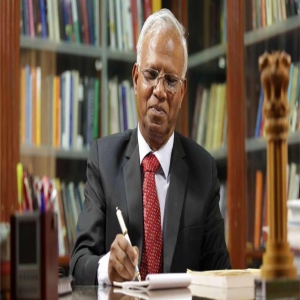


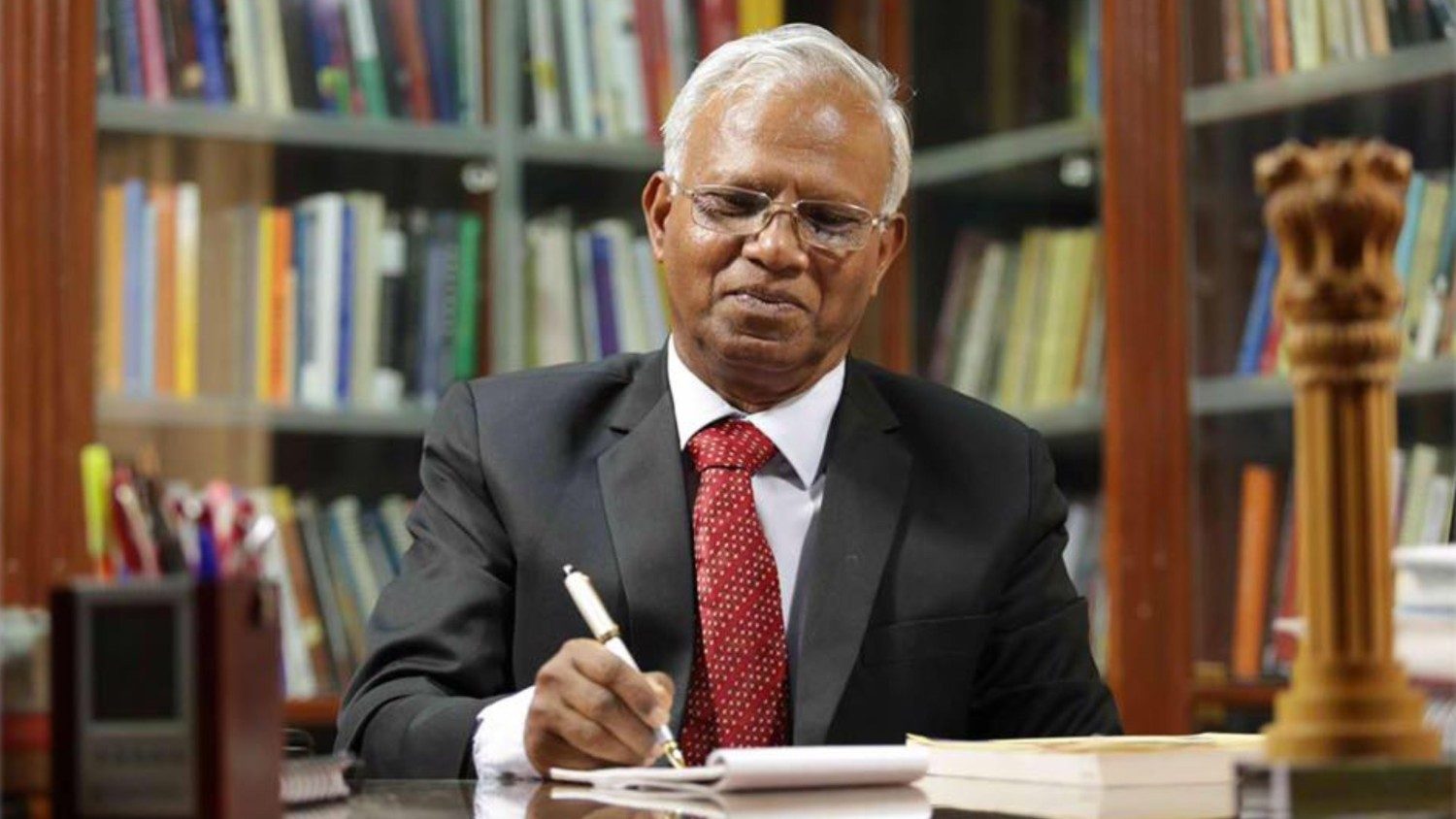
Felix Wilfred was born in 1948 as the second child to B Arogyam, a headmaster in a local school, and Mary Josephine, devout Catholic parents who lived in a rural village called Puthenkadai in the Kanyakumari District of Tamil Nadu, South India. Finishing his schooling by 16, Felix was on board to Rome in 1965 to undertake his philosophical and theological studies to be trained as a Catholic priest.
He completed his philosophical and theological studies at the Pontifical Urban University Rome, studied Italian literature at the University of Perugia, Italy, and studied French philosophy and literature at the University of Caen, France. Even as a student, he won three gold medals for academic excellence. Utilising the opportunities to the maximum, Felix mastered the philosophical and theological systems taught in the University classrooms. He learnt classical Latin, Greek, and European languages such as Italian, Spanish, French, and German.
His formative years were situated within the immediate post-Second Vatican Council era. He said: "When I reached Rome in 1965, I witnessed, along with a large crowd of people, the closing function of Vatican II at St. Peter's Basilica. At that age, I did not understand anything. I only liked to see such a colourful crowd...only gradually I learned of the significance of that event and the teachings of Vatican II." It was marvellously fitting that he was invited by Pope Francis to attend as a theological expert the Synod on Synodality 2024!
After finishing his studies abroad, Felix returned to take up an assignment as a theological educator at St. Paul's Major Seminary, Tamil Nadu, in 1977. Recapturing this moment of returning home, Felix said it was a new beginning of a process of theological education for him in the school of Indian realities. His presence in the Seminary, along with some of his notable colleagues of the time, significantly changed the character of theological education being imparted. Theologising with a new outlook of incorporating secular concerns and experiences into the sacred subjects began to unfold not only within the institution but also outside of it. Theological publications that came out of the Seminary began to carry this new vision and set a new theological horizon in the vicinity.
Felix blossomed as a theologian by publishing his reflections from the early days of his teaching career. One of the early publications in Tamil, Talirkum Pizhambukal, dwelt upon themes of the Second Vatican Council as the 'signs of the times,' 'importance of laity,' and so on. His emergence as a theologian was recognised notably when he was chosen to be the president of the Indian Theological Association in 1983 at 35.
Gradually, his calibre began to be noticed internationally when he was chosen to be a member of the International Theology Commission of the Vatican from 1986 to 1991. His presence as a theologian on Asian soil began to be known widely when he served (1987-1997) as a member and executive secretary of the Theology Commission advising the Federation of Asian Bishops' Conference (FABC) and a consulter to the Doctrinal Commission of the Catholic Bishops' Conference of India (CBCI). He also served as a member of the Catholic Centre for UNESCO.
In 1993, Felix was chosen to be a professor at the Department of Christian Studies, University of Madras. Taking up the post, Felix began to disseminate his theological reflections from a new locus that gave him a God-given opportunity to interface the secular and the sacred. He presented papers at hundreds of international conferences in almost all the major countries, published hundreds of articles, edited journals and volumes, and continued to publish books. His contribution as one of the editors (series editor on the theme: Human Problem) of the theological journal Jeevadhara helped, and continues to help bring out the multiple features of his contextual theologising, the unique dimension of which lies in theologising on the most contemporary concerns of humanity.
In 2000, Felix became the Head of the Department of Christian Studies at the University of Madras. The department began to vivify academically. Academic programmes increased: Masters and Bachelors Degrees in Christian Studies through the Institute of Distance Education came up, and post-graduate diploma courses on 'Ethics and Human Resource Management' and 'Ethics and Biotechnology' were introduced due to his able negotiating capacity. Several research students began to enrol in the department, and he guided more than twenty-five students in completing their doctoral studies.
Besides the courses, regular conferences and seminars on themes that touch upon social transformation became the order of the day. The department came to be noticed and appreciated at the University level. Felix was also appointed chairman of the School of Philosophy and Religious Thought at the University and president of the Faculty of Arts, besides serving as a member of several other University-related Boards and Councils. He was a member of the Statutory Ethical Committees of the famous IIT, Chennai and of Anna University, Chennai.
Felix has been a member of the internationally reputed journal Concilium for several years. In 2007, he was elected president of the Board of Editors of Concilium. An international Catholic journal that functioned on European soil for many years shifted its office to Chennai, India. It is a feather on Felix's cap that he gained the international theological community's confidence to be elected president. In 2004, Felix founded the Asian Centre for Cross-cultural Studies, which functions in Chennai, India. In 2018, he founded the International Journal of Asian Christianity, which, published by BRILL, has gone on to be indexed in the internationally acclaimed Scopus list of academic journals.
Relentless Seeker of Transformative Knowledge
Felix's is a life totally and integrally dedicated to a search for transformative knowledge, which is the core of his life mission of theologising through study and research. This dedication was initiated right from his formative years and continued until his unexpected demise. When asked 'what was the motivating factor behind this dedication to seek knowledge', Felix once said:
"Truth itself is its own reward. There may be those despising our endeavours; they may call you impractical. That's what it looks like, but if you stop thinking, that becomes the end. A life of study and research is uneventful and monotonous; and everyday looks the same. You need discipline and concentration. Everyday, you must have the eagerness to learn. Knowledge makes you free..."
Felix relentlessly sought knowledge, in the process of which he attempted to redraw its boundaries, make new knowledge, and look for its transformative dimensions. Though growing up in an intellectual ambience of a traditional approach to knowledge (the Thomistic philosophical and theological systems), Felix, as a prophetic intellectual, manifested a dynamic understanding of knowledge, which crosses borders irresistibly to be anchored on reality.
A Multi-Dimensional Contextual Theologian
Felix was one of the very few outstanding theologians to emerge in Indian Christianity, nay, in Asian Christianity during its post-colonial era. As a proponent of contextual theology, Felix theologised in a unique manner, reflecting upon contemporary realities and taking insights from other disciplines, especially social sciences and humanities, to interpret the realities. By so doing, he emerged as a multi-dimensional contextual theologian, in the sense that he theologised not on one but on such multiple contextual issues as Dalit empowerment, human rights, Indian secularism, nationalism, identity question, Indian feminist question, Indian minority issue, globalisation, reality of folk/popular/subaltern religions and their role for emancipation, civil society, information society, plurality of religions, inter-religious dialogue, question of relativism, ecology, and so on. He also reflected upon mainstream theological themes like Christology, ecclesiology, spirituality, inculturation, ecumenism, and so on, from Asian and Indian locations. By so doing, he has given depth and width to the process of contextual theologising, both in terms of method and content.
Some Anecdotes from the Life of Felix
The international academic fraternity is aware of Felix's intellectual calibre; it may also do well to glimpse into some of his everyday life ex
One day, he was sharing his experience of mountaineering in the Alps. He likes it very much, he said. He went on narrating about it with so much involvement and passion. What he enjoyed most, as it appeared to me, was how he encountered one peak after the other as continuous opportunities to climb… When one was over, yet another came, and he delighted in climbing them one after the other… In his life, too, he said, it was one of climbing one peak after another… and there was no rest. A person with whom you can explore further and further. Life is not a close-ended question with him but an open-ended journey; you keep exploring with him.
Once, when we – he and his study circle students - were travelling back from a venue, which was a nine-hour journey away (It was a very fruitful exercise he introduced among the research students to meet once every three months and present before the group whatever one has studied). The bus was overcrowded, and no seat was vacant. Not bothering about any seat, he squeezed into the crowd, kept his bag in the middle of the bay, and sat over it…! A man who can fly high (his air travel crosses millions of kilometres!) but does not get into the rigidity of mind as regards convenience, comfort, and positions!
One day, when we were assessing the performance of a particular student, he quite spontaneously said, "This person cannot become tensed; without tension, what creativity?" It was then I understood what tension meant for him. It is a manner of experiencing tension without getting upset. Needless to say, it is a creative tension. In the final analysis, what counts is not how much tension you underwent but what fruit is born out of it. Fr Felix's achievements demonstrate what he has produced out of his creative tension. This tension can be a theological ability in that it helps us experience God, who comes with unsettling questions. In his words: "She (God) comes in the form of many unsettling questions."
Dear Fr. Felix, you will always remain a creative inspiration to us. We thank God for you.
.jpg)
.png) Cedric Prakash
Cedric Prakash
.jpg) Elsa Lycias Joel
Elsa Lycias Joel
.jpg)
 A. J. Philip
.png) Jacob Peenikaparambil
Jacob Peenikaparambil
.jpg)
.png) John Dayal
John Dayal
.jpg)
.jpg)
.png) Joseph Maliakan
Joseph Maliakan
.png)
.png) Robert Clements
Robert Clements
.jpg) Cedric Prakash
Cedric Prakash
 ICPA
ICPA