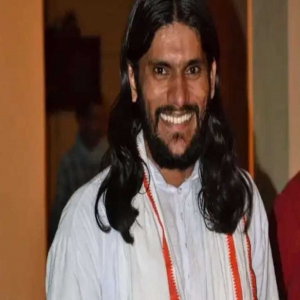


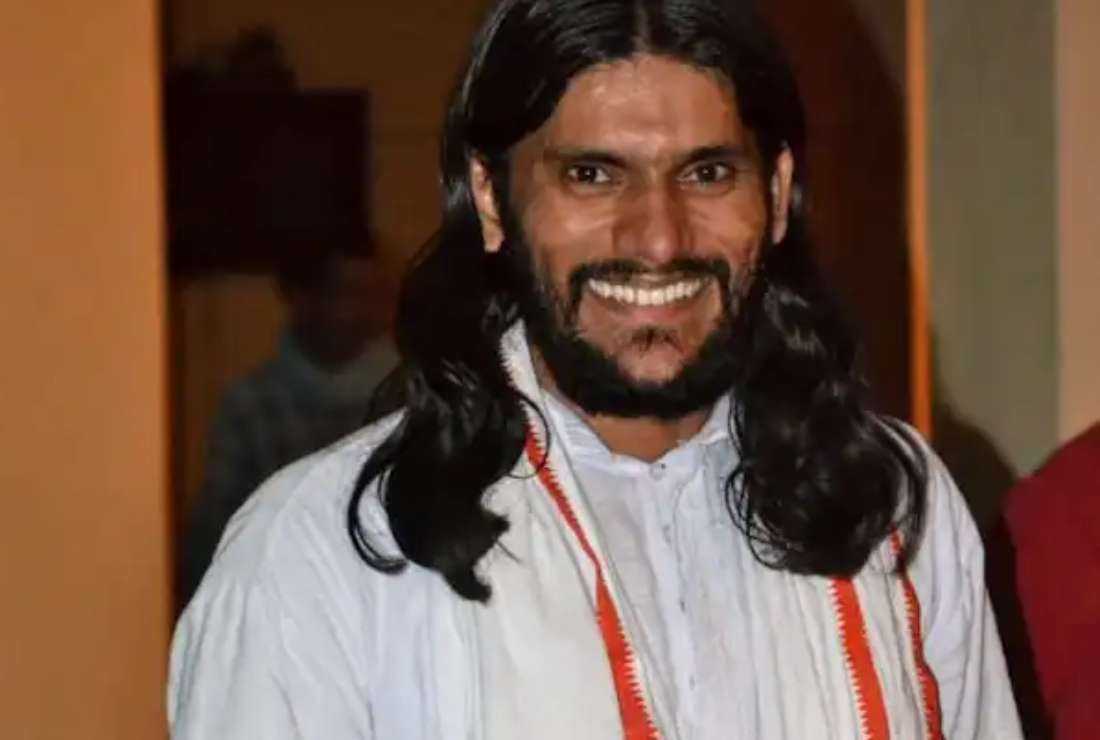
The Allahabad High Court's recent ruling in the case involving Rev. Father Vineet Vincent Pereira has sparked significant debate. The court refused to quash proceedings under Section 295A of the Indian Penal Code (deliberate and malicious acts, intended to outrage religious feelings of any class by insulting its religion or religious beliefs), observing that "it is wrong for any religion to claim that it is the only true religion as it implies a disparagement of other faiths."
During the investigation, though the investigation officer (IO) concluded that no illegal religious conversion had taken place, the police proceeded with the chargesheet regarding the allegations of criticising other religions. Father Vincent's counsel argued that he was falsely implicated and that, as per the FIR, no offence under section 295A of the IPC was made out. It was argued that the magistrate took cognisance of the chargesheet without applying a judicial mind.
The state, on the other hand, argued that the applicant's contentions involved disputed questions of fact and required an appreciation of evidence. The judgment frames such assertions as potentially wounding religious feelings in India's secular fabric. While the ruling addresses a specific complaint against a Christian priest's public statements, it invites a broader scrutiny: Does this principle apply uniformly across all faiths?
A close examination of Hinduism—particularly the devotional traditions centred on Rama and Krishna—reveals robust theological assertions of the supremacy of these deities and of the Vedas as the singular, eternal repository of truth leading to salvation (swarga or moksha). Far from being fringe views, these claims form the bedrock of major sampradayas (traditions) and are echoed in canonical texts, saintly literature, and contemporary practice.
Hinduism is not a monolithic faith but a pseudo-family of traditions (sanatana dharma) spanning orthodoxy, bhakti (devotion), and reform movements. Yet within this diversity, Vaishnavism—the worship of Vishnu and his avatars, preeminently Rama and Krishna—explicitly positions its chosen deity as Svayam Bhagavan (the Supreme Personality of Godhead) and subordinates other paths.
This is not mere preference but a doctrinal assertion rooted in revelation. Followers do not shy away from declaring their faith supreme; they frame it as compassionate guidance for all humanity.
The Vedas, classified as shruti ("that which is heard," eternal and authorless/apaurusheya), are upheld as the ultimate pramana (valid means of knowledge), with all subsequent scriptures (smriti, itihasa, puranas) deriving authority from them.
Orthodox schools like Mimamsa and Vedanta insist that proper adherence to Vedic injunctions—rituals for heaven, knowledge for liberation—is the sole guaranteed path, rendering non-Vedic routes incomplete or illusory.
Consider first the followers of Krishna, whose tradition exploded through texts like the Bhagavad Gita and the Srimad Bhagavatam. In the Gita (Chapter 7, Verse 7), Krishna declares unequivocally: "O Arjuna, there is no truth superior to me. Everything rests upon me, as pearls are strung on a thread."
This is not poetic flourish; it establishes ontological supremacy. Chapter 9, Verse 27 reinforces exclusive devotion: "Whatever you do, whatever you eat, whatever you offer or give away, and whatever austerities you perform—do that as an offering to me." The climax arrives in 18.66: "Abandon all varieties of dharma and just surrender unto me. I shall deliver you from all sinful reactions. Do not fear."
Krishna here presents himself as the singular refuge, transcending even Vedic rituals. The Srimad Bhagavatam (1.3.28) goes further, calling Krishna "svayam bhagavan"—the original source of all avatars, including Vishnu himself.
Gaudiya Vaishnavism, popularised globally by ISKCON (International Society for Krishna Consciousness), builds on this: Acharya AC Bhaktivedanta Swami Prabhupada's commentaries repeatedly assert that Krishna is the supreme lord, the Vedas' ultimate purport, and bhakti to him the only foolproof path to Goloka (eternal abode), surpassing jnana (knowledge) or karma (ritual action).
Devotees chant the Hare Krishna maha-mantra as the yuga-dharma (age-appropriate path), often describing other faiths as valid but preliminary stages leading ultimately to Krishna consciousness. Public kirtans, festivals like Janmashtami, and literature routinely proclaim: "Krishna is the only way to transcend material existence." This is not disparagement in intent but an evangelical zeal mirroring the very exclusivity the court critiqued.
The Rama bhakti tradition mirrors this intensity. Tulsidas's Ramcharitmanas, the most beloved text for millions of North Indian devotees, elevates Rama as Para Brahman—the formless absolute manifest in human form. In the Ayodhya Kanda and throughout, Rama is described as the "Maryada Purushottam" (ideal upholder of dharma) and also as the source of all creation.
Tulsidas writes verses equating Rama with the essence of the Vedas: "Rama is the Vedas personified; devotion to him alone grants liberation." The text repeatedly warns that without Rama-nama (the name of Rama), even Vedic study yields no fruit, whereas sincere bhakti bypasses the complexities of ritual.
Ramanandi sampradaya saints and modern movements like those behind the Ram Mandir in Ayodhya amplify this: Rama is not one among equals but the supreme protector whose leela (divine play) in the Ramayana offers the definitive blueprint for dharma, victory over adharma, and moksha. Hanuman Chalisa recitations and Ram Navami processions often include chants framing Rama as "sarva-vyapi" (all-pervading) and as the sole bestower of the heavenly realms, Vaikuntha.
Followers in rural and urban India—especially in the Ram bhakti heartlands of Uttar Pradesh and Bihar—publicly assert that "Rama is the only true path," viewing other deities as his servants or partial manifestations. This claim is embedded in daily aarti, bhajans, and temple discourses, where the Vedas are invoked as Rama's own revelation.
Central to both traditions is the supremacy of the Vedas themselves as the exclusive textual gateway to heaven and beyond. The Rig Veda (10.90, Purusha Sukta) and others position Vedic yajna (sacrifice) as the cosmic order sustaining swarga (heavenly worlds).
Later texts, such as the Manusmriti (2.6-2.11), declare the Vedas the "supreme authority," warning that those who reject Vedic dharma fall into lower births or naraka (hell). Upanishadic jnana-kanda (philosophical sections) promise moksha only through realisation of the Vedic Brahman. Even bhakti integrates this: Krishna in the Gita affirms Vedic origins (15.15: "I am seated in the hearts of all, and from me come remembrance, knowledge, and forgetfulness"), while Puranas like the Bhagavata are sometimes called the "fifth Veda."
Traditional acharyas (such as Adi Shankara in his Brahma Sutra Bhashya) insist that non-Vedic paths lack pramanic validity. Contemporary gurus and organisations like Arya Samaj or VHP echo this: the Vedas alone reveal the eternal law; other scriptures may contain partial truths but lack the unerring authority for ultimate salvation.
There are nuances. preventing Hinduism's famous pluralism—"ekam sat vipra bahudha vadanti" (Rig Veda 1.164.46: "Truth is one, the wise call it by many names")—allows for inclusivism: other faiths are valid rungs on the ladder, but the Vedic-bhakti path is the fastest or highest.
Madhvacharya's Dvaita Vedanta and Ramanujacharya's Vishishtadvaita assert Vishnu's philosophical supremacy without denying the existence of other gods (henotheism). Devotional claims often arise from ecstatic love rather than malice—think Mirabai's Krishna-only fervour or Surdas's poetic surrender. Yet when preached publicly, especially amid conversions or political mobilisation, they can mirror the "disparagement" the court flagged.
Historically, medieval Vaishnava saints critiqued Shaiva or Shakta paths as inferior, or colonial-era Arya Samaj campaigns against "non-Vedic" practices.
Legally, India's Constitution (Article 25) guarantees freedom to "profess, practise and propagate" religion, subject to public order, morality, and health. Section 295A targets "deliberate and malicious" acts, not sincere belief.
The HC ruling risks selective enforcement: if a priest's claim triggers FIRs, why not kirtans declaring "Krishna is the only saviour" or Ramcharitmanas recitals labelling other paths illusory?
Christianity's John 14:6 ("I am the way, the truth, and the life") or Islamic finality of prophethood face similar scrutiny globally, yet thrive in plural societies through context.
In India's diverse democracy, prosecuting theological supremacy risks chilling free speech, especially when majoritarian ex
True secularism demands consistency: either all faiths' core assertions are protected as heartfelt convictions, or none are—targeting only incitement, not doctrine.
Hinduism's Rama and Krishna traditions, anchored in Vedic supremacy, unabashedly proclaim their faith and scriptures as the paramount path to heavenly bliss and liberation. These are not historical relics but living realities shaping millions of lives, from Ayodhya processions to ISKCON centres around the world.
The Allahabad HC's principle, while purportedly aimed at harmony, must grapple with this reality. Suppressing such claims risks sanitising religion into bland relativism, ignoring the passionate particularity that defines faith across traditions.
A wiser jurisprudence would distinguish devotional zeal from hatred, allowing India's spiritual marketplace to flourish under Article 25, where every tradition may proclaim its truth without fear, so long as it respects others' right to do the same. Only then does secularism honour the depth, not dilute the soul, of India's faiths.
.jpg)
.png) Cedric Prakash
Cedric Prakash
 ICPA
ICPA
 ICPA
ICPA
 ICPA
ICPA
 ICPA
ICPA
 ICPA
ICPA
 ICPA
ICPA
.jpg)
 A. J. Philip
.jpg)
.png) Jacob Peenikaparambil
Jacob Peenikaparambil
.jpg)
.png) John Dayal
John Dayal