

.png) Jacob Peenikaparambil
Jacob Peenikaparambil
Many people assume that the delivery of justice is solely the responsibility of the judiciary. In reality, the executive plays an equally critical role in the justice delivery system. The judiciary's primary functions include interpreting and applying the law, safeguarding fundamental rights, and acting as the guardian of the Constitution. It adjudicates disputes, delivers judgments, ensures fairness, and holds the executive accountable through judicial review.
At the same time, the executive—comprising the police, public prosecutors, executive magistrates, and other law enforcement agencies—is indispensable to the day-to-day functioning of the justice system. It assists the courts, enforces judgments, and maintains law and order. Criminal cases are typically initiated by the police, who also prepare the First Information Report (FIR), a foundational document in criminal proceedings. Additionally, the government is responsible for building and maintaining judicial infrastructure under schemes such as the Centrally Sponsored Scheme for Judicial Infrastructure.
The executive also plays a role in judicial appointments. The President of India formally appoints judges to the High Courts and the Supreme Court, while the government is responsible for addressing vacancies in subordinate courts. Furthermore, initiatives such as the eCourts Mission Mode Project—aimed at computerisation and virtual hearings—depend on close coordination between the executive and the judiciary. The executive also establishes special and fast-track courts to deal with specific categories of cases more efficiently.
Despite these shared responsibilities, the alarming backlog of cases in India highlights systemic failures in governance. As of March 2026, more than 55.8 million cases remain pending across all levels of the judiciary—from district courts to the Supreme Court. The scale of this backlog suggests that the government bears at least an equal, if not greater, share of responsibility.
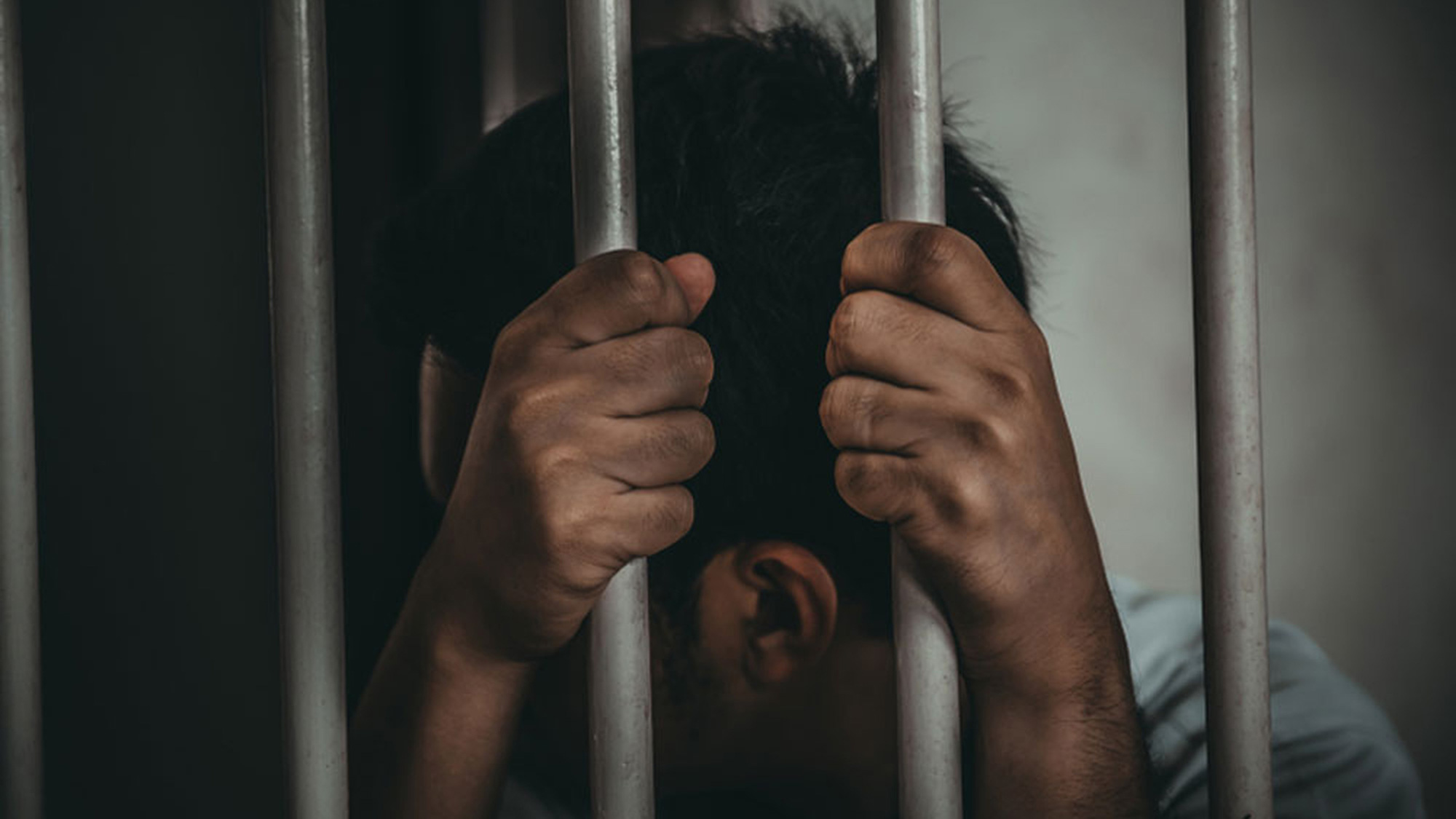
One of the most serious consequences of judicial delay is prison overcrowding. Approximately 77% of India's prison population consists of undertrials—individuals awaiting trial or investigation. This proportion is significantly higher than in most democracies. While the prison population has increased by nearly 48% over the past decade, prison capacity has grown by only about 27%, reflecting inadequate state planning and investment.
Equally troubling is the social composition of undertrial prisoners. According to the Prison Statistics India 2023 report published by the National Crime Records Bureau (NCRB), Scheduled Castes, Scheduled Tribes, and Muslims together account for about 51% of undertrials, far exceeding their combined share of approximately 39.4% in the general population (Census 2011). This disparity raises serious concerns about equity and access to justice.
Regrettably, the issue of judicial pendency and prolonged detention has not received sustained political attention. Recently, Supreme Court judges Justice BV Nagarathna and Justice Ujjal Bhuyan publicly highlighted the government's role in delaying justice. Speaking at a national conference organised by the Supreme Court Bar Association, they drew attention to interconnected concerns: massive case pendency, indiscriminate registration of FIRs, overuse of stringent laws such as the Prevention of Money Laundering Act (PMLA) and the Unlawful Activities (Prevention) Act (UAPA), prolonged pre-trial detention, and the growing tendency to criminalise dissent.
Both judges emphasised that the government is the country's largest litigant. Justice Bhuyan pointed to the "reckless registration" of cases—even in trivial matters such as student protests, public demonstrations, and social media activity—which consumes valuable judicial time.
Justice Nagarathna observed a troubling paradox: while the government expresses concern about judicial backlog, it simultaneously contributes to it through excessive litigation. In her words, the state becomes "both the complainant and the cause." According to her, "the government is not only a mere participant in litigation, it is also the largest single generator of litigation.
She also highlighted bureaucratic risk aversion as a contributing factor. Government departments often prefer to file appeals rather than accept adverse lower court decisions, thereby prolonging litigation. Additionally, she linked delays to insufficient and inconsistent investment in judicial infrastructure.
Critics, including opposition parties and human rights advocates, have long alleged misuse of stringent laws. Justice Bhuyan used the more measured term "overuse" and supported his argument with data presented in Parliament. Between 2019 and 2023, over 10,500 arrests were made under the UAPA, but only 335 resulted in convictions—a conviction rate of just over 3%.
By presenting statistics on conviction rates from 2019 to 2023, as presented in the Lok Sabha by the Ministry of Home Affairs, Justice Bhuyan proved that the draconian UAPA is being overused.
[[[[[ CHART HERE ]]]]]]]]]]]]]]
This data suggests that a vast majority of those arrested were not ultimately found guilty, raising serious concerns about premature arrests and insufficient evidence. Such practices not only inflate case backlogs but also undermine personal liberty. As Justice Bhuyan rightly remarked, this cannot be the model for a "Viksit Bharat."
In many cases, the process itself becomes the punishment. Long periods of pre-trial detention effectively penalise individuals without conviction. This lends credibility to the charge that laws are sometimes used to harass dissenters. Cases such as those of activists detained for extended periods without trial have intensified this debate and raised fundamental questions about the balance between state power and individual freedom.
For example, Sonam Wangchuk was in Jodhpur Central Jail for approximately 170 days in detention under the National Security Act (NSA). He was detained following protests regarding Ladakh's statehood and environmental security. His release came shortly before the Supreme Court was to hear his case. Hence, the critics of the government ask: was his detention a measure to harass him and instil fear in others, so that no one would protest against the government's policies?
Another famous case in which bail was denied even after detention for five years is that of Umar Khalid and Sharjeel Imam, who were arrested after the 2020 Delhi riots. The court, in its judgment on January 5, 2026, said that the petitioners could apply for bail again only after one year.
Many legal experts commented that the judgment was a denial of justice. In October 2022, a former Supreme Court judge, three retired high court judges and a former federal home secretary wrote in a report on the riots that they found no substantiating evidence to warrant the imposition of terrorism charges against the activists.
The principle that "bail is the rule and jail is the exception" is supposedly a cornerstone of Indian criminal jurisprudence, rooted in the right to personal liberty under Article 21 of the Constitution. Even under stringent laws like the UAPA and PMLA, this principle is meant to prevail. Yet, in practice, bail is often denied for prolonged periods. Justice Bhuyan criticised what he described as a "more loyal than the king" approach among some judges, who err on the side of excessive caution rather than constitutional liberty.
In this context, his call for greater tolerance of dissent is particularly significant. A vibrant democracy must create space for disagreement, debate, and criticism. Criminalising dissent not only weakens democratic institutions but also erodes public trust in the justice system.
As Justice Nagarathna emphasised, there is an urgent need for comprehensive reform of the criminal justice system, encompassing the police, prosecution, judiciary, and correctional services. This system, governed by procedural laws, must function cohesively to ensure timely justice. Both the executive and the judiciary must work in tandem to address structural inefficiencies so that justice is not only done, but done without delay.
.jpg)
.png) Cedric Prakash
Cedric Prakash
 ICPA
ICPA
 ICPA
ICPA
 ICPA
ICPA
 ICPA
ICPA
 ICPA
ICPA
 ICPA
ICPA
.jpg)
 A. J. Philip
.jpg) Jacob Peenikaparambil
Jacob Peenikaparambil
.jpg)
.png) John Dayal
John Dayal