

 Jacob Peenikaparambil

Plenty are the signs to vindicate that Indian nationalism is becoming insensitive and inhuman. The arrest of a young climate activist Disha Ravi from Bangalore by Delhi police on 13th February, just for forwarding a "toolkit" shared by climate campaigner Greta Thunberg in support of the farmer protests, is nothing but cruel. She is accused of conspiracy and sedition. "I did not make Toolkit. We wanted to support the farmers. I edited two lines on February 3," Disha Ravi told the court and the court sent her to police custody for further questioning.
The Indian Express editorial on 16th February under the title, ‘Toolkit Justice’ has described the act of Delhi police as “weaponizing what is a typical advocacy document”. Former Supreme Court judge Justice Deepak Gupta commented in a channel debate that the ‘toolkit’- which led to the arrest of Disha- said nothing about violence or incitement and that it was a document calling for peaceful protest against farm laws. “To term the toolkit seditious was a wrong understanding of law,” he added.
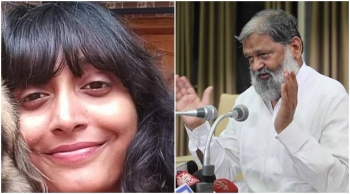
Response of some BJP functionaries to the arrest of Disha is really atrocious. "If seeds of anti nationalism have been sown in somebody's thought process, he/she should be destroyed from roots... whether she is Disha Ravi or anyone else" tweeted Haryana Home Minister Anil Vij.
Three-time BJP MP PC Mohan drew a parallel between climate activist Disha Ravi and terrorists Ajmal Kasab and Burhan Wani. “Burhan Wani was a 21-year-old. Ajmal Kasab was a 21-year-old. Age is just a number! Law will take its own course. A Crime is a crime,” his tweet read. Comparing a climate activist to a terrorist proves how a particular ideology has polluted and perverted the minds of people. Because of this perverted mindset “activists are in jail and accused terrorists are on bail”, as Shashi Tharoor has said.
The inhuman nature of the state is reflected in the way human rights defenders are accused of sedition and anti-national activities and put behind the bars, and one among them is Rona Wilson. According to a report by the Washington Post, Arsenal Consulting, a US digital forensics firm, which analyzed an electronic copy of Wilson’s laptop, concluded that an attacker used malware to infiltrate the laptop and planted documents on it. According to its findings, Wilson received emails that appeared to be from a fellow activist, urging him to click on a link to download an innocuous statement from a civil liberties group. But this link actually deployed NetWire, a malicious software that allowed a hacker to access Wilson’s computer. The whole case against Wilson is based on this planted document. Humanity does not allow making use of this kind of manipulation.
The way the government first responded to migrant workers’ crisis shows nothing but insensitivity. In the absence of work and livelihood and means of transport due to strict nationwide lockdown, when lakhs of migrant labourers walked hundreds of kilometres without food and water the government did not respond at all at the outset. When sensitive and concerned citizens approached the Supreme Court to direct the government to provide free transport and food to the migrant workers who wanted to return to their homes, the Supreme Court was first reluctant to intervene. The response of the top Court appeared to be highly insensitive. When the issue of 16 migrants being run over by a goods train while they were sleeping on the railway tracks, on May 8, was raised, the bench said, “How can anybody stop this when they sleep on railway tracks?”. Finally when the SC took up the issue suo moto and directed the government to provide free transport and food to the migrant labourers, the government acted half hazard way.
It seems that the attitude of the rulers has filtered down to the bureaucracy and the lower level government functionaries. A shocking incident took place in Indore, the cleanest city of India, on Friday, 29th January. The municipal workers of Indore city were caught on camera dumping homeless people on the roadside outside the city limits on that day. Videos of this incident, most probably shot by the locals, were widely shared online. It was reported in the media that because of the protest from the villagers, the workers were forced to bring back the hapless people.
The video of the inhuman act of the municipal workers shocked the citizens of Indore. Some of them started asking whether it was part of the efforts to keep the city clean. In order to satisfy people the Chief Minister Shivraj Singh Chouhan suspended an Indore Municipal Corporation (IMC) official, and two contractual workers in charge of a night shelter were sacked. The question many people are asking, “Will the contract workers take a decision to dump homeless people outside the city without any direction from the top? The fact that no serious enquiry was made about this incident shows that the authorities are not serious about finding out the real culprits.
Why do human beings become disposable? There could be various reasons for growth of inhumanity in the administration and in a large section of Indian population. Some people have no prick of conscience to kill human beings for the sake of an animal or a statue or a building. Hurting religious sentiments has become an easy excuse to indulge in any kind of violence against human beings.
An ideology that brands particular groups of people as enemies of the nation, and encourages others to make use of violence to alienate, isolate and discriminate against them has been instilled in the minds of many people. The same ideology has infiltrated into the administrative system through the brainwashing of the bureaucracy. As a result, the system has become inhuman and a large section of population is ready to justify the inhuman actions of the administration. This is a very dangerous situation.
Along with this ideological brainwashing the Indian society is witnessing a shift from spirituality to religiosity and a resurgence of religious fervour. Religiosity consists of rituals, prayers, devotions, pilgrimages etc. Religiosity is often self centred, divisive and exclusive. On the other hand, spirituality focuses on the practice of values like love, compassion, empathy and respect for human beings and nature. Spirituality helps a person to see God’s presence in the flora and fauna, animals and above all human beings. Spirituality makes a person humane. Excessive religiosity that makes people selfish and insensitive to other creatures, especially human beings, is one of the reasons for the inhuman incidents that happen in the society.
With globalization and economic liberalization people are becoming aspirational, an intense desire to amass wealth and enjoy pleasures. Insatiable greed is the result of this aspirational culture and it has given birth to consumerism. Anything or anyone who is seen as an obstacle to enjoyment is thrown out. That is why some people dump their parents in old age homes. People living the slums are seen as a burden, forgetting the fact that they provide various critical services to the well - to - do people.
According to a study made by Housing and Land Rights Network (India’s Smart Cities Mission: Smart for whom? Cities for whom), none of the Smart City proposals speaks about specific measures to address the housing needs of street children, homeless people, migrants, persons with disabilities and marginalized women. Naturally these people can become disposable. They could be dumped in some places outside the city for making the city smart and beautiful.
Another reason for growing insensitivity could be the inclination to see the country primarily as an economy and not as people, and the tendency to assess progress in terms of GDP (Gross Domestic Product). Development of the country is often perceived in terms of wide roads, modern airports, five star and seven star hotels, swimming pools, huge industries, smart cities etc. and not the development of human beings. The benefits of economic growth need not filter to the lower level and thus increase the gap between the rich and the poor.
The OXFAM report 2021 has brought to light the increasing inequality in India during the period of lockdown. According to the report the wealth of the 100 billionaires in India increased by 35% during the lockdown and by 90% since 2009 ranking India sixth in the world after USA, China, Germany, Russia and France. “Income increases for India's top 100 billionaires since March 2020 was enough to give each of the 138 million poorest people a cheque for Rs. 94,045”, the report said. In stark contrast, 170,000 people lost their jobs every hour in the month of April 2020”, the report points out.
The constitution of India envisages India as a welfare state. But year by year the government is withdrawing from various sectors of the economy, leaving development to the play of market forces. Public resources are handed over to the private corporations under the guise of speedy economic growth. The allocation for education and health, two vital sectors that contribute to human development, is being reduced. Economic policies, focusing mainly on growth without sufficient focus on human development, is responsible for seeing the poor, the aged and the disabled as a liability.
Incidents like filing sedition cases against activists for expressing solidarity with the striking farmers, jailing human rights defenders accusing them as anti-national, dumping homeless people outside the city etc. tarnish the image of India at the international level. The government has to listen to what the Indian Express editorial wrote on 16th February. “Surely India’s democracy cannot be so thin-skinned about international interface, so paranoid, ’70s-style, about the “foreign hand”. In an open democracy, the power of a government lies not in creating an obedient and pliant citizenry by criminalising the protester, but in extending and enlivening the public sphere”.
People of India have to make their elected representatives accountable to them, follow the constitution and safeguard the fundamental rights guaranteed by the constitution. Asking questions to the government is a right of the citizens and any attempt to stifle freedom of ex
.jpg)
 Cedric Prakash
.jpg)
 A. J. Philip
.jpg) Jacob Peenikaparambil

 Dr Suresh Mathew
.jpg)
 John Dayal
.jpg)
.jpg)
.png)
 Robert Clements
.jpg)
 P. A. Chacko