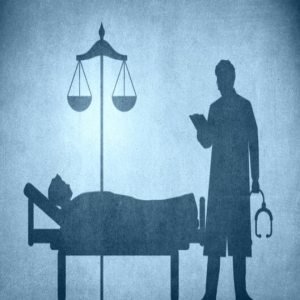


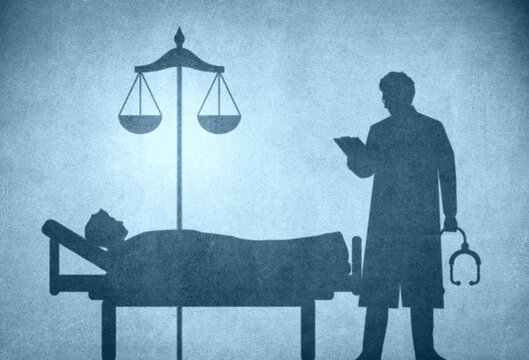
The judgment delivered by the Supreme Court on March 12, 2026, in the Harish Rana case (Harish Rana v. Union of India) once again strongly reaffirms the Court's position that the right to die with dignity is included within the scope of Article 21 of the Constitution of India, which guarantees the right to live with dignity. Although the Court had earlier issued guidelines regarding passive euthanasia, this ruling may be regarded as one of the first major decisions in which those guidelines have been practically applied.
The English term euthanasia is commonly translated into Malayalam as day?vadham ("mercy killing"). The word derives from the Greek eu (good) and thanatos (death). However, in discussions concerning the final stage of human life, important legal and ethical distinctions must be maintained. In particular, a crucial distinction exists between active euthanasia, which directly causes death, and passive euthanasia, which involves the withdrawal or withholding of treatment. Under Indian law, only the latter is permitted.
Background of the Case
In 2013, Harish Rana sustained a severe brain injury after falling from the fourth floor of a hostel building. For the past thirteen years, he remained in a vegetative state, unable to communicate or respond to his surroundings. Medical support was required for both breathing and nutrition. His life was sustained through clinically assisted nutrition (CAN) administered via a tube inserted into his stomach. In these circumstances, his father approached the Court seeking permission to withdraw treatment, arguing that there had been no improvement in his son's condition.
Questions Before the Court
The Supreme Court had to address several important legal questions.
First, the Court considered whether clinically assisted nutrition (CAN) should be regarded as ordinary care or whether its withdrawal could be legally permitted. Nutrition was delivered via a percutaneous endoscopic gastrostomy (PEG) tube, surgically inserted into the stomach. The Court therefore examined whether this procedure should be considered ordinary care or a form of medical treatment.
Second, the Court examined what constituted the "best interests of the patient" in circumstances where the patient was unable to express his own wishes. In other words, it had to determine whether continuing treatment genuinely benefited the patient or merely prolonged his biological existence.
Third, the Court considered the practical implementation of the guidelines laid down in the 2018 judgment in Common Cause v. Union of India (AIR 2018 SC 1665), particularly whether the withdrawal of treatment in such cases required specific judicial approval.
The Court's Decision
In 2024, Rana's father filed a petition before the Delhi High Court seeking permission for passive euthanasia based on the Supreme Court's 2018 ruling. The petition was rejected. In August 2024, the Supreme Court also maintained a similar position, while directing the central and state governments to provide financial assistance for treatment.
In 2025, however, when Rana's condition deteriorated further, his father once again approached the Court. The Court then directed expert medical boards to assess the effectiveness of the ongoing treatment. The medical panels concluded that recovery was no longer realistically possible and that continuing treatment did not improve the patient's quality of life but merely prolonged his biological existence.
Based on these findings, the Court concluded that continuing treatment would not serve the patient's best interests and therefore permitted its withdrawal. The Court further observed that clinically assisted nutrition delivered through a tube cannot simply be regarded as ordinary feeding. Rather, it involves surgical procedures, medical supervision, and specialised equipment. When such treatment no longer benefits the patient, its withdrawal may therefore be legally permissible.
Practical Application of the 2018 Judgment
In the 2011 Aruna Shanbaug case (AIR SCW 1625, 2011), the Supreme Court permitted passive euthanasia under strict conditions. Later, in Common Cause v. Union of India (2018), a Constitution Bench further clarified the legal position.
In that judgment, passive euthanasia through the withdrawal of treatment was linked to the constitutional protection of human dignity under Article 21. At the same time, the Court reaffirmed that active euthanasia, which directly causes death, remains illegal in India. The present judgment is significant as a practical application of the principles established in the 2018 decision.
Human Dignity and the Judgment
The Court approached the issue not merely as a medical matter but also as a question of human dignity. Where recovery is impossible, prolonging mere biological existence through compulsory medical intervention does not necessarily correspond to the dignity of the human person. In such circumstances, withdrawing treatment is not to be understood as abandoning life but rather as allowing the inevitable process of dying to occur with dignity.
Ethical Questions in Contemporary Healthcare
Medical science and healthcare have made remarkable advances in recent decades. At the same time, corporate hospitals and expensive medical technologies sometimes raise ethical concerns. Moral theology traditionally distinguishes between ordinary and extraordinary means of treatment.
Extraordinary treatments are sometimes criticised as being driven by profit motives. According to widely accepted principles of medical ethics, treatments that are disproportionate, ineffective, or excessively burdensome for the patient are not morally obligatory.
The Need for Legislation
The Court once again noted that India still lacks a clear statutory framework governing this issue. Earlier Law Commission reports had also emphasised the need for legislation in this area. The Court therefore stressed that Parliament should establish a clear and uniform legal framework to address such cases.
The Position of the Catholic Church
The teaching of the Catholic Church regarding the value of human life and human dignity is clear and consistent. The document of the Second Vatican Council, Gaudium et Spes (The Church in the Modern World), teaches that euthanasia, like murder, genocide, abortion, and suicide, constitutes a grave offence against human life and human dignity and is therefore a serious violation against both the Creator and the human community (GS 27).
Disproportionate Means of Treatment
At the same time, the Church recognises that advances in medical science have raised new moral questions concerning the final stage of human life. In this regard, the Declaration on Euthanasia issued in 1980 by the Congregation for the Doctrine of the Faith states, in its concluding section, that a reasonable proportion must be maintained in the use of medical treatments. Although human life must always be protected, the Church teaches that it is not a moral obligation to employ every available technological means of treatment for a sick person.
The nature of the treatment, the risks involved, the burden and suffering it imposes on the patient, and the expected benefits must be carefully weighed to distinguish between proportionate and disproportionate means of treatment. Refusing treatments that are ineffective or excessively burdensome for the patient does not constitute suicide or euthanasia; rather, it represents a prudent acceptance of the natural limits of human life (Declaration on Euthanasia, Part IV).
The Church's teaching also clearly distinguishes between directly causing death and foregoing excessively burdensome treatment. In the encyclical Evangelium Vitae (1995), Pope John Paul II states that actions intended to bring about death constitute euthanasia and must therefore be morally rejected. At the same time, extraordinary and disproportionate medical treatments that merely prolong biological existence without offering beneficial results for the patient may legitimately be discontinued. In such circumstances, even if death is not far off, the morally appropriate course is to ensure that the patient's ordinary care is not interrupted (EV 65).
Care of the Patient in a Vegetative State
In 2004, at a Congress jointly organised by the Pontifical Academy for Life and the International Federation of Catholic Medical Associations, Pope John Paul II clarified that the administration of water and nutrition to a patient in a vegetative state, even when provided by artificial means, represents a natural means of preserving life. It should not be considered a medical act but rather ordinary and proportionate care. Therefore, the provision of food and water is a moral obligation insofar as it achieves its proper purpose, namely, nourishing the patient and alleviating his suffering (n. 4).
This principle is also reflected in the 1995 guidelines issued by the Pontifical Council for Pastoral Assistance to Health Care Workers (n. 120). Later, the Congregation for the Doctrine of the Faith reaffirmed the same principle in its clarifications issued in 2007: as long as the patient's body is capable of assimilating nourishment, the provision of artificial nutrition and hydration remains an ordinary moral obligation. Even when the vegetative state continues for more than a year, there is no justification for withdrawing the nutrition and hydration that must be provided to the patient. If such care were withdrawn, the patient might die from starvation or dehydration, which would in fact constitute euthanasia.
Nevertheless, each case may involve different circumstances. For example, if the patient's body is no longer able to assimilate nourishment, or if the treatment itself causes serious suffering or risk to the patient, it may constitute a disproportionate means of treatment. In such situations, the Church's moral teaching recognises that the treatment need not be continued. It remains to be evaluated whether the judgment in the Harish Rana case is consistent with these moral principles.
The judgment in the Harish Rana case marks an important development in legal reflection on the final stage of human life. While ethical questions concerning life and death remain complex, the Court once again affirms that human dignity, the fundamental value of human life, must be protected.
Thus, the legal principle that the right to die with dignity forms part of the constitutional protection of the right to live with dignity gains further consolidation. At the same time, contemporary developments remind us that effective safeguards must also be established to prevent the possible misuse of these principles.
.jpg)
.png) Cedric Prakash
Cedric Prakash
 ICPA
ICPA
 ICPA
ICPA
 ICPA
ICPA
 ICPA
ICPA
 ICPA
ICPA
 ICPA
ICPA
.jpg)
 A. J. Philip
.jpg)
.png) Jacob Peenikaparambil
Jacob Peenikaparambil
.jpg)
.png) John Dayal
John Dayal