

.jpg) Dr. Elsa Lycias Joel
Dr. Elsa Lycias Joel
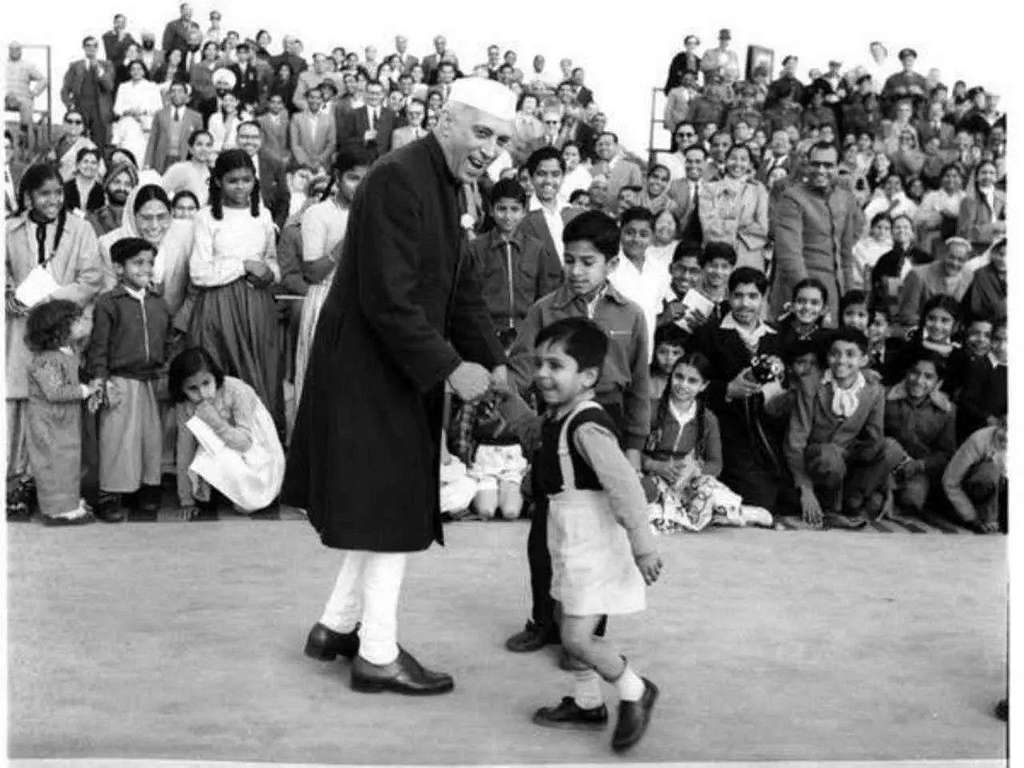
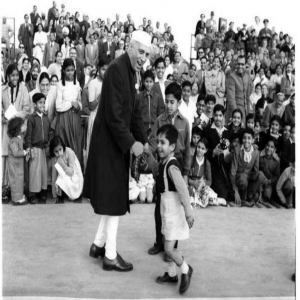
Any day is a perfect day to deliberate on how children should be nurtured and raised to create a peaceful and just world. Yet, certain days seem perfect enough to help us make a resolution. We decided to celebrate children on this particular day for the right reason. Even though many more leaders believed in children being the torchbearers of our country, Jawaharlal Nehru advocated for children's rights. Any legal right must result in welfare. Come to think of it, the right to good mental and physical health is also a child's right. What are we as parents doing our bit in addition to providing kids with organic food and the best healthcare?
Does the food we provide really cater to their overall health? Safety is also a child's right. Kids are likely given mobile phones to keep them safe. Nobody can differ here. It is quite natural for parents to feel reassured if children are just a call away, and a text-and-call device is more than enough. Location sharing helps, but again, it is a choice. No child would enable it while on a date. Phones come with App hiding apps and plenty of other features to keep adults in the dark. Tragically, there is a disconnect between how parents expect kids to use smartphones and how exactly the machines are misused or overused.
Even though the IT Act strongly recommends that children under 18 should be guided by parents or guardians when accessing online services, parents' responsibilities seem to end the moment they buy their kids a smartphone, mostly the latest version in the market. Kids are secretive, and parents do not seem to find the time to supervise their online activities. Therefore, approving or denying consent exists in the realm of impossibility. Who cares what the POCSO Act mandates! Not many video games, series and movies sow seeds of peace and justice in fertile minds. Not many applications and platforms offer hope, motivate or boost confidence.
Many are unable to go about their everyday tasks without the assistance of their smartphone and Apps. Yes, they do not consider other options either because they have got used to things getting delivered to their doorstep, or they are too busy to spend a few hours outdoors shopping or making real contacts, or they have become lazy. Whatever the reason, adults must mend their ways and set an example. Let us help our kids understand why Mark Zuckerberg, the founder of Facebook, did not choose to spend his entire time on social media and why he doesn't consider it a good medium. Our kids do not know that Instagram and Snapchat capitalise on humans' biological drive. If photo-based platforms are created for self-ex
Childhood and adolescence must evolve outdoors in a real world full of opportunities, permutations and combinations. I don't remember being part of even one Children's Day celebration. However, I had the best childhood playing till the sun went down and exploring day in and day out. Intense socialising was the norm. While at play, we made our own choices, resolved our own conflicts and cared for one another whenever necessary. Depression, social awkwardness, introverts, stress, extroverts, anxiety and related disorders never seemed to affect children, or they grew out of it or simply recovered. We learnt to nurture our neuroses rather than pour out our deep, dark, imaginary confessions in an inexhaustible flow to therapists and mentalists.
It is proven beyond doubt that high levels of screen time have a negative effect on children's emotional stability. It isn't for nothing that developed countries such as France, Netherlands, Sweden, England, and more have banned or restricted children's use of devices, including smartphones, tablets, and smartwatches. Certain countries, Nordic in particular, are considered safe and ideal for human habitation with less violence, with Sweden becoming an exception in recent years. Excessive screen time is linked to poor mental and physical health. In 2017, digitalisation for schools was one of Sweden's flagship programmes for achieving digital competence. With increased crime rates in the last couple of years, Sweden is pushing for restrictions on personal digital devices in school.
So, if we are concerned about children's welfare, we should do more than organise Children's Day celebrations in schools, colleges, neighbourhoods or gated communities. We must strive to mould a whole child through real-time interaction. Not in parts but the whole. Good grades at school amount to nothing if a kid lacks a strong sense of self-awareness, any number of extracurricular activities won't create a sense of belongingness, young entrepreneurs will still be confused about their identities, sports gamers struggle to read emotions, take cues from facial ex
The emergence of ebook apps, Nook Color, Kindle and the like have robbed kids of the pleasure of visiting libraries with friends, lending and borrowing books and above all, the comfort of having books in the bedroom. To me, bibliosmia is about emotions and memories of a particular book, of a person, a place and a time. I do remember feeling the weight of certain books I read over and over. My parents loved books, they taught me to love them and never dog-ear them. I was raised well because I take care of old books, fix them and protect them too. Children have the right to happiness. Are children really happy being attached to their devices all the time, blind to the big and beautiful world around them? Are they happy, or are they addicted? Digital kids with digital minds need not be celebrated but mended.
Many schools have already transitioned from giving digital instructions to a homework diary. In this regard, certain schools are setting a good example for many others to follow. On Children's Day, parents can take it upon themselves to speak to the school management and teachers and convince them to assign homework to children while at school and encourage children to use pen and paper instead of keyboards, thereby helping children stay away from Chatgpt, Quillbot and Grammarly that kills their creativity, comprehension skills, learning capabilities and focus. Teachers and parents can ensure that children do not find an excuse for misuse of phones.
With a cell phone in hand, most of us do everything possible to reduce human-to-human verbal contact. Our status on WhatsApp or other chats is nearly always invisible. We push contact numbers to the blocked list. We almost always ignore calls to write back, "Sorry I missed your call," or "text me if it's important." Children imitate us.
So, let this children's day mark a new beginning. Nordic countries are ranked among the world's happiest because they follow the "open-air life" Swedish concept. We can embrace that easily by scheduling outdoor time for our kids, making morning, evening, or late-night walks a habit and bonding with them. Unless the weather is toxic, we shouldn't blame it on the rain and shine. Even as we bond, let us help them understand why scheduling downtime is crucial for their well-being, discuss books and ways to be humane and compassionate and not betray anyone. If we don't initiate a change, we would shudder to see how our children will raise their children.
Yes, our children have so much more than we had in terms of gadgets, freedom and exposure to the world. I do not insist that everything should be the same as it was decades ago. Each generation should be better off in every way, intellectually and emotionally. We have to ask ourselves why our kids need a phone when exactly they need one, how judiciously it is going to be used if they will continue to value honesty, togetherness and communication if they will still be an active part of all their out-of-school activities and open to a smartphone contract.
Non-digital childhood is a blessing. Happy Children's Day!
.jpeg)
 A. J. Philip
.jpg)
.png) Jacob Peenikaparambil
Jacob Peenikaparambil
.jpg)
.png) John Dayal
John Dayal
.jpg)
 Pachu Menon
.jpg)

.png)

.png)
.png) Robert Clements
Robert Clements
.jpg)