

.jpg)
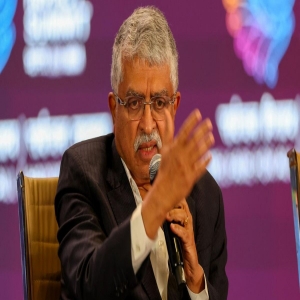
Mr Nandan Nilekani,
Chairman, High Powered Task Force on Reforms in Public Examinations,
Ministry of Education,
Government of India
Dear Mr Nilekani,
India's education system is in terminal decline because of short-sightedness and corrupt, incompetent academic leadership. The public education system is practically dismantled. Ever since the National Education Policy 2020, introduced unilaterally without discussion and debate in Parliament and consultation with the principal stakeholders and the states, has been implemented, nearly one lakh public schools have been closed across the country, while private schools mushroom, depriving the poor children from the lower economic strata of the constitutional right to quality public education.
Multiple issues remain unaddressed. I posted 27 articles on my Blog discussing the issues. The rapid privatisation of education, right from the basic primary stage to the college-university level, has plunged our education system into a serious existential crisis, with good quality education becoming beyond the reach of an average child, particularly the children from the marginalised sections, thus defeating the very purpose of education. Education for whom? What purpose does it serve?
Examination reforms per se make no sense unless the core issues of education—massive indiscriminate privatisation, withdrawal of state funding, downsizing of public funded institutions, lakhs of teachers' posts remaining vacant, appointment of substandard teachers on contract, through a hire-n-fire system, with meagre salary, political interference, saffronisation of education and controlling the thought process of teaching and learning, chopping off inconvenient chapters of history from the school and the university curriculum and depriving children of holistic education, hand picking the people having affiliation to the political ideology of the establishment and appointing them, by side stepping the open merit system, as the heads of higher educational institutions, like public universities, IITs and IIMs; and curbing academic freedom and critical thinking—are comprehensively addressed.
It is shocking that even in elite institutions like the IITs, TISS, the premier State and Central universities, like Mumbai University, Jawaharlal Nehru University, and Delhi University, to name a few, the RSS-affiliated ABVP students' wing imposes its diktat and decides who should speak at the academic seminars and conferences, with the spineless heads of these institutions meekly acquiescing to its demand. It is so disgraceful and shameful. The higher education system is becoming increasingly irrelevant to most young people, in the absence of non-discriminatory, quality public education and employment opportunities. Nothing good will come from a system that aims to produce only loyalists and conformists, discourages free thought and critical thinking, and cannot produce great creative minds.
Today, the brain drain has reached alarming proportions. Hundreds of thousands of skilled professionals, scientists, doctors, and top students are leaving India every year to work and settle in countries like the United States, Canada, Australia, and Germany. It is ironic that a huge chunk of rich and wealthy people, who take full advantage of the education system in India, leave the country in search of greener pastures abroad, while a vast majority of the poor and socially disadvantaged people who stay in India face a bleak future with increasing cost of education and growing unemployment. This results in a heavy loss of intellectual and human capital that India spends public money to nurture.
A massive outflow of high-skilled human capital is underway. Nearly 20 million Indian students study abroad, and tens of thousands of elite STEM, medical, and management graduates relocate permanently each year, while hundreds of thousands renounce their citizenship to join an ever-growing overseas diaspora of around 18 million people. Government data shows that over 1.6 million Indians have renounced their citizenship since 2011, with over 200,000 individuals surrendering passports every year. Around 75,000 skilled engineers and medical professionals leave the country annually, alongside a booming student migration pipeline: over 25 Indian students leave for foreign universities for every foreign student who enters India.
And 30% of engineering graduates from the prestigious IITs, 50% of medical post-graduates, and over 60% of premier research PhD scholars eventually settle outside India. Subsidised training at institutions like IITs, IIMs, and AIIMs costs taxpayers heavily, ranging from 10 to 25 lakh rupees per student. The permanent exit of these professionals costs India an estimated 35 to 50 billion dollars a year in lost productivity, R&D momentum, and tax revenue.
It is important to understand the anger and resentment among the youth – Gen Z, millennials and Gen Alpha. They have lost faith in the education system and the examination system. With employment opportunities drastically declining across all sectors of the economy, youth look to government jobs, working hard for years and spending lakhs of rupees that their parents raise through loans and mortgages on their properties, hoping to crack public examinations and find a secure job. However, repeated question-paper leaks and the cancellation of public examinations shatter their dreams.
That the so-called National Testing Agency, created in 2017, is simply unable to measure up to the task and ensure the integrity of the public examinations that it conducts is an indication of its failure, a blot on the system. The NTA is mired in corruption, with transparency and accountability going for a toss, commercial interests overriding the national interest due to political patronage, and paper leaks becoming a regular, recurring feature. It is a very depressing scenario. There is no future for the youth, the future of tomorrow.
The Public Examination (Prevention of Unfair Means) Act 2024, passed after the NEET paper leak, is supposed to address examination malpractices and prevent paper leaks. Yet, the NEET exam 2026 was cancelled because the Act failed to prevent the unfair means used in conducting not only NEET, but also other all-India competitive public examinations like NET, JEE, CMAT, etc., that the NTA conducts. The NTA has no institutional mechanism to assign responsibility for paper leaks; it outsources examinations to private commercial agents with a nexus to politicians and accountable to no one. It is a farcical exercise. The 2026 amendment to the Public Examinations Act, introduced during the last monsoon session of Parliament, is an eyewash.
The amendment is supposed to impose more stringent punishment on people involved in paper leaks and corrupt practices, aiming to achieve a zero-leak policy by increasing the jail term and penalties from 5 years to 10 and from 1 crore to 5 crore rupees. It is more rhetoric than a substantive intent. Simply increasing the jail term and penalties will not address the root causes of paper leaks, nor will it prevent them. It is cosmetic surgery.
The Supreme Court, which is hearing a batch of petitions on the NEET paper leaks, has emphasised the need to institutionalise reforms within the NTA. It should not be a knee-jerk reaction after a catastrophe. There should be meaningful continuity in resolving systemic problems. Had the Centre acted upon the recommendations of the Radhakrishnan Committee, constituted after the NEET paper leak in 2024, the NEET paper leak again this year, resulting in the mental trauma that followed and the suicide of some 22 students, could have been averted. Who is accountable for this tragedy?
No examination reforms will succeed unless the people connected with the examination system have impeccable integrity and their backgrounds are thoroughly scrutinised to ensure they are not overtly affiliated with the ruling party's ideology before appointment. That is, unless question paper setters, examiners, and those involved in the printing process have impeccable integrity, are free from political interference and patronage, and offenders are promptly punished, no amount of reforms will ensure the integrity of the public examination system.
Unless the rapid privatisation of education is halted and the public education system is restored by spending at least 6% of GDP on education, as envisaged in the NEP, education reforms, if any, will make no sense to the vast majority of youth at the bottom of the social ladder. What is the sense in the top-ranking rich children of the NEET grabbing the seats in government medical colleges, in the name of merit, forcing the poor students who may have succeeded in cracking the NEET to opt for admission in private medical institutions, where the fees charged run into lakhs of rupees that they cannot afford? It is a paradox. Why are students from poor economic backgrounds not given first preference for admission to government medical colleges, where fees are not so exorbitant?
It is desirable to decentralise the public examinations. In the face of regular paper leaks and the corrupt, incompetent NTA administrative structure, with poor infrastructure and inadequate regular staff, failing to ensure the integrity of the examination system, affecting millions of students across the country, there is a strong case for scrapping the all-India entrance examinations like the NEET and the CUET. The centralised examination system has only benefited the coaching centres, with students depending on coaching classes and relying on dummy schools to crack the examinations, spending lakhs of rupees on coaching, a luxury only the rich and affluent children can afford, leaving economically poor children high and dry. It is an extortionist system.
Let every state have its own entrance tests for admission to medical institutions and other courses, reflecting regional and linguistic diversity and local needs. It is a misnomer to say that all-India tests ensure merit-based admissions. It heavily favours English-medium students from elite institutions, putting students from vernacular-medium schools in villages and small towns at a great disadvantage. The idea of an all-India medical test like the NEET is misconceived; it is arbitrary and discriminatory. Even if there are paper leaks at the state level, it won't have the devastating nationwide effect on millions of students across the country, unlike the centralised NEET examination. And it is essential to insulate education from politicisation and from being made subservient to a partisan political agenda.
Yours truly,
.jpeg)
 A. J. Philip
.jpg)
.png) Jacob Peenikaparambil
Jacob Peenikaparambil
.jpg)
.png) John Dayal
John Dayal
.jpg)
 Pachu Menon

.png)
.png)
.png) Robert Clements
Robert Clements
.jpg)