

.png) Jacob Peenikaparambil
Jacob Peenikaparambil
Ever since the Chief Election Commissioner and Other Election Commissioners (Appointment, Conditions of Service and Term of Office) Act, 2023 altered the appointment mechanism in a manner that gives the ruling executive a decisive role in the selection of Election Commissioners, the credibility and institutional independence of the Election Commission of India (ECI) have been intensely questioned.
Section 16 of the same Act provides that no court shall entertain or continue civil or criminal proceedings against a current or former Chief Election Commissioner or Election Commissioner for acts, words or things done in the discharge, or purported discharge, of official duties. The provision contains no time limit on this protection, raising serious questions about accountability.
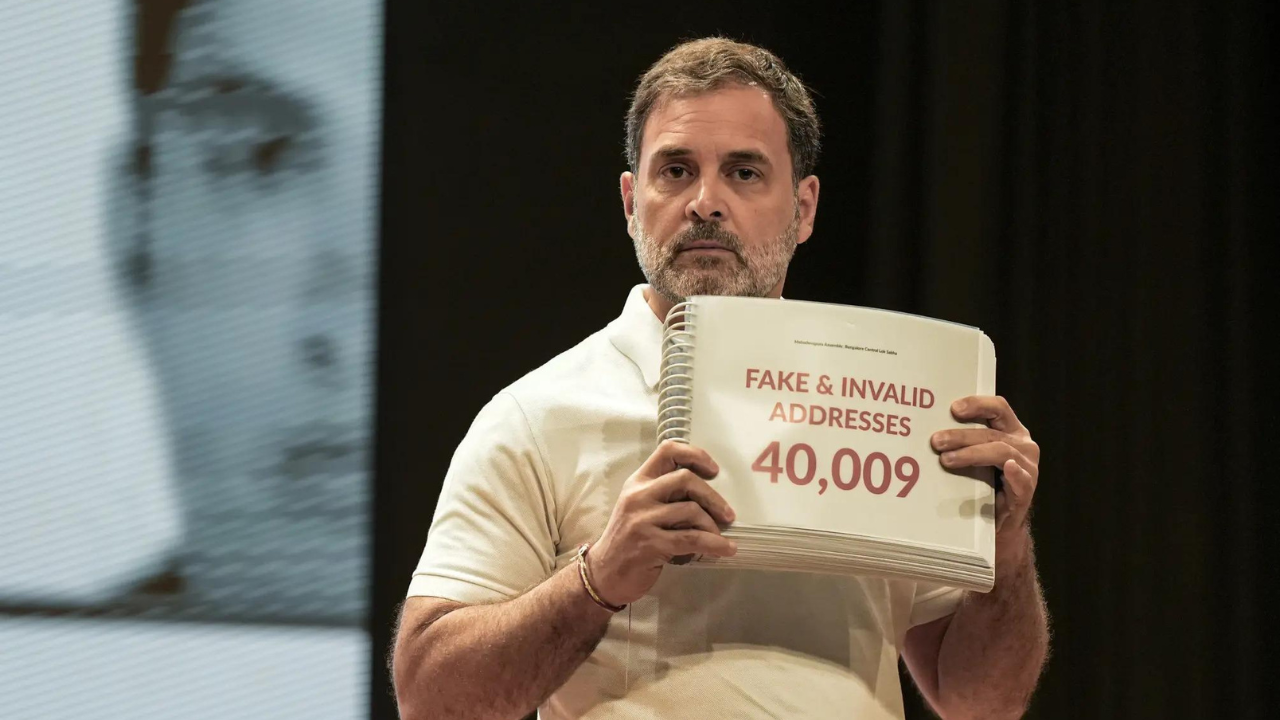
Since 2023, Rahul Gandhi has repeatedly raised the issue of vote chori, alleging electoral malpractices intended to favour the ruling party. He has alleged that automated software and call centres were used to selectively delete opposition-leaning communities, including Dalits, OBCs, minorities and Adivasis, from electoral rolls. He specifically cited the Aland constituency in Karnataka, where thousands of voters were allegedly targeted. He has also alleged that millions of "new voters" were added without adequate verification, including a reported increase of more than 41 lakh voters in Maharashtra within five months. It appears that many opposition parties did not initially take these allegations seriously enough or exert sufficient collective pressure on the ECI.
However, the investigative reports by journalist Ritika Chopra in The Indian Express on September 23 and 24, 2026, appear to have brought the controversy surrounding the ECI and the Special Intensive Revision (SIR) of electoral rolls to a new level of national attention.
Even before The Indian Express published its investigation revealing reported differences within the Election Commission over the SIR process, Dr Parakala Prabhakar, a prominent political economist and commentator, had called for a mass nationwide movement and public agitation demanding greater transparency from the ECI and seeking to protect the country's democratic foundations.
Ritika Chopra's investigative article in The Indian Express not only reported friction between CEC Gyanesh Kumar and the other two Election Commissioners but also raised questions about the procedures used to implement SIR. The findings have since been widely discussed in mainstream media and on social media.
Amid mounting criticism from opposition parties and sections of civil society, the ECI announced a series of measures through a four-page press note on September 26. Critics, including former Election Commissioners, have described these measures as inadequate and as an attempt at damage control. Rather than directly addressing all the questions raised by the Indian Express investigation, the Commission focused on measures intended to reduce difficulties faced by voters during the SIR process. The Commission said all three Election Commissioners had unanimously approved the nationwide SIR order and announced measures on hearings, electoral-roll software, Form 6, and related procedures.
The Joint Opposition rejected the ECI's administrative measures, arguing that they fail to address the core allegations concerning electoral-roll management, structural safeguards and decision-making within the Commission.
Political commentators and reports in The Indian Express have argued that the ECI's four-page corrective note leaves several critical questions unanswered. However, these measures do not adequately address questions concerning earlier centralisation of electoral data, changes to Form 6, and the impact of deletions from electoral rolls.
While the Election Commission has stated that the Supreme Court upheld the declaration attached to Form 6 in the context of SIR, this does not fully explain why the form was changed or what procedure was followed. The legal framework governing electoral registration, including the Registration of Electors Rules, 1960, raises questions about the authority and procedure for changing prescribed forms. These questions therefore require a clear and transparent public explanation.
Former Chief Election Commissioner SY Quraishi reacted to the measures announced by the ECI, saying the Commission's SIR press note raises more questions than it answers. He reportedly noted that the Commission's announcements—such as circulating agendas before meetings, issuing minutes and ensuring compliance with the directions of Election Commissioners—raise questions about whether proper collective procedures had previously been followed.
A group of retired judges, economists, rights activists, professors, and other prominent citizens has also written an open letter to India's opposition parties, asking them to "step up" and remember their constitutional responsibility. They have called upon the Opposition to ensure that citizens' votes "remain worthy of trust in every election that follows."
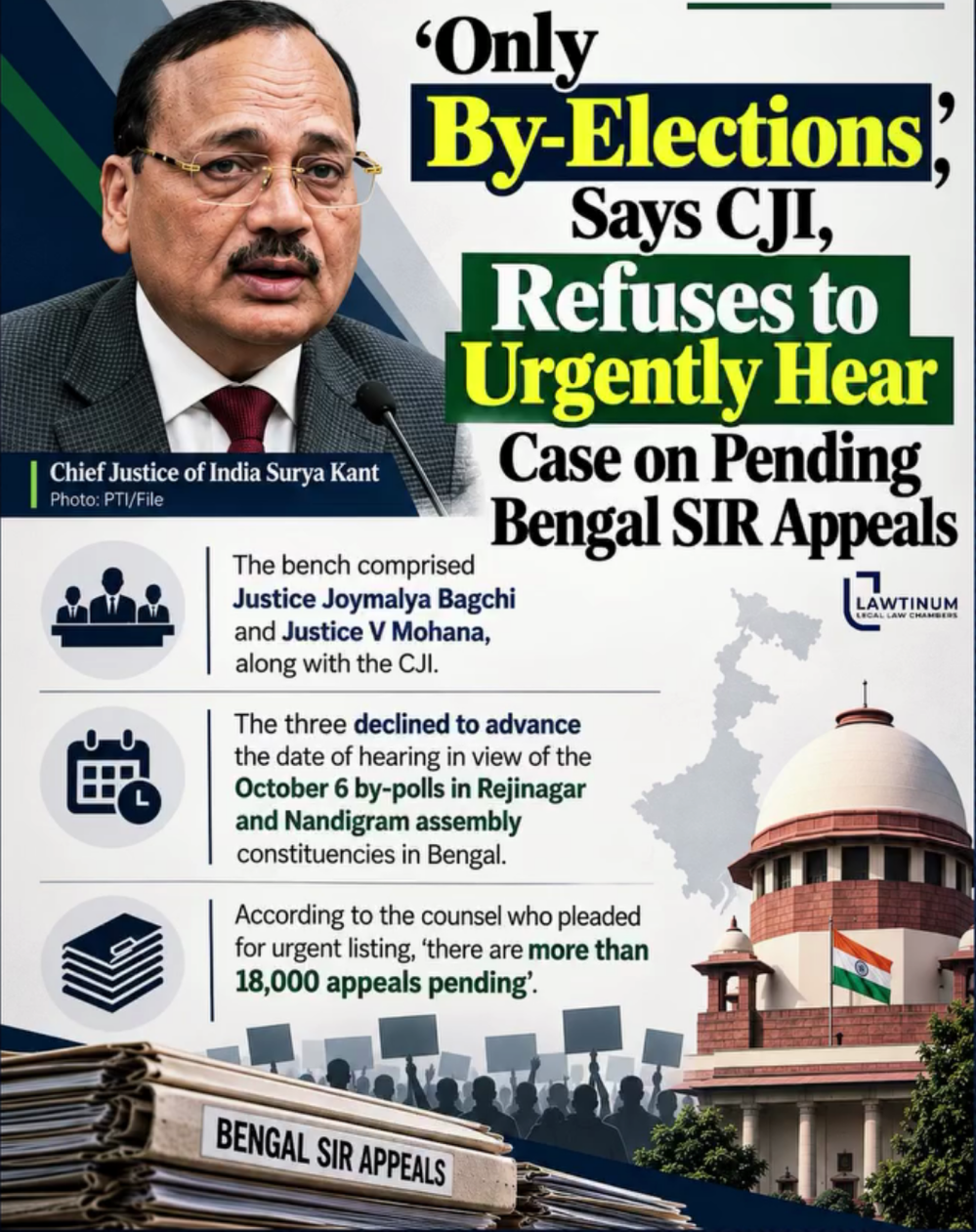
On the Supreme Court's role in the SIR controversy, senior advocate Dushyant Dave, who strongly criticised the ECI and the judiciary while delivering the annual KM Bashir Memorial Lecture in Kerala, is worth quoting, as reported by Bar & Bench on September 28, 2026. Dave said:
"Thanks to Election Commission and Supreme Court of India, adult franchise is going away because in the name of the SIR, everybody, even my wife and I have received notices as to whether we should really be included in voters list or not." He further said: "It's very easy to take away people's fundamental rights and sadly, the judicial system in this country supports the executive, which has become more and more powerful."
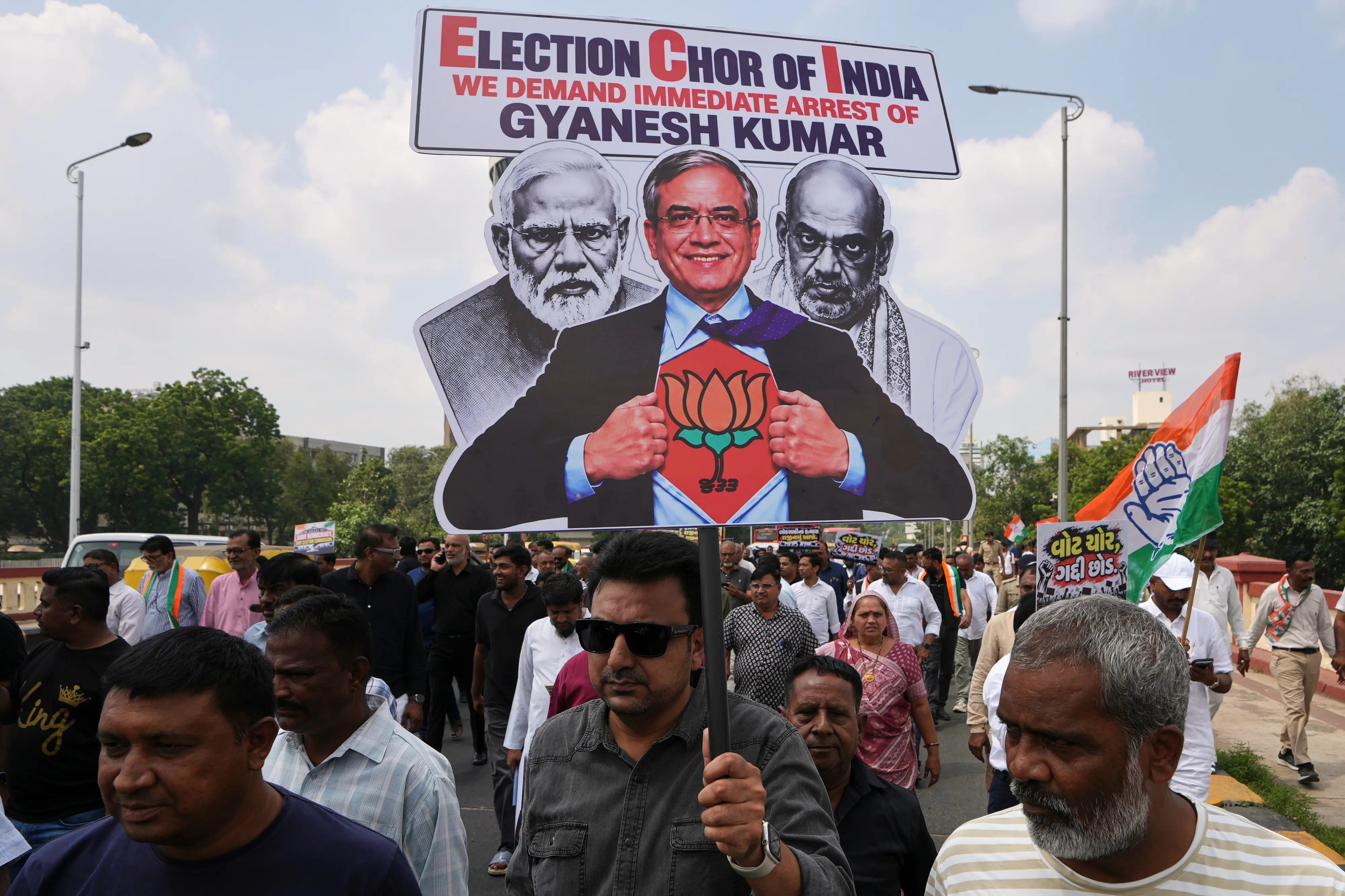
Against the backdrop of the Election Commission appearing to tweak elections in favour of the ruling BJP by adopting various tactics, the most significant being the SIR, and the reluctance of the Supreme Court to defend the voting rights of citizens, "We the People of India" have no option other than taking to the streets to protest non-violently to safeguard our fundamental right to vote.
This is an important opportunity for the entire Opposition to come together and exert democratic pressure on the Election Commission and the government to protect electoral integrity and citizens' voting rights. They should work with civil-society organisations, activists, the CJP and all others committed to protecting democratic and constitutional values in India. If the Opposition fails to rise above narrow political interests and work together on this fundamental issue, history may judge it harshly.
Let the entire Opposition remember the words of H. Jackson Brown Jr.: "Nothing is more expensive than a missed opportunity."
.png) Cedric Prakash
Cedric Prakash
.JPG)
 A. J. Philip
Jacob Peenikaparambil
A. J. Philip
Jacob Peenikaparambil
.jpg)
.png) John Dayal
John Dayal
.jpg)
 Pachu Menon
.png)
.png)
.png) Robert Clements
Robert Clements