

.jpg) Jose Vattakuzhy
Jose Vattakuzhy
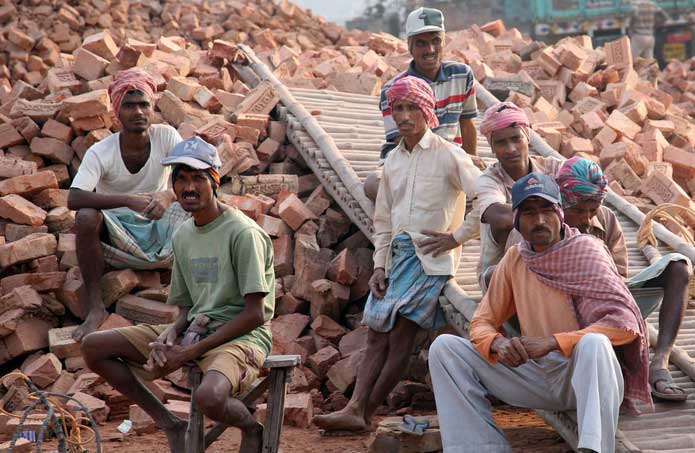
Negotiations in NDA Government 3.0 also enhance workers' rights expectations, particularly in the informal labour market. Despite being defined by new labour codes and segregated by the e-Shram card portal, Indian informal workers face severe challenges like precarious employment situations, lack of social security net, and exploitation instead of being treated as dignified workers.
It is significant to remember that in 2019 and 2020, after chambers approved these codes of parliament, the Hon. President granted consent to the Code on Wages, 2020; Code on Social Security, 2020; Industrial Relations Code, 2020; and Occupational, Safety, Health, and Working Conditions Code, 2020. The Central Government has also published the draft central rules for the four labour codes.
Since India has a federal government, State governments must be involved whenever there is a shift in labour laws and regulations. According to the most recent data available, many states and union territories have also released state-level draft regulations for some or all of the Labour laws. However, it has been some time before these codes' final notification came into effect. In this context, the newly elected government may concentrate on post-election issues after laying the foundation for implementing labour regulations.
"Workers' segregation," could refer to the practice of separating workers based on certain characteristics such as race, gender, time, skill, mobility, and sector, apart from legal-based division, which has historically been an issue in labour relations, particularly in contexts of discrimination or unequal treatment. The sectorial division falls like the primary sector, which includes agriculture, forestry, mining, and allied activities. A significant portion of India's workforce is still engaged in agriculture, though the percentage has declined. The secondary sector comprises manufacturing, construction, and industries. This sector has grown but faces challenges like job quality and informal employment. The Tertiary sector is dominated by IT, healthcare, education, hospitality, and retail services. It has been expanding rapidly and absorbing a growing portion of the workforce.
Division based on skill levels: India's workforce can be categorised into skilled, semi-skilled, and unskilled labour. There is a significant focus on upskilling and vocational training to enhance employability. The IT sector demands high-skilled workers, while sectors like construction and agriculture absorb more semi-skilled and unskilled labour. Geographical distribution is another noticeable fact, as workers are divided between urban and rural areas regarding employment opportunities and wages. Urban areas offer a wider range of job opportunities in the service sector and manufacturing, whereas rural areas are more dependent on agriculture and related activities.
Legally speaking, the major division based on labour laws is that Indian workers are informal and formal or unorganised and organised workers in the labour market. Whereas a large portion of India's labour force operates in the informal sector, which lacks job security and benefits and often operates outside regulatory frameworks, the formal sector provides more stable employment with benefits like pensions, health and social security, and regulated working conditions.
In India, the term Informal or 'unorganised' workers has popularly been heard since September 20, 2004, when the National Commission for Enterprise in the Unorganised Sector was constituted with the aim "to ensure the welfare and well–being of all workers, particularly those who are unorganised sector, Indian workers". However, the term unorganised worker in India officially came into economic activities documents at the time of the Second Labour Commission (1999-2002).
All enterprises registered under any kind of act and maintaining annual accounts and balance sheets for auditing and submission of IT returns came to be known as organised sector empires. The rest of the unincorporated enterprises are called unorganised or informal sector firms. The unorganised sector firms are typically smaller in size and have fewer resources. They often rely on local networks and family-run businesses. They are less regulated and rely on informal labour arrangements.
The Unorganized Workers' Social Security Act, 2008 defines an unorganised worker as a home-based, self-employed, or wage worker in the unorganised sector, including those not covered by various Acts in Schedule-II, such as the Employee's Compensation Act, Industrial Disputes Act, Maternity Benefit Act, the Employees' State Insurance Act, 1948 the Employees Provident Funds and Miscellaneous Provision Act, 1952 and the Payment of Gratuity Act, 1972. The Code on Social Security 2020 defines an "unorganised worker" as any worker in the organised sector not covered by the Industrial Disputes Act of 1947 or home-based, self-employed, or wage workers.
The e-Shram portal is a digital platform launched by the government of India that aims to register and provide social security benefits to unorganised workers in the country. It serves as a centralised database to register informal or unorganised workers. In this, unorganised workers are those who engage in economic activities but work outside formal labour market regulations and protections. They typically lack job security, social security coverage, and other benefits that formal sector workers might receive. Categories of unorganised workers include Construction Workers, Domestic Workers, Street Vendors, Agricultural Labourers who are involved in farming activities, often on a seasonal or casual basis, and others include various other classes such as waste pickers, rickshaw pullers, home-based workers, 'Gig worker' and 'Platform worker etc.
The term "secured worker" has different meanings depending on the context. It refers, however, to the legal recognition of workers in the context of the great divide between unorganised and organised workers. Without labour law protection, informal sector workers are unable to ensure their basic rights such as minimum wages, working hours, social security, job stability, and workplace safety. India faces significant challenges regarding informal workers, whose precarious situations are often reported daily from various regions nationwide.
By March 2024, nearly 295 million workers who could register on the e-Shram website were verified through Aadhaar documents. Of 2.8 crore registered workers, 5.58% earn between Rs 10,001 and Rs 15,000 per month, while 92.37% earn less than Rs 10,000. In addition, a recent study reported in the Times of India on June 15, 2024, showed that the average monthly income of an unorganised Indian worker was Rs. 9248.5 between the years of 2021 and 2023.
Shortly after, another story described the incredibly difficult working conditions that Amazon's contract employees were subjected to during the heat wave in India at its warehouses. It must have been extremely challenging to work 10-hour shifts on their feet in 50°C+ heat with insufficient sitting and minimal relief from fans and coolers. In India, job insecurity among informal labourers is not an issue for the major chains of companies. According to statistics from IT layoff trackers and The Times of India, 39 firms let go of 9,742 workers in May of this year. As per the record, 306 IT businesses have already laid off 89,333 people in 2024.
The Swiss court found an Indian NRI family guilty of exploiting domestic workers, revealing the Indian mindset towards domestic workers in India and abroad. Domestic workers in India, despite being the third-largest unorganised category, face exposure due to non-legal protection, health, and old age benefits. The ILO Domestic Workers Convention, 2011, has not been ratified, and many states have only listed them in minimum schedules without specific laws.
India is witnessing the rise of gig workers, a growing trend globally due to the rise of digital platforms and demand for flexible work arrangements. This new sector, referred to as green-collar workers, is particularly prevalent in the unorganised sector, providing income opportunities for many. The NITI research report shows a significant increase in gig workers in India's workforce, from 0.54% in 2011-12 to 1.33% in 2019-20, with projections of 23.5 million by 2029-30.
At the same time, India's gig workers also face precarious employment conditions, lack of social security benefits, and limited legal protections. The absence of a clear regulatory framework leaves them vulnerable to exploitation and income instability. A study shows that 43% of participants earn less than Rs. 500 per day or Rs. 15,000 monthly. According to the report, 78% of app-based delivery workers put in more than 10 hours a day at work, and 34% of them make less than Rs. 10,000 per month.
According to data from the 2011 Census, the total number of interstate migrant workers in the country is 4.14 million. A sizable migrant labour population within India shapes our economy. However, there isn't any hard evidence on their numbers. Between 70 million and 194 million migratory labourers are estimated. It is to be expected that measures for this "invisible population" are lacking, and most interstate migrants suffer from low income, unfavourable working conditions, poor on-site housing, and a dearth of social assistance.
In a written reply to a question in Rajya Sabha, the Minister of State for External Affairs stated that the number of Indian migrant workers returning from the ECR countries between June 2020 and December 2021, as per records available, is 4,23,559. The reality is that the Indian labour market has more or less been shunning those skilled and experienced despite their potential contributions.
Agricultural workers live in rural areas and live by working in fields. They comprise two-fifths of all rural residents in India. Due to their lack of access to land, these labourers are forced to work for affluent farmers. The problems of underemployment and unemployment impact labourers employed in agriculture. India's agriculture sector employed over 148 million people in the fiscal year 2023. The fiscal year 2022 witnessed the highest number of employees—more than 158 million. The Union Agriculture Ministry's website mentions 98 agricultural projects for India in 2024. However, only farmers with land ownership are eligible for these programs, but agriculture workers are not included in any of those schemes.
The e-Shram portal or e-Shram card in India is an initiative to provide social security benefits to unorganised workers. However, unorganised workers are not eligible for any of those benefits through the e-Shram Card. Its gateway might provide access to all programs. Each of those schemes has its own requirements for registration, rather than using unorganised worker criteria. As a result, the e-Shram card currently acts as a means of identification for the country's unorganised labour force, which is not compensated financially for its status. The card, therefore, does not provide any financial benefits or social security to these workers. As a result, they continue to be vulnerable to exploitation and financial hardship.
The attack on workers in the unorganised sector affects the country's development. The new labour codes will be implemented with notifications of rules and regulations, but the segregation and data bank of unorganised workers is insufficient. The NDA 3.0 should demonstrate the political will to legally institutionalise the systems of unorganised workers' facilitation centres and establish unorganised welfare boards at the federal, state, and local levels with yearly budgetary fund allocation as per Unorganised Workers' Social Security Act, 2008 and The Code on Social Security, 2020. This will help protect unorganised workers' rights and ensure their access to essential services and benefits. Additionally, political support and incentives should be provided to ensure the success of the labour codes. This will lead to better working conditions and improved living standards for workers. It will also help create a more sustainable and equitable economy.



.jpg)
 A. J. Philip
.jpg)
.png) Jacob Peenikaparambil
Jacob Peenikaparambil
.png) Chhotebhai
Chhotebhai

.jpg) P. A. Joseph
P. A. Joseph
.png)
.png) Robert Clements
Robert Clements
.jpeg) A. J. Philip
A. J. Philip
.jpg) Jacob Peenikaparambil
Jacob Peenikaparambil