

The first phase of the budget session of the Indian Parliament, which began on January 28 and ended on February 13, 2026, was one of the stormiest sessions. It made a sort of history.
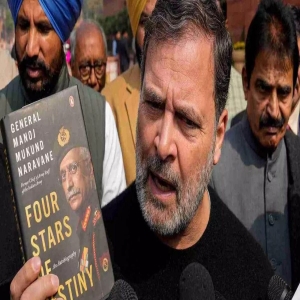
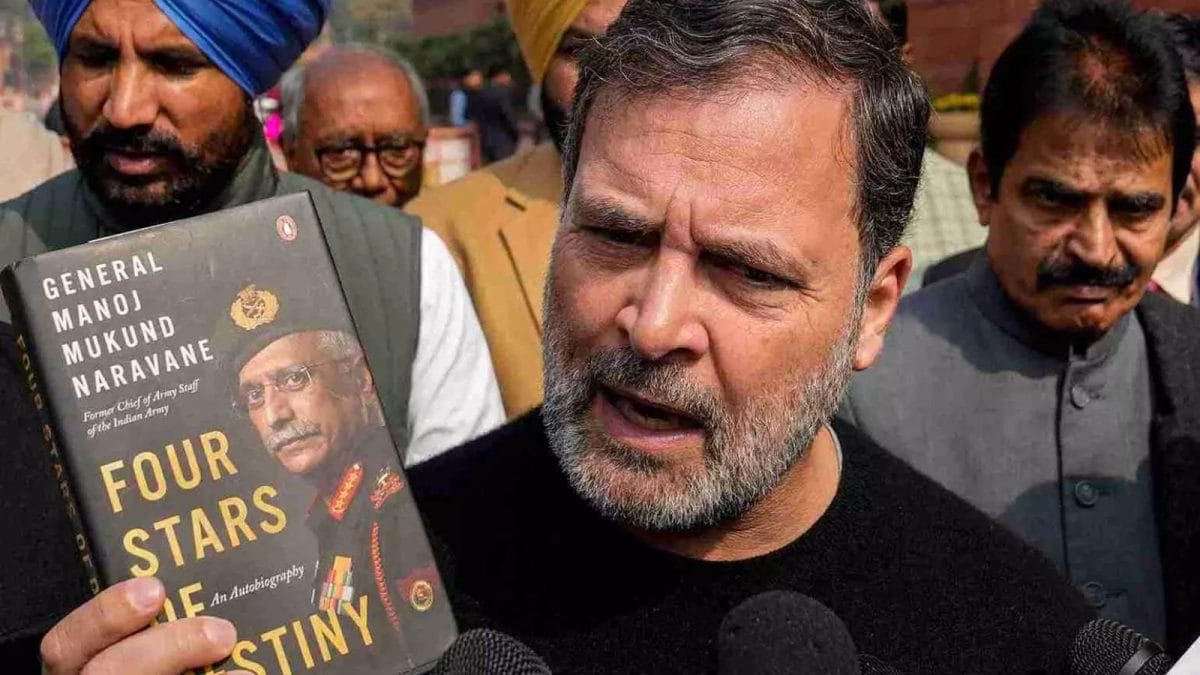
On February 2, opening the debate on the motion of thanks to the President's address to the joint session of the Parliament, the Leader of the Opposition (LoP) in the Lok Sabha, Rahul Gandi had tried to quote an excerpt from the article published in the Caravan Magazine relating to the memoirs Four Stars of Destiny of former Chief of Army Staff MM Naravane.
Defence Minister Rajnath Singh stopped him from quoting from the book, stating that he could not quote from an 'unpublished' book and that it was not connected to the President's address. Home Minister Amit Shah and Parliamentary Affairs Minister Kiren Rijiju strongly protested and prevented him from speaking. And Rahul Gandhi insisted that he was quoting from a printed article and speaking on national security, central to the President's address. They repeatedly interrupted him and would not allow him to speak.
The Speaker then wrongly interpreted the House rules 349 and 353 and stopped him from speaking, saying that he could not quote from an 'unpublished book' or an 'unauthenticated' article. And with Rahul Gandhi unwilling to relent and the arguments from both sides lasting for four to five hours, the House was adjourned thrice, finally for the day. It was an extraordinary ding-dong battle never witnessed in Parliament.
The next day, February 3, Rahul Gandhi placed an authenticated article from the magazine on the table of the House. He wanted to speak, but he was prevented again. The standoff between the Opposition and the government intensified. The Speaker suspended eight opposition MPs for the entire budget session for protesting the denial of the LoP the right to speak. This is the first time the LoP was not allowed to speak on the motion of thanks to the President's address.
In the meantime, Rahul Gandhi came out to speak to the reporters in the Parliament complex, flashing a copy of Naravane's book, to the surprise of everyone. He said the book is published by Penguin Random House and is available; the government blocked its distribution as 'the PM is scared' of its contents.
Naravane says that on the night of August 31, 2020, when the Chinese tanks were marching into the Indian territory in the Kailash range, he phoned Rajnath Singh, S. Jaishankar, Ajit Doval and Bipin Rawat desperately seeking instructions, none of them responded. And after nearly two-and-a-half hours, around 10.30 pm, on Naravane phoning Rajnath Singh again, the latter informed him that the Prime Minister's instruction is that 'he can do whatever he thinks appropriate.' Naravane writes that "he was left alone and abandoned by the entire establishment" when the Chinese forces were invading.
On the night of February 2, the day Rahul Gandhi spoke in the Lok Sabha, Narendra Modi contacted Donald Trump, expressing his willingness to sign the trade deal with the US, as confirmed by Trump. According to Rahul Gandhi, this was a "sell-out of India." As per the deal, India agreed to open the agricultural sector to American markets on zero tariffs, to buy American goods worth 500 billion dollars, while Indian exports to America would face an 18% tariff. This is how "Mother India is sold." Modi is under tremendous pressure from Trump because of the Epstein files and the ongoing criminal case against Adani in an American court, and therefore, he was willing to compromise India's national interest to protect his image and political future.
The LoP charged that the "Prime Minister is compromised." Modi, fearing the unified Opposition's protest against the deal and the revelations by Naravane and the Epstein files, chose to skip the reply in Lok Sabha to the debate on the motion of thanks to the President on February 4. The Speaker, Om Birla, clarifying that it was he who advised Modi not to address the House, as he feared some 'unpleasant act' against Modi by some Congress women MPs, was a concocted story planted to defend Modi.
The Opposition has planned to move a no-confidence motion against the Speaker for his partisan conduct in the House. A Notice under Article 94(c) of the Constitution, signed by 119 MPs for the removal of the Speaker, was submitted to the Lok Sabha Secretary General on February 10, after the presiding officer did not again allow the LoP to speak at the start of the proceedings and then at the start of the zero hour, which both led to adjournments. The no-confidence motion is likely to be taken up on March 9 when the Parliament reassembles for the second phase of the budget session. And the Speaker is to stay away from House proceedings until a decision on the no-confidence motion is taken.
Participating in the budget debate on February 10, Rahul Gandhi managed to say what he wanted to say, but was not allowed to do so during the debate on the motion of thanks to the President, covering a wide range of issues. Gandhi, a practitioner of martial arts who holds a blue belt in Jiu-Jitsu and a black belt in Aikido, used a martial arts analogy effectively to suggest that the US trade deal could have been negotiated better. He said the foundation of martial arts is the grip on the opponent. This is what he said:
"Some time back, Rijiju asked me how I keep fit. I do martial arts. Focus is on grip ... grip to choke. In politics, grip and choke are invisible. The old US dollar-based unipolar system is being challenged. The dominance of the US is challenged by the Chinese, the Russians and by other forces. We are living in a world of energy and financial weaponisation. We are moving from a world of stability to a world of instability. The US supremacy is challenged. Many of our software engineers will be challenged by AI. I would like to say to the House what I consider the strength of our nation. The strength of our nation is the people ... 1.4 billion, energetic, dynamic and open to challenge anybody. But it is not only the people. The biggest data pool is generated in India. The petrol for AI is data. If you have AI but no data, you have nothing. Our data, our food supply and our energy need to be protected.
The budget recognises geopolitical conflicts and that dollars and finance are weaponised. But there is nothing in the budget about these issues. We have made a deal with the United States. In a contest between the United States and China, the single most valuable asset is Indian data. Population is a strength, if only you recognise that the data is important. If the INDIA alliance is negotiating with President Trump, we would say that 'you are going to talk to us as equals, you are not going to talk to us as your servants. Our energy security is ours; we will protect it. We understand you need to protect your farmers, and so we need to protect our farmers.' This is what the Modi government has done with our data. Number one: We give up control over our digital routes. Number two: there is no deal for data localisation. Number three: free data flow to the United States. Number four: limit on digital tax. Number five: No need to disclose any source, 20-year tax-free holiday.
Our tariff has increased from 3% to 18%, while theirs has decreased from 16% to 0%. US imports would increase from 46 billion dollars to 146 billion dollars a year. This is a complete surrender of the future of the Indian population. Now the US will decide who we will buy our oil from. Our energy is weaponised. Finance and trade are weaponised. This is disgraceful. You have sold India; are you not ashamed of selling India? You have sold Bharat Mata. The Prime Minister sold India, because they have choked him. Two things: the Epstein files and the case against Adani in the United States. The case in the United States is not against Adani; it is targeted against Modi and the financial architecture. Hardeep Puri introduced Anil Ambani to Epstein. I do not believe that any Indian Prime Minister would sign such a deal unless there was a choke on him. We buckled under tariffs; we have handed over our data; our farmers are left at the mercy of massive mechanised American farms; our textiles have been wiped out; Bangladesh is now going to wipe out our textile industry; and our energy is wiped out. What happened is a complete surrender. It is a wholesale surrender. Prime Minister has surrendered the future of 1.4 billion people, because he wants to protect the financial architecture of the BJP."
On February 20, the Indian Youth Congress workers staged a protest at the AI India summit, removed their T-shirts, and raised the slogan "PM compromised." It was a peaceful democratic protest. There was no violence, no damage to public property. The Delhi police arrested its office bearers, and its national President Uday Bhanu Chib, who was not part of the protest, invoking various draconian sections of the criminal law BNS against them, making the arrest non-bailable, crushing the political dissent. Reacting to the arrest, Rahul Gandhi said, "I am proud of my Babbar Sher colleagues who fearlessly raised their voice in the interest of the country against the compromised PM. Holding a mirror to the truth to power is not a crime, it is patriotism."
The Free Press Journal editorial on February 24 defended the protest: "The fact remains that this tactic by Congress workers came on the heels of the party leader and Leader of Opposition, Rahul Gandhi, repeatedly being stopped from dissenting in the Parliament and the mainstream media offering little space to ask questions of the government about the trade deal or the Epstein Files. The shrinking space for critiques pushed dissenters to adopt unusual tactics. It is a comment on the lack of robustness in India's democracy. The Delhi Police cracking down on the protesters shows their moral bankruptcy."
And the editorial in The Indian Express, February 26, has castigated the police crackdown:
"The punitive crackdown on the Indian Youth Congress is unseemly and disturbing. The shirtless protesters were demonstrating against the Prime Minister in the context of the India-US trade deal. But then, for Delhi police to promptly register FIRs alleging criminal conspiracy, labeling slogans against the government 'anti-national' and invoking spectres of a 'riot like situation' and for a Delhi court to denounce the protests as a 'blatant assault on public order,' imperiling the 'Republic's diplomatic image before foreign stakeholders,' points to a thin-skinned state that reacts to criticism with a strong arm, repeatedly. Surely, the AI leaders who participated in the summit would have deemed the state crackdown needlessly repressive. The BJP-led government needs to find a new vocabulary instead of treating every protest as an insurrection against it; over and over again, calling Congress and is leadership' anti-national.' The Modi government seeks to project an image that is self-assured and authoritative."
The US Supreme Court ruled that the trade tariffs imposed by Trump were illegal. India was in a rush to conclude the trade deal, unlike other countries. It can now renegotiate the deal in its favour. That is doubtful, given Modi's total surrender to Trump. And Trump saying, even after the Court verdict, that there would be no change to the trade deal with India, revealing the stranglehold on Modi and proving Rahul Gandhi right that Modi is under pressure and choked up.
The Congress party has planned nationwide protests against the trade deal with America. Addressing the Kisan Maha Panchayat in Bhopal on February 24, Rahul Gandhi reiterated the charge that the Prime Minister has sold the country and linked the trade deal to the Epstein files and the Adani case.
It is interesting to know why Modi suddenly chose to go on a two-day – 25-26 February - visit to Israel, which reduced Gaza to rubble and dust and is orchestrating the expansion of illegal settlements in the occupied West Bank at a time when Trump is threatening to attack Iran, and in view of the revelation in the Epstein files that he had 'danced and sung' with Netanyahu in July 2017 to please Trump. That Modi cosying up to Netanyahu will antagonise the traditionally friendly countries like Iran, Russia, and the Arab world, while weakening the cause of the Palestinian state, is a different matter. This is yet another instance of his compromising a larger national interest.
.jpg)
.png) Cedric Prakash
Cedric Prakash
 ICPA
ICPA
 ICPA
ICPA
 ICPA
ICPA
 ICPA
ICPA
 ICPA
ICPA
 ICPA
ICPA
.jpg)
 A. J. Philip
.jpg)
.png) Jacob Peenikaparambil
Jacob Peenikaparambil
.jpg)
.png) John Dayal
John Dayal