

 Pachu Menon
.jpg)
Article 342 of the Constitution of India empowers the President to officially specify indigenous tribes, tribal communities, or specific groups within them as "Scheduled Tribes," in consultation with the state governor.
Protecting the rights of Scheduled Tribes (STs) in India involves a comprehensive framework of constitutional provisions, special legislation, and administrative safeguards designed to prevent exploitation, preserve cultural identity, and promote socio-economic development.
However, cultural symbols of tribal groups in the state gain high-fashion and festival attention, becoming powerful visual markers of 'Goan identity,' while daily struggles such as land rights, forest access, and basic infrastructure receive little attention.
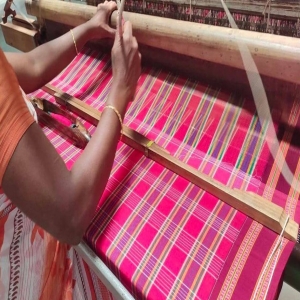
For instance, when tribal aesthetics like the 'Kunbi' weaves are popularised as high fashion or cultural heritage in Goa, the actual socio-economic and political causes of Scheduled Tribes are often ignored due to the commercialisation of heritage, historical caste-class divides, and political tokenism.
However, Scheduled Tribe (ST) discussions have surged to the forefront in Goa after the central government's official notification of the 'Readjustment of Representation of Scheduled Tribes in Assembly Constituencies of the State of Goa Act, 2025', which came into force on August 6, 2026.
This landmark move paves the way for political reservations for tribal communities in the 40-member Goa Legislative Assembly ahead of the 2027 elections.
While the ST reservation is set to reshape the coastal state's political landscape, it is assumed that the indigenous people are assured a better life through guaranteed legislative representation, direct policy influence, and targeted developmental resource distribution.
However, indigenous and tribal communities face critical hurdles, including friction with non-ST social groups demanding census clarity, internal exclusion anxieties, and delays in administrative execution.
For decades, substantive structural demands such as dedicated political representation and full implementation of protective land laws faced administrative inertia, until sustained grassroots and legislative pressure forced formal shifts.
Political representation empowers tribal communities by securing direct influence in lawmaking, protecting ancestral lands and cultural rights, ensuring fair resource allocation for local development, and shifting tribal status from passive beneficiaries of state welfare to active decision-makers in governance.
Way back in 2011, a four-decade-old legislation enacted soon after Goa's liberation from Portuguese rule became handy for the state government to save the properties of tribal communities from being robbed by land grabbers.
The state revenue department had forbidden the sale of land belonging to Scheduled Tribe (ST) or Scheduled Caste (SC) communities to non-tribal or non-SC buyers.
Political reservation is undoubtedly a vital milestone for the legal and democratic empowerment of Goan tribes, but is certainly not the only way forward.
Achieving true socio-economic progress requires combining legislative quotas with targeted improvements in education, land rights, healthcare, and sustainable livelihood opportunities.
Debates over the implementation and impact of tribal welfare programs in Goa involve competing views on fund use, administrative execution, and political rights.
While administrative bodies point to active financial assistance frameworks, community leaders and opposition figures often criticise the pace and scope of these measures.
The new law shifts tribal representation from political party patronage to a protected constitutional right, ensuring a minimum baseline of dedicated legislators in the house.
While the Act is legally active, the Election Commission of India must complete administrative steps and adjust the census before demarcating seats. Tribal groups are actively pressing authorities to finish these steps ahead of the upcoming elections.
However, other major non-ST social groups in the state have raised concerns about how the seats are chosen and whether the quotas should be rotational, reflecting local political friction over implementation.
Tribal groups in Goa have given the state government a strict two-month deadline to finalise political reservation formalities for Scheduled Tribes (ST) following a central notification issued in August 2026.
Goa's tribal communities reflect the state's vibrant culture and timeless traditions. Preserving Goa's tribal cultures while integrating tribal communities into mainstream society requires balancing modern socio-economic advancement with active protection of indigenous heritage.
Integrating tribal welfare into contemporary Goan identity requires recognising groups like the Gauda, Kunbi, Velip, and Dhangar as the original indigenous settlers and tribal communities of Goa - the 'Mull Goenkars.'
Political reservation for Scheduled tribes (ST) in the Goa Legislative Assembly gives tribal communities a direct voice in lawmaking. However, while it helps bring their concerns into mainstream governance, preserving ethnic culture and protecting land rights require broader economic and social policies alongside political quotas.
Recent legislative milestones, such as the political reservation in the state assembly and institutional support through the Department of Tribal Welfare, help bridge the historic marginalisation.
But the transition from passive welfare recipients to active decision-makers is gradual and ongoing.
Nevertheless, critics and community leaders argue that actual last-mile execution, land rights recognition, and protection of unique cultural identities still face persistent bureaucratic hurdles.
The tribal communities will feel empowered only when they achieve true self-determination, secure legal rights to their ancestral lands, and gain equitable access to quality education, healthcare, and sustainable livelihoods without losing their unique cultural identities.
.png) Cedric Prakash
Cedric Prakash
.JPG)
 A. J. Philip
.png) Jacob Peenikaparambil
Jacob Peenikaparambil
.jpg)
.png) John Dayal
Pachu Menon
John Dayal
Pachu Menon
.png)
.png)
.png) Robert Clements
Robert Clements