

 Dr Shreya Jessica Dhan
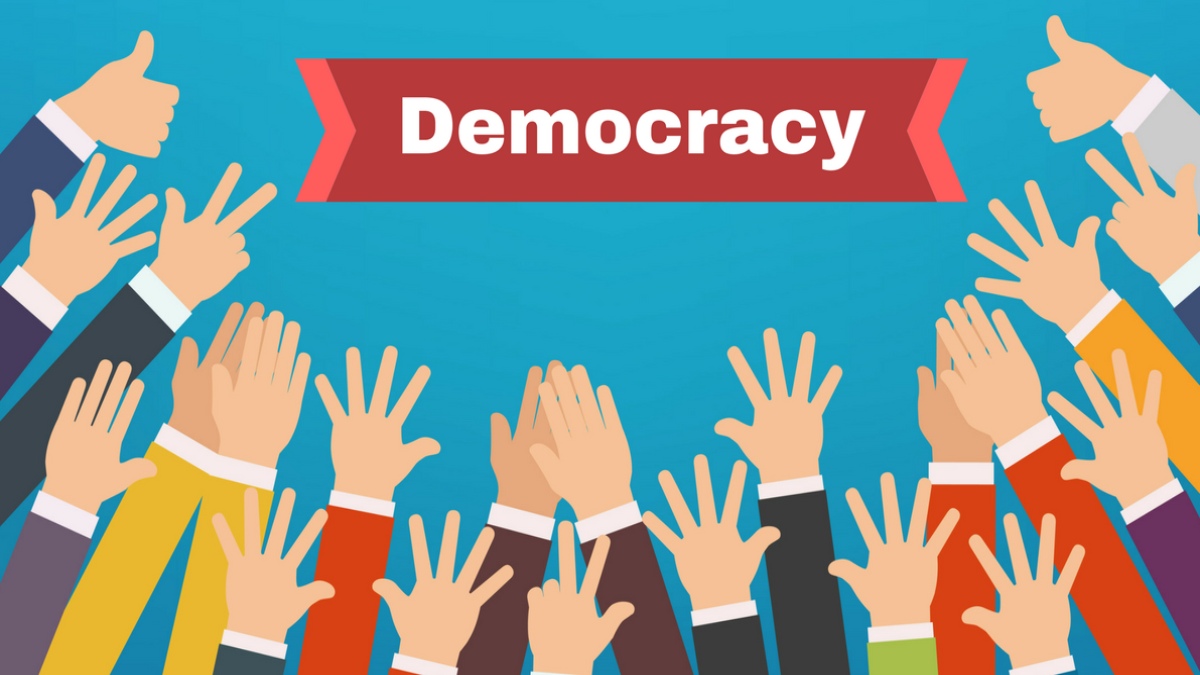
The BJP party's failure to secure a majority in the 2024 elections was a significant political setback. This outcome not only underscores the democratic nature of Indian governance but also the party's accountability to the will of the people. The article examines how democracy puts a brake on the NDA regime, ensuring that government policies align with the majority's interests. The Constitution became a focal point in the mobilisation process for the first time. The democratic values have challenged the de facto Hindu Rastra and led to the party's defeat and diminished influence in Uttar Pradesh, having the largest number of seats in the Parliament. This shift is of immense significance, as it reaffirms democratic values such as equality, citizen's rights, and justice. Furthermore, it underscores the importance of those in power being accountable to the people, protecting human rights, and maintaining peace and order in the country.
The most basic form of democracy is a system in which the governed select the government. However, this system does not operate in isolation. It relies on the active engagement of political parties, which serve as a powerful and enduring mechanism for articulating public opinion within a democratic government. These parties function as a crucial link between citizens and the state, transforming the democratic process into a 'collective endeavour'. In a democratic society, the confidence of its citizens in the executive reflects their belief in its ability to respond to collective problems. The executive function hinges on the trust that officials will adhere to the rules established within the political realm.
A study encompassing 13 states, six of which governed by the BJP – Andhra Pradesh, Karnataka, Tamil Nadu, Telangana, Bihar, Madhya Pradesh, Uttar Pradesh, West Bengal, Delhi, Punjab, Rajasthan, Maharashtra, and Gujarat – and 11 public services, revealed that 38% of households across India perceive an increase in corruption levels, while 37% believe that corruption in public services has remained unchanged. Approximately 27% of households encountered corruption at least once while utilising these public services (National Herald India). The research identified transport, police, housing, land records, health, and hospital services as the most corrupt sectors of public services, a stark indication of the urgency. Despite "digital inclusion", 7% of respondents stated they had to pay a bribe to obtain an Aadhaar card, and 3% reported paying a bribe to acquire their voter ID card. The urgency of addressing corruption is clear, as it undermines the scope of collective actions and constricts the realm of democracy. It causes inefficiencies in public services, erosion of citizen's rights, and protection with the government.
The NDA government seems to have lost touch with the citizens, failing to assess the economic situation objectively. In 2014, NDA got a majority in Lok Sabha on a development and economic reforms mandate. While India is one of the fastest-growing economies in the world, it is also one of the most unequal countries. Inequality has been rising sharply for the last two decades, widening the gap between the rich and the rural poor. Forbes billionaire rankings show that the number of Indians with a net wealth exceeding $1 billion has surged from just one in 1991 to 162 in 2022. Remarkably, Mukesh Ambani and Gautam Adani are the two wealthiest Asian men. The top 10,000 wealthiest individuals among the 92 million Indian adults possess an average of Rs 22.6 billion, 16,763 times the country's average.
In contrast, the top 1% holds an average wealth of Rs 54 million. This significant wealth gap is indeed a cause for concern. The World Inequality Lab predicted that by 2022-23, the top one per cent of income and wealth shares (22.6 per cent and 40.1 per cent) had reached their highest historical levels. India's top one per cent income share is among the highest in the world, surpassing South Africa, Brazil, and the USA. The richest have amassed a substantial portion of the wealth generated through the privatisation of the economic sector. Their wealth is growing at an alarming rate, while the poor are still struggling to earn a minimum wage.
The vulnerable and disadvantaged groups have noticed significant exclusion. The recent election has brought to light a significant fact that the vote of the poor, even in the midst of a significant economic gap, is of immense importance. It is because 'political equality' is a cornerstone of democracy. It ensures that every vote, irrespective of the voter's social background, carries the same weight and grants equal access to political rights and participation in the country's governance. It fosters a sense of security and justice and serves as a potent reminder that India's progress should be synonymous with expanding rights and opportunities for all citizens. Our leaders must work towards creating a society where every member has an equal chance to thrive, requiring continuous and proactive policy changes and advocacy efforts.
Young citizens are facing a significant challenge—unemployment. There is intense competition in the job market, with very few job opportunities available compared to the large number of job seekers. Furthermore, the situation is worsened by leaked question papers, bribery-related corruption, and sudden cancellations of exams and interviews. All of these factors contribute to a bleak and challenging employment scenario. The younger generation seeks stable employment with security and reasonable wages, ideally in government or government-regulated organisations.
When it comes to public healthcare, it is expanding in terms of quantity rather than quality. On the one hand, private hospitals have grown in both quantity and quality, but on the other, they are unfortunately unaffordable to the average citizen. While health expenditures have grown to 1.9% of the GDP, they still fall short of the 2.5% of GDP target set by the National Health Policy 2017 (Observer Research Foundation). There is a need for sustained and increased investment in healthcare infrastructure, particularly in rural and urban areas. Shortages of medical professionals, equipment, and machines further exacerbate this situation, resulting in low public satisfaction with the healthcare system.
Moreover, the significant variations in budget and revised estimates for the year 2024 across some of these social sectors, including skill development, social justice and empowerment, and tribal affairs, point out that despite the emphasis on process reforms and accountability, there are still grave inefficiencies in the implementation of various social sector programmes. Therefore, ensuring that the allocated funds are utilised effectively and reach the intended beneficiaries has remained a challenge. The rising prices and inflation also take a toll on the poor and middle-class families, leaving them grumpy and hungry.
The budget's disregard for the agricultural sector threatens food security. With nearly two-thirds of the population residing in rural areas and agriculture employing a significant portion of the working population, neglecting the agrarian economy could hinder the realisation of the vision of Viksit Bharat. The influence of electoral politics on budget allocation has led to unique favours for the states supporting the ruling coalition, undermining the principles of centre-state relations and highlighting the predominant power held by the central government in the federal structure.
It is important to note that poor performance in democratic values of equality, rights, and justice has contributed to the BJP's decline in electoral performance. While India is aiming to achieve the Sustainable Development Goals by 2030, it is essential to focus on democratic institutions and structures and a careful balance of state power with diverse competing interests.
.jpg)
.png) Cedric Prakash
Cedric Prakash
.jpg) Elsa Lycias Joel
Elsa Lycias Joel
.jpg)
 A. J. Philip
.png) Jacob Peenikaparambil
Jacob Peenikaparambil
.jpg)
.png) John Dayal
John Dayal
.jpg)
.jpg)
.png) Joseph Maliakan
Joseph Maliakan
.png)
.png) Robert Clements
Robert Clements
.jpg) Cedric Prakash
Cedric Prakash
 ICPA
ICPA