

.png) Jaswant Kaur
Jaswant Kaur
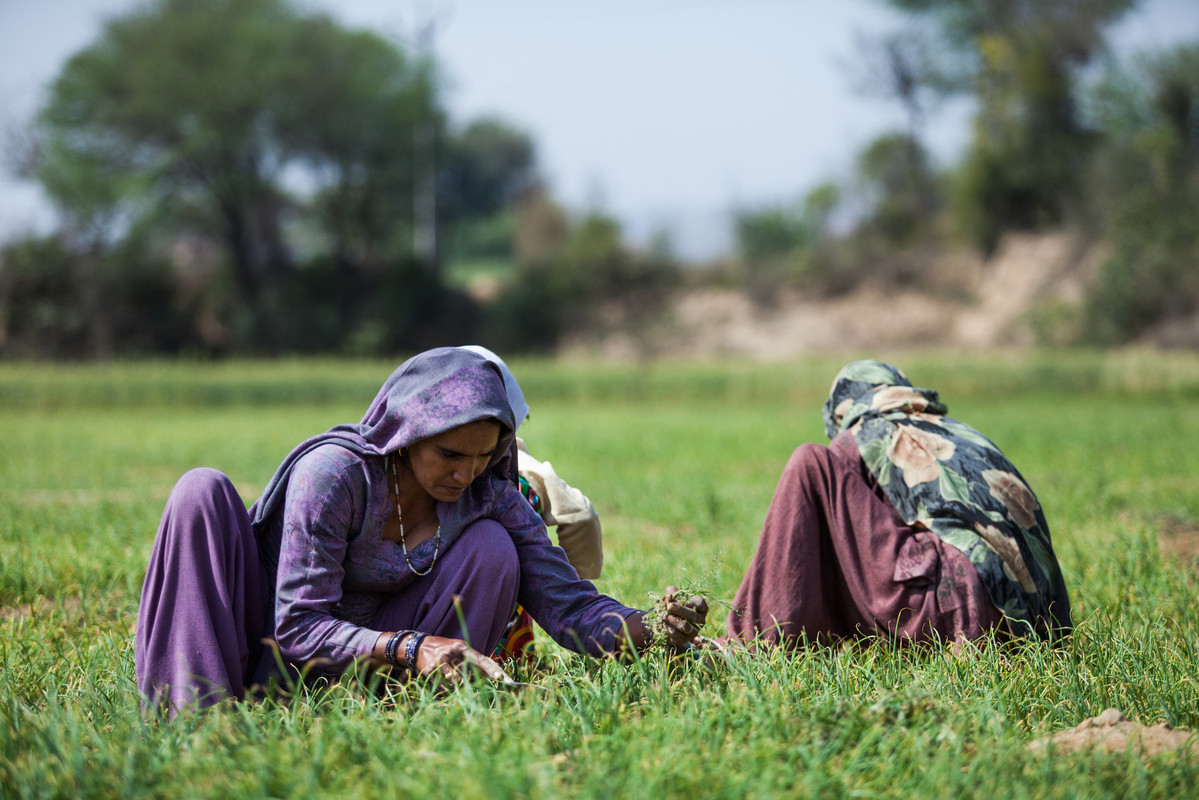
Every year on International Women's Day, the conversation around women's empowerment follows a familiar script. We celebrate women who have shattered glass ceilings, built successful businesses, and balanced demanding careers with family life.
Then come the advertisements showcasing women confidently navigating both office corridors and household chores. These narratives are inspiring and necessary. They signal progress and possibility. Yet they also reveal a subtle bias in how empowerment is imagined.
The dominant image of the empowered woman today is that of the professional woman, financially independent and visible in the marketplace. But this narrative leaves out hundreds of thousands of women whose labour sustains homes and communities. In India, the largest group of women contributing to society are not corporate leaders or entrepreneurs—they are homemakers.
This year's International Women's Day theme, "Give to Gain," offers a useful lens for rethinking this reality. It focuses on the power of reciprocity and support. When people, organisations, and communities give generously, opportunities and support for women increase.
The phrase also suggests that progress often emerges when societies recognise contributions that have long gone unnoticed and begin to value them differently. If one can think of a few contributions in India that illustrate this idea more clearly, it is the unpaid labour of homemakers.
India's female labour force participation rate remains among the lowest in the world. According to recent estimates from the Periodic Labour Force Survey, the female labour force participation rate has improved modestly in recent years but remains far below that of men. Even with improvements, only about a third of women are counted as part of the labour force. In contrast, male participation rates exceed 70%.
At first glance, this statistic suggests that millions of Indian women are not working. However, it also leads us to reflect on the limitations of how work itself is defined. Even recent labour reforms have done little to recognise unpaid domestic labour within the framework of economic activity.
Across the country, millions of women wake before dawn and spend the day cooking, cleaning, caring for children, supporting the elderly, managing household finances, and maintaining the emotional architecture of families. In the process, many of them end up in abusive and toxic relationships. These tasks are not occasional duties but full-time responsibilities that demand time, energy, skill, and patience. Yet, because they are unpaid and performed within the household, they do not count as economic activity.
Data across countries reinforces how deeply gendered unpaid work remains. OECD analysis shows that Indian women spend roughly five to six hours each day on unpaid domestic and care work, while men spend less than an hour. The gap is more than double the average gender difference seen across OECD countries, where the daily disparity is around two hours. This unequal distribution of care work is not merely a social issue. The OECD identifies it as a central reason why women participate less in the labour force and earn less over their lifetimes.
In rural areas, the burden can be even greater, especially when household responsibilities overlap with tasks such as collecting water, rearing animals, and caring for crops. When these hours are aggregated nationwide, the scale of unpaid work performed by women becomes enormous.
Economists who attempt to estimate the monetary value of unpaid care work often arrive at striking figures. Several studies suggest that if the work performed by homemakers were compensated at modest wage levels, it could amount to between 13% and 17% of our gross domestic product (GDP). That figure can easily rival the contribution of some of the largest formal sectors of the economy.
Yet the homemaker rarely appears in economic discourse. In statistical tables, she is often classified as "not in the labour force." In social conversations, she is sometimes described as "not working." The phrase is casually used and widely accepted, even though it describes a life that is defined by constant labour.
This contradiction lies at the heart of our gender debate. The country depends heavily on women's unpaid labour, yet that labour is rarely acknowledged as work. The legal system in India has begun, slowly and cautiously, to address this contradiction. The courts have increasingly recognised that domestic labour carries economic value even when it does not produce a salary.
In a recent decision, the Delhi High Court reflected on the role of homemakers within the institution of marriage. The court emphasised that a spouse who manages the household is not economically idle and cannot be treated as such in legal proceedings. Domestic labour, the court observed, contributes significantly to the family's well-being and should be recognised while determining maintenance or financial entitlements.
This observation may appear simple, but its implications are profound. For decades, legal disputes involving maintenance or compensation often relied heavily on visible income. When one spouse earned money, and the other managed the household, the economic value of the latter's contribution was rarely quantified. Over the last few years, the judiciary has started challenging this imbalance by acknowledging that a marriage is an economic partnership in which both partners contribute in different ways.
The Supreme Court has also acknowledged the economic value of homemakers in accident compensation cases. When courts calculate damages following the death of a homemaker in a road accident, they now increasingly attempt to assign a financial value to the services she would have continued to provide her family. This approach reflects an evolving understanding that domestic labour is not merely an emotional contribution but also an economic one.
Such judicial recognition represents an important step toward correcting a long-standing oversight. Yet legal acknowledgement alone cannot transform social attitudes.
The deeper challenge lies in how empowerment is framed in public discourse. Over the past two decades, India's economic transformation has been accompanied by a powerful narrative about the rise of the modern Indian woman. She is portrayed as ambitious, financially independent, technologically savvy, and able to balance career and family with remarkable ease. This image reflects genuine progress and has inspired countless young women.
However, it has also created an unintended hierarchy among women. Professional success has become the most visible symbol of empowerment, while the labour of homemakers is often overlooked or even dismissed. A woman who manages a household may sometimes feel that her contributions are less valued simply because they do not produce a paycheck.
This perception is neither fair nor accurate. Homemakers sustain the social infrastructure on which every formal workplace depends. Every professional who arrives at an office with a packed lunch, every child who enters a classroom ready to learn, and every elderly parent who receives daily care clearly benefit from this unpaid, unrecognised labour. Without the invisible labour of homemakers, much of the stability that allows families to pursue education, employment, and opportunity simply would not exist.
The paradox is striking. While we celebrate economic growth and entrepreneurial ambition, the country's care economy continues to rely largely on unpaid labour by women.
This imbalance also helps explain why our female labour force participation rate remains low. When women shoulder a disproportionate share of domestic responsibilities, their ability to enter or remain in the workforce becomes limited. Childcare, eldercare, and household management consume hours that could otherwise be invested in education, skill development, or employment.
The challenge, therefore, is not simply about encouraging women to work outside the home. It is also about redistributing care responsibilities within households and recognising that unpaid labour has real economic value.
Countries that have made significant progress in gender equality often combine workforce participation policies with strong care infrastructure. Affordable childcare services, parental leave policies, and flexible work arrangements enable both men and women to balance family responsibilities. This also demands a shift in the cultural and societal system to recognise caregiving as a shared responsibility rather than a gendered obligation.
We would require a similar transformation. However, recognising the contribution of homemakers should not mean romanticising unpaid labour or expecting women to carry its burden indefinitely. Instead, it should lead to policies that support caregivers, expand economic opportunities for women, and encourage a more equitable distribution of domestic work.
International Women's Day offers an opportunity to broaden the narrative of empowerment by recognising the silent, invisible homemaker who prepares meals, manages finances, nurtures children, and cares for ageing parents, sustaining the very fabric of society. Her labour may not appear in GDP calculations, but it underpins the productivity of every sector of the economy.
The conversation about women's empowerment in India has often focused on what women must achieve. Perhaps the time has come to focus equally on what society must recognise.
For millions of Indian women, empowerment may not arrive through boardroom appointments or corporate promotions. It may begin with something far more fundamental: the simple recognition that the work they perform every day, within the walls of their homes, is real work.
We often ask women to enter the workforce to contribute to the economy. But before that conversation begins, the country must recognise a quieter truth: the economy itself has always stood on the unpaid labour of its women.
.jpg)
.png) Cedric Prakash
Cedric Prakash
 ICPA
ICPA
 ICPA
ICPA
 ICPA
ICPA
 ICPA
ICPA
 ICPA
ICPA
 ICPA
ICPA
.jpg)
 A. J. Philip
.jpg)
.png) Jacob Peenikaparambil
Jacob Peenikaparambil
.jpg)
.png) John Dayal
John Dayal