

.png) Jaswant Kaur
Jaswant Kaur
Five years are sufficient to measure the success or failure of any scheme or a project. In doing so, one may get interesting data to analyse, understand the shortcomings, limitations and work on improvising them.
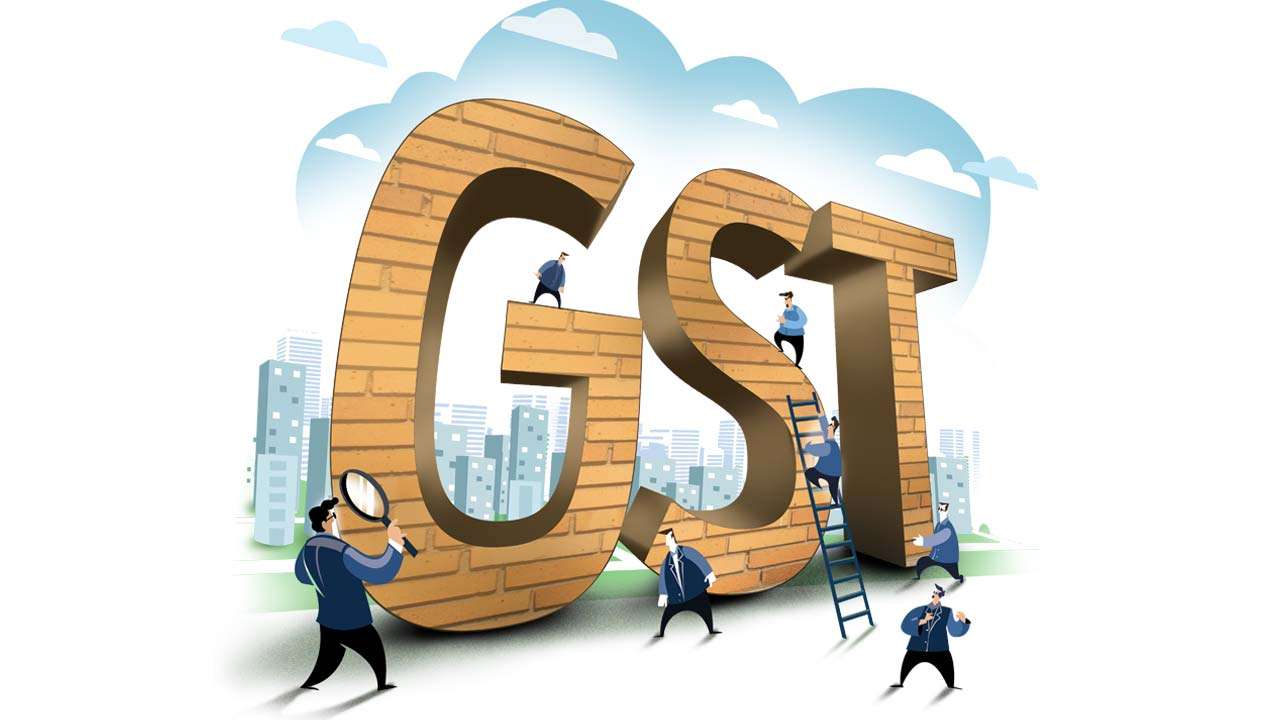
The Goods and Services Tax (GST) has completed five years of its existence. We still remember the dramatic manner in which it was implemented. With much fanfare, GST was introduced on the midnight of June 30, 2017, with a promise of “one nation, one tax”. The function was akin to the one organised when India got Independence. Perhaps, it indicated freedom from the cascading taxes.
We all assumed that all the services and goods will have one tax rate throughout the country. Much to the despair of everyone, we were given five tax slabs to begin with! We were given a promise that GST will be able to contain inflation, ensure smooth transit of goods, absorb several taxes, provide a user-friendly taxation system, and so on.
It was also mentioned that petroleum products will come under the GST regime soon. In all, we were made to feel as if we will be relieved from a huge truck-load of burden.
Five years on, nothing much has changed. The tax slabs remain unchanged. Of course, some items which fell in higher slabs were shifted to lower ones and vice versa. However, we do not know on what basis these tax rates are decided.
For instance, we end up paying 5 percent on LPG, 18 percent on medicines but only 0.5 percent (rate has been revised to 1.5 percent effective from July 18, 2022) on cut and polished diamonds. The government wants us to buy diamonds, not life-saving medicines! In fact, many items which were exempted from GST, including stationery items, will soon come under the 18 per cent tax rate.
There is no respite to inflation. In fact, prices of all essential items have increased manifold. Petroleum products are being sold in the same old fashion with multiple taxes. The finance minister says that the GST rang the death-knell to 31 types of taxes that used to be levied.
Technically, we have not received freedom from what is called the cascading effect of these taxes. Yes, the number might not be 31! For the simple reason that higher fuel prices have a direct impact on the prices of goods being transported from one place to another. How can the government say that the GST is the only deciding factor since fuel is still under the old tax regime?
As far as easy filing of tax returns is concerned, it is still a compliance-heavy cumbersome procedure. The government has made a few changes but not to the level that was expected. Not only this, availing of input tax credit (ITC) is still an uphill task.
The GST, by its very nature, is levied on the value-added on goods and services to avoid taxation at several levels. However, a supplier will not be able to claim input tax credit till the time the buyer deposits the tax. Small businessmen and traders are facing liquidity issues. Covid-19 has worsened their situation.
To add to their woes, the department has been sending notices to taxpayers for mismatches in ITC. The businesses have to bear the burden of non-compliance on the part of their suppliers. Despite the fact that several high courts have decided the matter in favour of those who have deposited the taxes. Still, the system has not provided a way out for this problem, which has been there since the beginning.
To cut the story short, the GST has become a hurdle in “ease of doing business”. People are more worried about departmental audits, notices, availing of ITC, rather than focusing on revenue generation. How will the government achieve its dream of making India a $5 trillion economy, if it cannot solve issues commonly faced by the majority of the taxpayers?
In one of her columns published in a leading daily, the finance minister has projected the GST as a sort of game changer. She is all praise for the way the GST Council has brought the “quasi-federal” nature of the country by giving representation to the states. “The Centre and the states held each other’s hand to not just face the crisis but to lift our economy onto the path of recovery,” she says.
However, the ground reality is different. The states were not in favour of the GST. The council was a mechanism to bring them on board. Every state had anticipated a revenue loss during the transition period. The Centre had come up with a compensation plan/minimum revenue guarantee for five years to make up for the losses suffered by the states. But for this, the state governments would not have become a part of this scheme. The GST would never have seen the light of the day.
The Centre levied a cess on luxury, demerit and sin goods (whose consumption has negative effects on the consumer e.g. tobacco, alcoholic beverages, recreational drugs, etc.) to make for the compensation amount. The cess was levied over and above the highest rate of 28 percent. The finance minister tried to wriggle out of this guarantee during the Covid-19 pandemic but in vain. The guarantee was available till June 30. The states, irrespective of their affiliation with any political party, want the compensation regime to continue for another five years.
The government has been claiming that the monthly GST collection has seen a considerable increase since its launch. If this is the case, why do state governments still want the compensation plan to continue? Except for five states, the revenue of the state governments has not touched the projected revenue.
Be that as it may, the ruling government was certainly able to manoeuvre the resistance to get the new law passed but it could not produce the anticipated results. One, it was implemented when the economy was already facing a crisis. Demonetisation had crippled the small businessmen and traders, who were struggling to make ends meet when they were forced to adopt the new regime.
GST, as a legislation, was built on the legacy of service tax and value added tax. It continues to suffer from the systemic flaws and historical issues relating to intermediary transactions, real-estate businesses etc. The government has not done much to resolve these matters. In fact, businesses who were having legal battles under the old regime have not been given a leeway so far.
Lastly, the government has not even set up the GST Appellate Tribunal. The disputes are not being resolved leading to piling of litigation, high operational costs with lower liquidity in businesses. At present, the High Courts are being flooded with writ petitions. The system is already loaded with cases from other legislations. How can we expect quick resolution from the High Court? A quicker and a fast-track adjudication process is urgently needed.
We can only hope from the government for quick resolution of these problems. May the fifth birthday of GST be its new beginning.


.jpg)
 A. J. Philip
.jpg)
.png) Jacob Peenikaparambil
Jacob Peenikaparambil
.png) Chhotebhai
Chhotebhai

.jpg) P. A. Joseph
P. A. Joseph
.png)
.png) Robert Clements
Robert Clements
.jpeg) A. J. Philip
A. J. Philip
.jpg) Jacob Peenikaparambil
Jacob Peenikaparambil