

 P. A. Chacko
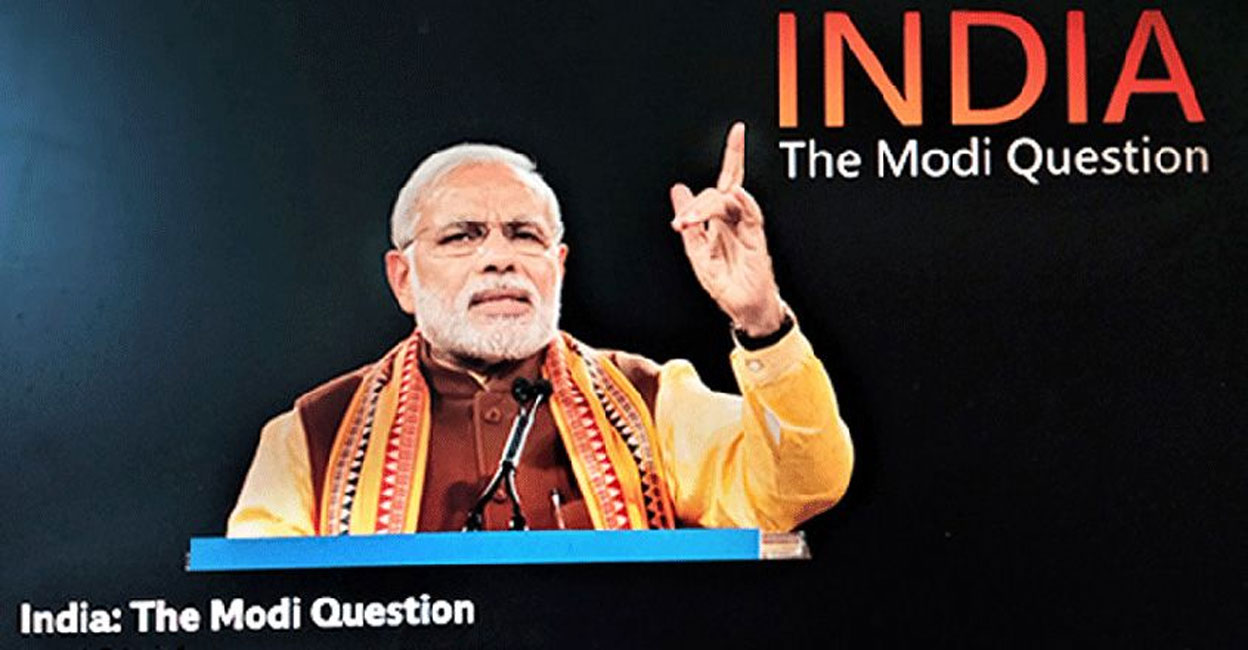
Why this fright and fury? If India is as great as we broadcast from our rooftops, why be frightened by such a ‘small fry’ as BBC or the Hungarian-American businessman George Soros? Why are we paranoid about a news item that described an event that happened in India? Or, fuming against a man who said that he would like to see India as a democratic and liberal nation? Are such items meant to declare war on our India or defame our nation’s name and glory?
Shakespeare the Bard’s sonnet number 100 calls on the Muse to cast away its fury: ‘Where art thou Muse....Spend’st thy fury on some worthless song, darkening thy power to lend base subject light?’ Is the Muse of India so frightened and angry like a child fuming in fury and double-kicking against a granite wall?
Kick, kick, my India, and hurt yourself in your paranoid fury! Our reactions are impish and childish, to say the least. Let us not forget that the world is a global family. And, in this globalized world, anything that happens in any nook or corner comes under everyone’s lens and scanner. As Supreme Court advocate Kapil Sibal reminded the apex court that our every movement is observed and recorded under Google Lens which functions like a global CCTV. When the Chief justice of India gets into his car, where he goes, how he gets into the Court premises etc. are scanned and laid bare under the Google lens. The same applies to the President or the Prime Minister of India or even the pedestrian or the housewife.
When the Indian Express or The Hindu reported the Godhra carnage and what evidences the witnesses gave under oath about who said what, who did what or who put oil in the Godhra flame, there was no fury. But, when the British Broadcasting Corporation, a worldwide news agency, said the same thing, we unleash all our hornets to attack it because the news is ‘tarnishing not just Mr. Modi’s image but India’s image itself.’
What an outlandish reaction? The recent reporting of the incident that happened in 2002 has been questioned for its timing. That is where some people’s paranoia gets exposed. The 2024 general election is nearing. Our politicians are on an image boosting exercise. The ruling dispensation gets annoyed about image sullying events coming in quick succession, reinforced with critical observations from news channels, courts and legal luminaries, pundits and pedestrians alike.
The government feels that things are getting too much. People are using their freedom of speech too liberally. Some anchors and news channels are getting bolder and need to be harnessed. Even the world media is gate-crashing into our premises. People making statements that they would like to see in India more of democracy and less of authoritarianism are speaking against the interests of India. Such people, if they are Indians, are anti-national and, if they are non-nationals, are promoting war against India.
Where will this paranoia end? When Indira Gandhi was pronounced guilty by the court and the news was flashed around, there was no fear of anti-national propaganda? Even after her having been killed, her critics even today cast aspersions against her dictatorial rule and declaration of emergency. Who considers them as anti-national or acts defaming the nation?
If Godhra carnage is talked about today, and when people say that there are evidences pointing towards the then Gujarat Chief Minister Narendra Modi’s implicit or complicit hand in it, it is considered an ‘anti-national act’. The pertinent question is, how does reporting the incident or implicating Modi in an incident that happened in 2002, dent our national image? Modi was CM of Gujarat in 2002. He was also a citizen of India. It was he who was the epicentre of news and views. How can we logically conclude that pointing finger at Modi sullies the image of the Prime Minister of India? Or for that matter, sullies the national image? What he did or what he refrained from doing then is the target point for news and views again and again. Such exercise may go on, and the accusing finger, irrespective of any court’s clean chit, may continue to dog him. Why fret over it?
When it comes to the 92-year-old philanthropist George Soros’ remark about wanting to see India with a regime with liberal views and principled democracy, the government’s ostrich-like reaction is rather funny. Political observers point out that even if it was to be responded to seriously, it could have been done so through proper channels rather than letting a small-time minister mouthing appellations and uncalled for statements. Her naming him ‘an economic war criminal’ was a gut reaction bordering on pettiness.
Observers point out that, perhaps for the BJP functionaries and the Parivar organisations Soros’ philanthropic grapes are sour. They observe that the BJP government’s representatives appearing for channel discussions cast aspersions on Soros’ funding some organisations of his liking. Meaning to say, RSS global fundraisers could not find favour with Soros. In other words, had they been receiving funds from Soros the billionaire, they would not have any hunch about Soros. Does political opportunism rule the roost as far as we are concerned?
Given the disarray of our opposition parties, it is too early to say what the 2024 election is going to be like. The writing on the wall for BJP may not be that clear. But, one thing is evident. The writing is getting clearer as days go by. Because, the furrows of angst on the faces of the Government and its backroom boys are a clear indication!
 Adv. Rev. Dr George Thekkekara
.jpg)
 A. J. Philip
.jpg)
.png) John Dayal
John Dayal
.jpg)
.png) Jacob Peenikaparambil
Jacob Peenikaparambil
.jpg) P. A. Chacko
P. A. Chacko
.png)
.png) Robert Clements
Robert Clements
.png) Cedric Prakash
Cedric Prakash