

.png) Jaswant Kaur
Jaswant Kaur
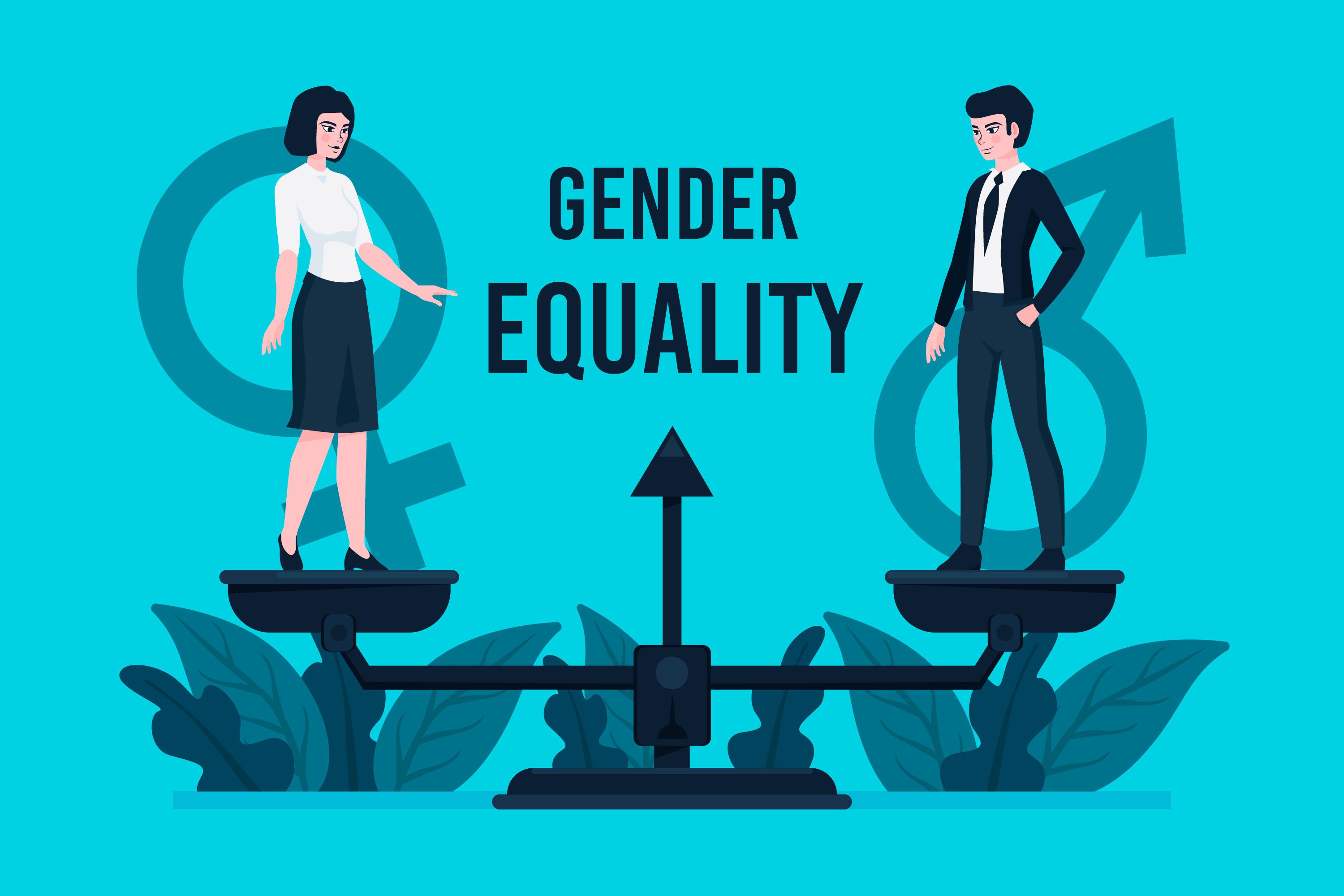
Every year, International Women's Day is celebrated worldwide. We vow to create an inclusive world that promotes diversity and equal rights for women. The movement that began in the early 20th century has undoubtedly gained momentum, but nothing much has changed during the past century. We are improving, but not at the pace we should have and certainly not uniformly across all demographics.
The latest research published by the World Bank tells a tale of vast disparity between men and women. The report says no nation has the same workplace rights and advantages for women as men! Yet, we create a perception of equality by celebrating women. And, to the utmost dismay, many believe that women have more rights than men, especially in a country like India, thanks to a few groups who are staunch opponents of gender equality.
In the foreword, Indermit S. Gill, Chief Economist and Senior Vice President for Development Economics at the World Bank Group, hopes that "my daughter's generation will be the last to face unfair barriers to its professional achievements."
The 10th in the series presents two sets of data: Women, Business and the Law 1.0 and an expanded version, Women, Business and the Law 2.0. For the first time, the research captures the law supporting women's rights and examines the frameworks supporting the law and expert opinion on the outcome of such law. The report is based on 10 indicators -- Safety, Mobility, Workplace, Pay, Marriage, Parenthood, Childcare, Entrepreneurship, Assets, and Pension.
Based on the World Bank's calculation of childcare and safety policies' impact on women's workplace participation in 190 countries, the report establishes that women enjoyed only 64 per cent of the legal protection compared to men globally. This is 14 percentage points less than the previous version when these factors were unaccounted for.
This is a slap on the face of those who think women have been given a lot of power. Men are now facing the heat in quite a few legislations, which give women the power to take them to court in cases of domestic violence, dowry, etc. The World Bank report says that, on average, countries have only 39.5 per cent of the machinery required to implement the law. In other words, about two-fifths of the supportive frameworks needed to promote the implementation of gender-equal laws have been established.
Ninety-five countries have laws providing equal remuneration for equal work for men and women. Only 35 have detailed ways and means to ensure their implementation. The report shows that women earn only 77 cents against a dollar men earn for the same work. India is one of these 95 countries with a law in place but no mechanism to implement it in letter and spirit, nor any way of measuring its impact.
When it comes to the safety of women, the report suggests that about 55 per cent of economies have comprehensive laws addressing domestic violence, while only 27 per cent have adequate legislation addressing child marriage. However, only 43 per cent of the countries have mechanisms to address multiple forms of violence against women.
The report said that while 151 countries had laws against sexual harassment in the workplace, only 40 had laws that covered abuse in public areas or on public transport, meaning women were not protected on their way to work.
"All over the world, discriminatory laws and practices prevent women from working or starting businesses on an equal footing with men," says Indermit Gill. "Closing this gap could raise global gross domestic product by more than 20 percent – essentially doubling the global growth rate over the next decade – but reforms have slowed to a crawl."
Considering that women have many tasks, largely unpaid work, besides what they do in the workplace, it is essential to provide enough flexibility in workplaces to promote their participation. However, the report shows that only 36 per cent of countries have provisions for flexible work arrangements, with either flexible work hours or work from home, and only 19 per cent have written guidelines for such arrangements.
While 65 per cent of the countries allow one day of paid leave for fathers, only 16 per cent incentivise paternity leaves. It means that this domain is relegated to a woman's responsibility. Despite this, when it comes to retirement, the time devoted by a woman to fulfilling this responsibility is not even accounted for when calculating the pension benefits in 43 per cent of countries. Only 15 per cent of the countries have instituted some form of incentive that affects women's retirement benefits.
If one looks at the data on childcare indicators, one will find that 77 per cent of countries have a provision for establishing centre-based childcare services. However, only 47 per cent of economies have a centralised registry or database of childcare providers. Very few countries have readily available information on work-life balance for single or married mothers who wish to work to provide for or support themselves and their families. India is one of them. If we address this gap, it will directly impact our Gross Domestic Product to the extent of one per cent if one goes by the calculations made by the World Bank.
On the entrepreneurial front, only 35 per cent of countries have data on women-led businesses. How can we then imagine the existence of effective public policies to promote women entrepreneurs? Only 13 per cent of countries mandate a gender quota for corporate bonds!
India scored 74.4 on the legal frameworks part in Women, Business and the Law 1.0 when indicators on safety and childcare were not considered. The score fell to 60 after including these indicators. Against the widespread perception that we as a country have been progressive, at least in enacting enough laws to protect the rights of women, the report is a stark eye-opener. We need to work hard, even to enact legislation and promote the female workforce participation rate.
The score further dips to 54.2 when it comes to supportive legal frameworks. This means we are only half prepared to implement and monitor the law's effectiveness. The expert opinion score is barely 35.6, which shows that our laws have not been productive in solving the purposes for which they have been enacted.
We must be deeply introspective if we want to promote gender equality. According to expert opinion, Bhutan is the only country in South Asia with a score of 45 regarding achieving legal outcomes. This means we can learn a lot from Bhutan in figuring out strategies to help improve our legal frameworks' effective implementation and monitoring.
The narrative centred on ESG (Environment, Sustainability and Governance) and DEI (Diversity, Equity, and Inclusion) has picked up a lot of steam lately. But it does not seem to have worked in favour of women. Our legal frameworks are more of a lip service to women's empowerment. If we really wish to achieve socioeconomic progress in real terms, we have to work with a much more focused and concerted approach to bringing women to par with men. If India chooses to miss the opportunity to bring gender equality, it will never be able to achieve its dream of becoming a developed nation, let alone a superpower.
.jpeg)
 A. J. Philip
.jpg)
.png) Jacob Peenikaparambil
Jacob Peenikaparambil
.jpg)
.png) John Dayal
John Dayal
.jpg)
 Pachu Menon
.jpg)

.png)

.png)
.png) Robert Clements
Robert Clements
.jpg)