

.jpg) Joseph M. Dias
Joseph M. Dias
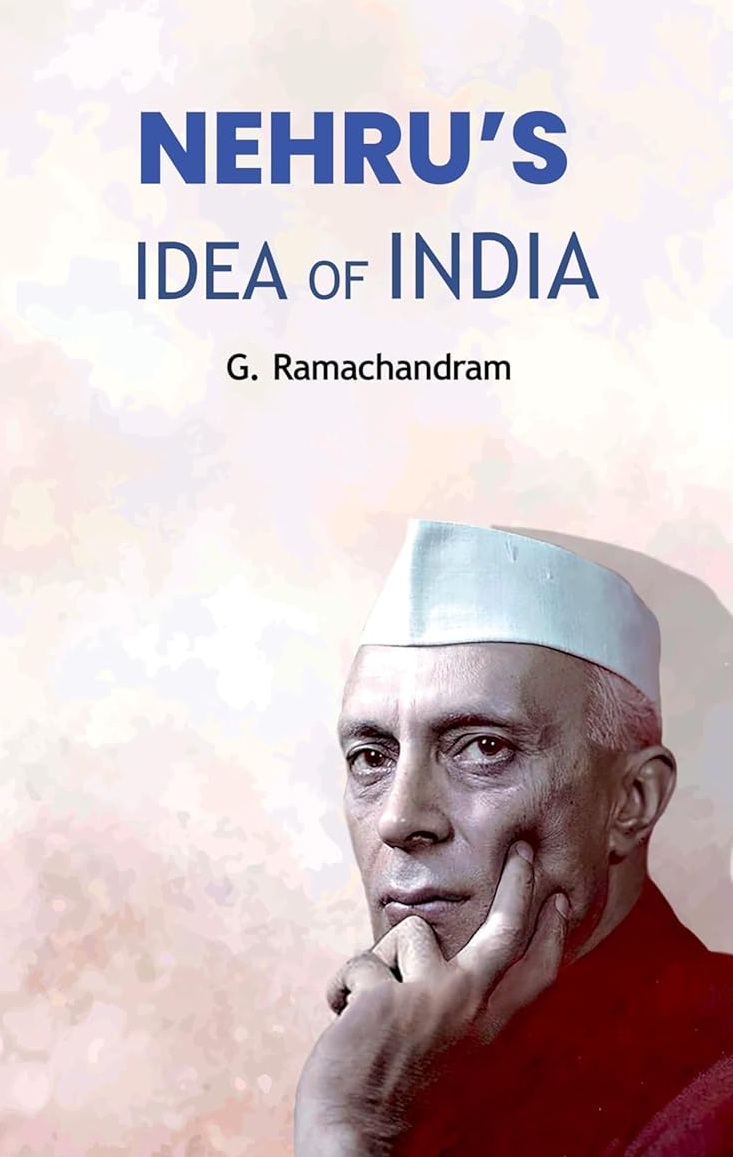
In this timely book, much-needed for our times, Dr G. Ramachandram presents a series of reflections on the Indian freedom struggle and the role played by a galaxy of eminent leaders of the country, led by Mahatma Gandhi and Jawaharlal Nehru. These reflections were written on different days between May 2020 and October 2023.
Just perusing the brief titles of these remarkably accurate historical jottings will give the reader a reasonably comprehensive knowledge of the Freedom Movement in India that culminated in our independence on August 15, 1947. A few examples of these titles are Nehru's Idea of India, Understanding India, The Duumvirate: Nehru and Patel, A Democratic Revolution: The Last Phase of the Freedom Struggle: Do or Die, The Mystique about Nehru, Gandhi and Nehru: The Co-architects of the Freedom Movement-I, Gandhi and Nehru: The Co-architects of the Freedom Movement-II, Nehruvian Secularism: A glue that holds India together, Nehru's Democratic Socialism – Promise of a New World Order, Parliamentary Democracy that Pandit Nehru Nurtured, Gandhi, the Born Rebel, a Revolutionary, Radhakrishnan, the Philosopher-King; Democracy in India not easy, but successful in Nehru years… etc.
The author rightly writes, "Pandit Jawaharlal Nehru was one of the tallest leaders of the freedom struggle, having spent a decade in jails in British India. When he was elected the President of the Indian National Congress in 1929, Mahatma Gandhi said: "In bravery, he is not to be surpassed. Who can excel him in the love of country? He is as pure as a crystal; he is truthful beyond suspicion. He is a knight sans peur, sans reproche – the nation is safe in his hands." In his classic Book, The Discovery of India, Pandit Nehru says, "Today, India is four hundred million separate men and women, each differing from the other, each living in a separate universe of thought and feeling. If that is so in the present, how much more difficult is it to grasp the multitudinous past of innumerable successions of human beings. Yet something has bound them together and binds them still… India is a cultural unity amidst diversity, a bundle of contradictions held together by strong invisible threads… She is a myth and an idea, a dream and a vision, and yet very real and present and pervasive."
On August 15, 1947, Jawaharlal Nehru, as India's First Prime Minister, said at a press meeting: "The appointed Day has come – the Day appointed by destiny – India stands forth again after long slumber and struggle, awake, vital, free and independent. A new star rises, the star of freedom in the East, a new hope comes into being, a vision long cherished materializes." In his broadcast to the nation, he pledged, as the 'first servant of the Indian people', to serve them for their betterment, dedicating himself to truth and aesthetic values, emphasizing realizing the ideals and objectives that guided the freedom movement through worthy means. It was a pledge to make India a great nation, having no place for class distinctions and discrimination based on birth or caste or religion, to build a free and democratic India where every individual shall have equality of status and opportunities, and to secure freedom from fear, "for fear is not only ignoble but is also the parent of hatred and violence.".
Dr. Ramachandram proceeds to add, "If Gandhi provided the techniques of the non-violent non-cooperation and civil disobedience movements and raised the moral bar to paralyze the British government, it was left to Nehru to provide intellectual inputs and articulate the political agenda for attaining 'Purna Swaraj'. It is an amazing story of how Gandhi and Nehru – a formidable combination – could succeed in securing independence, when multiple forces: the communal organizations, the status quoists, the feudal Indian states, the industrialists, the talukdars and the zamindars, the subservient Indian Civil Service and practically every group that mattered – were pulling in the opposite direction, toeing the line with the British Government and jostling to seek favours to pursue their vested interests."
Each of these numerous vested interests and the gigantic problems that this vast multicultural subcontinent faces have been courageously and convincingly exposed in this precious volume. It is surely a must-read for anyone who wishes to understand the Sovereign Socialist Secular Democratic Republic that is India today, boasting a remarkably broad-minded and modern Constitution.
.jpg)
.jpg)
.png) Jacob Peenikaparambil
Jacob Peenikaparambil

.png) John Dayal
John Dayal
.jpeg)
.png) Joseph Maliakan
Joseph Maliakan

.png) Dr Arnald Mahesh SDB
Dr Arnald Mahesh SDB

.jpg) Jose Vattakuzhy
Jose Vattakuzhy
.png)

.jpg) Isaac Gomes
Isaac Gomes
.png)
.png) Robert Clements
Robert Clements