

.jpg) Dr. Arun Kumar Oraon
Dr. Arun Kumar Oraon
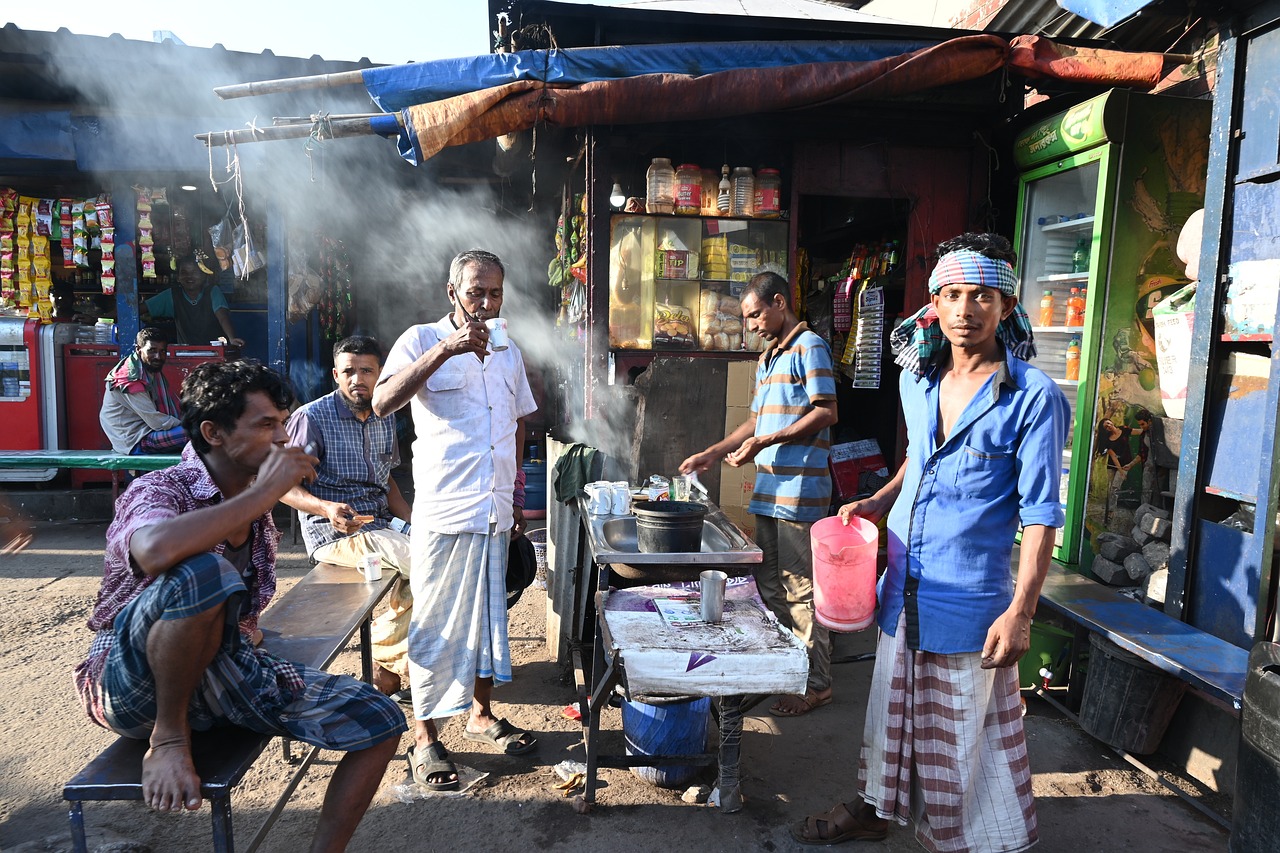
Basmatiya, a panchayat located near the India-Nepal border, is special in many ways, especially because the Muslim, Dalit, and Mahadalit communities live within the same village. I was in this area for about 26 days during my research work. I got a chance to sit and talk with the local people for a long time, which made it easier to understand the atmosphere of the village. The villagers take the morning tea at a stall opened by a person from the Muslim community. Members from all communities sit together and interpret the national and international news differently.
A few days ago, during Ramnavami in this Panchayat, there was a clash between the Hindu and Muslim communities near the Nepal border, which raises a question mark on the long-standing harmony and raises many questions: Was the Ramnavami procession taken out for the first time in this area? If this was not the first time it was taken out, why did clashes between the two communities break out?
Communal politics takes numerous forms. The tradition of placing statues of various deities at every square and intersection has begun, so much so that a locality is identified by the deity installed there. The villagers say that there were no deities on the squares and intersections like this ten years ago. People now have a different orientation regarding festivals. This attitude is becoming more visible, especially among the Dalit and OBC communities.
Despite being a Muslim-majority area, a palpable shift in the Hindu community's perception of their Muslim counterparts is evident. Particularly among the youth, a disdainful attitude towards the Muslim community is becoming increasingly prevalent. This is reflected in the reluctance of Muslim individuals to openly express their views in public, a stark contrast to the village's previous atmosphere of tolerance and acceptance.
The following incident is illustrative. Some people were watching the news concerning Bahraich in Uttar Pradesh on YouTube while sitting on the platform of a shop in the square. Meanwhile, two Muslims came there to buy some goods. The people watching the video regarded the two youngsters with suspicion for a while and remarked that until the Muslims were taught a lesson, they would continue like this. The two Muslim youths ignored the words of the people sitting there and went away.
During Hindu festivals, the meat and fish shops in the local market are closed; this was not a matter of course earlier. However, at present, such shops are completely closed; the villagers say that this has been done for the last few years so that there is no hindrance in the religious activities of the Hindu community.
It is expedient to state certain facts to understand the process. The local Hindu population has begun attaching much more importance to religious matters than was customary. A campaign is being run to celebrate every small festival prominently. The people are assured that this will help them overcome their economic crisis. Hindu temples are being established at the village entrances of Dalit and Mahadalit communities to some deities apart from their own.
In the village, temples of Hindu deities can be seen at the doors of backward castes. Villagers say that earlier, people used to go to Nepal or nearby temples to worship, but due to changing circumstances, people are building temples at the doorsteps of their houses.
The villagers assert that only the Hindus have been cared for ever since the Modi government came. During conversations, villagers often forget their core issues and start paying more attention to events abroad. The Prime Minister talks about giving 5 kg free ration to people experiencing poverty for the next five years from election platforms, which will benefit 80 crore Indians. But, in rural areas, this ration is given only 4.5 kg, and the quality of the food grains given in PDS in their area has deteriorated.
Most of the youth of this area migrate for labour, but no one talks about employment at the local level. The government is getting all the work around the village done by contractors instead of villagers, about which people do not raise any questions. It has become quite popular among the villagers that the country's condition has improved since the construction of the Ram temple.
The villagers misperceive that the raids conducted by the Enforcement Directorate (ED) and Central Bureau of Investigation (CBI) on opposition parties after the coming of the Modi government prove that the present government wants to end all forms of corruption. The popular opinion is that the Prime Minister is getting a lot of respect in foreign countries; before Modi, our Prime Minister was not respected in this way in any country. Therefore, being an Indian, all of us should follow every rule made by the Prime Minister and not criticise his work since the government respects the religious wishes of the Hindu majority.
Bihar has a history of communal violence, with the 1989 Bhagalpur riots being one of the worst examples of Hindu-Muslim violence in independent India. The violence began on October 24, 1989, and lasted for two months, killing more than 1,000 people and displacing 50,000. Therefore, the politicians and the locals must maintain communal harmony within the state.
Nowadays, WhatsApp "News" is the opinion maker in these areas. Videos by the Godi media and the BJP cell on YouTube strengthen such beliefs. The discussion among the villagers is the religious segregation done by the government, not education, employment, or farming. Seeds and bio-fertilisers should be discussed among the villagers. Instead, the attacks on the Muslim community in the country are the focus of their discussion, which is making them believe that they are superior to other communities. The influence of communalism is spreading in the rural areas and creating a situation of separation among the Muslim communities living there.
Though illiterate, the rural population has historically demonstrated commendable religious harmony in their daily routine. However, the scenario is changing towards communal disharmony.
.jpeg)
 A. J. Philip
.jpg)
.png) Jacob Peenikaparambil
Jacob Peenikaparambil
.jpg)
.png) John Dayal
John Dayal
.jpg)
 Pachu Menon
.jpg)

.png)
.png)
.png) Robert Clements
Robert Clements
.jpg)