

.png) M L Satyan
M L Satyan
Four months ago, I conducted a few sessions during a retreat held at Christeen Retreat Centre, Kottayam, Kerala. The participants consisted of a bishop, priests, nuns, and lay Catholics. I dealt with the topic of the Cross, Death, and Resurrection. I presented this in two parts. In the first part, my sharing focused on the "stations of the cross" beginning before the birth of Jesus. The participants said that my sharing was an "eye-opener."
For now, let us put aside the traditional ways of celebrating Christmas. Such celebrations were, are, and will be brighter, no doubt about it. Let us look at the darker side of Christmas based on certain gospel passages. Please note that my intention is not to vilify a celebration but to invite the readers to do a sincere reflection.
Economic status of Joseph: In ancient Judea, the profession of a carpenter was more than just a means of livelihood; it demanded a diverse skill set and a deep understanding of various materials. Carpenters were responsible for constructing everything from simple household items to more complex structures like homes and synagogues. This multifaceted job required not only technical proficiency but also creativity and innovation.
Joseph's daily life as a carpenter would have been filled with physical labour and meticulous craftsmanship. He would shape wood into functional and aesthetically pleasing objects using tools such as saws, chisels, and hammers. The quality of his work would have had to meet the high standards of his community, ensuring durability and reliability.
Beyond the physical aspects of carpentry, the profession also carried a certain social and economic standing. Carpenters were respected for their skills and ability to provide for their families through honest work. This respect extended into the community, where Joseph's reputation as a skilled carpenter would have made him a valued member. His role would support his family materially and establish a sense of identity and purpose within his social circle.
With Joseph's background, let us try to explore this further. A deeper study and reflection of the scripture will help us learn that Jesus was rejected on the following occasions.
Rejection 1: In Matthew's Gospel, we read: "This was how the birth of Jesus Christ took place. His mother, Mary, was engaged to Joseph, but before they were married, she found out that she was going to have a baby by the Holy Spirit. Joseph was a man who always did what was right, but he did not want to disgrace Mary publicly, so he made plans to break the engagement privately." (Mt.1:18-19)
It is a medically proven fact that a baby in the womb is affected by both positive and negative extrinsics. The negative energy of Joseph's secret plan affected Mary. As a consequence, the baby in her womb received that negative energy and felt terribly rejected. Did this rejection lead to a happy birth? No.
Rejection 2: In Luke's Gospel, we read: "Joseph went from the town of Nazareth in Galilee to the town of Bethlehem in Judaea. He went to register with Mary, who was promised in marriage to him. She was pregnant, and while they were there in Bethlehem, the time came for her to have her baby. She gave birth to her first son, wrapped in strips of cloth and laid him in a manger as there was no room for them to stay in the inn." (Lk. 2:4-7)
Just imagine a crowded Bethlehem. Joseph took Mary to all the inns, but the innkeepers had no pity for them and refused to let them in, as their inns were overcrowded. Joseph and Mary definitely felt humiliated. With pain and agony, they slowly ploughed through the crowd and found a cattle shed on the outskirts of Bethlehem. What was the impact of the humiliation and the pain Joseph and Mary went through? The baby in the womb felt that pain and humiliation. Did this humiliation lead to a happy birth? No.
Rejection 3: In Luke's Gospel, we read, "So the shepherds hurried off and found Mary and Joseph and saw the baby lying in the manger" (Lk 2:16). Jesus in the womb already felt rejection on two occasions. Now, his birth takes place in the midst of cattle, and that too in a lonely place. Was this a happy and joyful occasion for Joseph, Mary, and the baby Jesus? Definitely not.
In his letter to Philippians, Paul mentions the incarnation of Jesus: "Who, being in very nature God, did not consider equality with God something to be used to his own advantage; rather, he made himself nothing by taking the very nature of a servant, being made in human likeness" (Phil. 2:6-7). Discarding divinity and assuming humanity occurred in a pathetic scenario.
Over time, the Church gave many spiritual interpretations to the birth of Jesus and converted it into a celebration. The Church teaches that Jesus came as a Saviour to save humankind. The announcement of angels in the Gospels was used to add a joyful flavour to the birth of Jesus. Each region/country started celebrating the birth of Jesus according to their culture, social, and economic status. Today, we have diverse celebrations of Christmas. Maybe these are deviations.
But practically, the birth of Jesus was indeed very sad and painful for Joseph, Mary and Jesus. This is the bitter truth.
Frank questions:
1. Why did the Church put the rejection part of Christmas under the carpet?
2. Why do the clergy and laity keep promoting commercialised Christmas year after year?
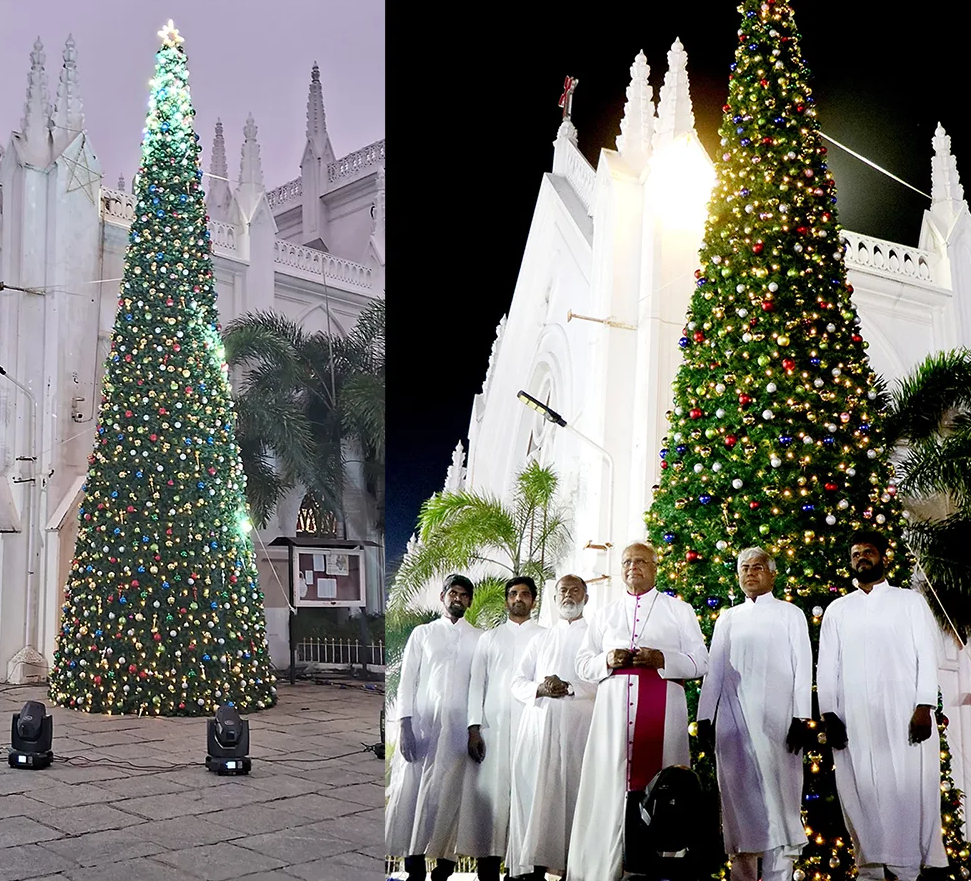
3. Can clergy and laity ever think of a Christmas without carol, crib, Santa Claus, gifts, X-mas tree, stars, cakes, wine, illuminations, fire-crackers, new dresses and parties?
As the Christmas season approaches, middle-class Christians start spending their savings. They also borrow if their Christmas budget exceeds their income and savings. It is an occasion for them to fall into a debt trap. They do all these to retain their social status and festive mood.
Imagine for a moment - if a baby in our family is born in an unsafe environment without any medical or personal support, will we ever celebrate such a birth? NEVER. Then, why should we celebrate the pain and rejection of Joseph, Mary and Jesus?
Last but not the least. There are several places like Bethlehem in our midst. Jesus is born even today among the socially and economically backward and excluded communities in pathetic conditions. Should we not recognise him in their midst? – Gospel according to Matthew 25:31-45
.jpg)
.jpg)
.png) Jacob Peenikaparambil
Jacob Peenikaparambil

.png) John Dayal
John Dayal
.jpeg)
.png) Joseph Maliakan
Joseph Maliakan

.png) Dr Arnald Mahesh SDB
Dr Arnald Mahesh SDB

.jpg) Jose Vattakuzhy
Jose Vattakuzhy
.png)

.jpg) Isaac Gomes
Isaac Gomes
.png)
.png) Robert Clements
Robert Clements