

.jpg) Acharyasri
Acharyasri

Christian faith is a faith in the forgiveness of sins through the suffering and death of Lord Jesus Christ on the cross. It is sustained and strengthened by the power and wisdom of God in Christ. The Divine Master had set his disciples free from the burden of their past sins, so that liberated from the hold of sins they might live for righteousness (1 Peter 2: 24). Thus, the Christian spirituality is a liberative spirituality of righteousness. ‘Liberation from sins’ and ‘living for righteousness’ are like the two sides of this liberative Christian spirituality.
According to Bhagawad Gita, the Lord incarnates from time to time on earth as ‘Avatars’ to protect the righteous and to destroy the forces of adharma (BG. 4: 7-8). Seen from such a point of view, every disciple of Sadguru Jesus Christ is called to be an ‘avatar’ to protect the righteous and to promote righteousness in the society/world. India today urgently needs such authentic disciples of Sadguru Jesus Christ to liberate her from the forces of adharma that are active in economic, political, social, religious and ecological dimension of her national life.
The Christian citizens of India belonging to various Christian Churches are called to be effective instruments of God in the historic divine mission of transforming the pandemic-devastated India into a spiritually awakened, morally regenerated, economically prosperous and politically enlightened ‘Bharatiya Dharma Rajya’ based on the liberative spirituality of righteousness through an Integral Renaissance of this ancient land of religions. The following five-fold paths in their individual and collective lives are required for them in order to be effective instruments of God in their historic divine mission in the pandemic-devastated India:
a. An ‘inner life’ of contemplation and meditation
“Whenever you pray, go into your room and shut the door and pray to your Father who is in secret; and your Father who sees in secret will reward you” (Matt. 6: 6), taught the Divine Master. Hence, apart from the vocal prayers in their Churches and homes, disciples of Christ need to adopt silent contemplation and meditation at a personal level. A contemplative life of inner purity and silence alone can give us the spiritual wisdom, strength and dynamism necessary for a great and challenging mission.
b. From competitive consumerism to voluntary simplicity
The all-pervasive competitive consumerism supported by a spiritless materialism promotes a self-destructive culture of conflicts and violence. It destroys the dignity of the human person, the dignity of human labour and the ecological harmony and environmental health of planet Earth. It promotes a mad race after more and more profit, luxury, pleasure, power and consumption. ‘Development’ is measured today in terms of the speed of this ‘mad race’ which can only lead humanity to a ‘point of no return’. Disciples of the Divine Master are called to follow a path of voluntary simplicity, loving service, joyful humility and heartfelt gratitude following the example of their Lord and Teacher Jesus Christ. An eco-friendly harmonious life style and a culture of voluntary simplicity alone can lead humanity to sustainable development, holistic health and abiding peace in this world.
c. Focus on ‘kingdom of God’ on earth
“Your will be done on earth as it is in heaven” is part of the prayer that the Divine Master taught his disciples. This was also an invitation for them to commit themselves to the mission of building up the ‘kingdom of God’ on earth. It was not a call to work for a ‘heaven’ in another world after death. “Strive first for the kingdom of God and His righteousness, and all other things will also be given to you”, taught the Divine Master. “The kingdom of God is not food and drink but righteousness and peace and joy in the Holy Spirit” (Rom. 14: 17. Hence, the call and mission of the disciples of the Divine Master in India is to usher in the kingdom of God of righteousness, and peace and joy in the Holy Spirit in India. This implies a call and mission to transform India into a spiritually awakened, morally regenerated, economically prosperous and politically enlightened ‘Bharatiya Dharma Rajya’ with the power and wisdom of God given to them in, with and through their Divine Master.
d. From ‘Fundamental Rights’ to ‘Fundamental Duties’
A nation is made great when its citizens fulfill their duties to one another and to their country which gives them their very identity. We are all ‘Indians’ irrespective of our religion, colour, caste, class, party or language. Our Passports are ‘Indian’ Passports; not Hindu, Muslim, Christian or Sikh Passports. Hence, all of us should work together to build a greater India of unity, peace, prosperity and happiness for all. For Christians, this national identity and nation-building task are of supreme importance because they are entrusted with a divine responsibility to protect and promote dharma (duties and/or righteousness) in the country.
e. Strengthening the ‘discipleship’ of Sadguru Jesus Christ
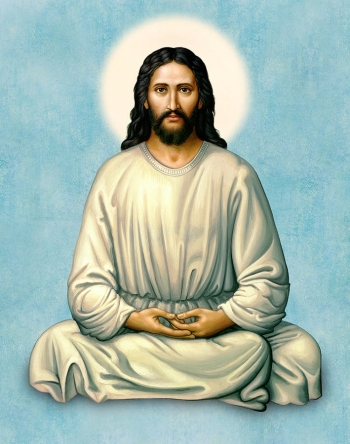
The points mentioned above will be possible only with a focus on the ‘discipleship’ of Christ. In Christian discipleship following the Indian tradition one is called to undertake a pilgrimage of faith as a disciple of the Divine Master from ‘Salokyam’ (familiarization with the Divine Master) to ‘Sayoojyam’ (abiding communion with God) through ‘Sameepyam’ (close personal relationship with the Divine Master) and ‘Saroopyam’ (imitation of the Divine Master). This tradition, if followed, will make disciples of Christ in India very powerful and effective instruments of God.
Can the disciples of Sadguru Jesus Christ in India rise up to take upon themselves the divine mission of transforming India into a spiritually awakened, morally regenerated, economically prosperous and politically enlightened ‘Bharatiya Dharma Rajya’ through the liberative spirituality of righteousness by giving practical ex
I for one believe that we can and we should.
(The author is the founder and Acharya-guru of Dharma Rajya Vedi & Dharma Rajya Mahayajnam for Integral Renaissance of India. swamisachidananda@gmail.com)

.png) Cedric Prakash
Cedric Prakash
.JPG)
 A. J. Philip

.png) Jacob Peenikaparambil
Jacob Peenikaparambil
.jpg)
.png) John Dayal
John Dayal
.jpg)
 Pachu Menon
.png)
.png)
.png) Robert Clements
Robert Clements