

 P. A. Chacko
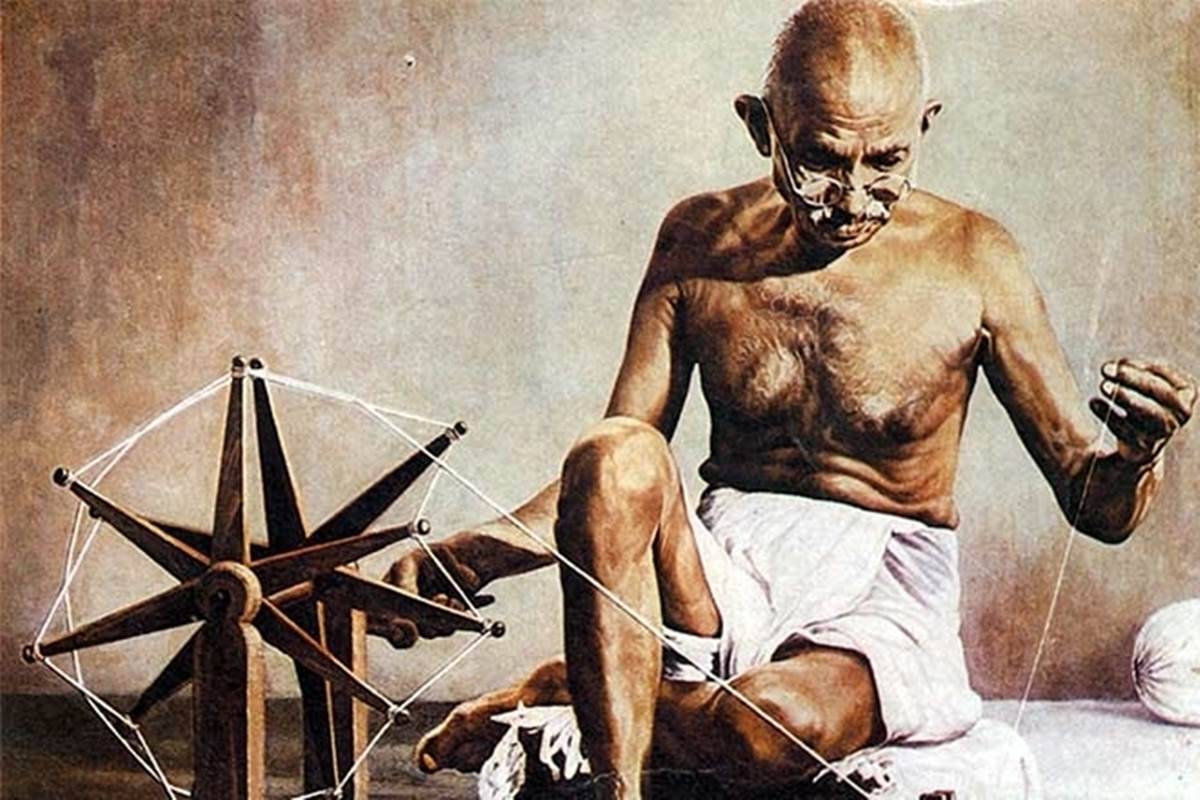
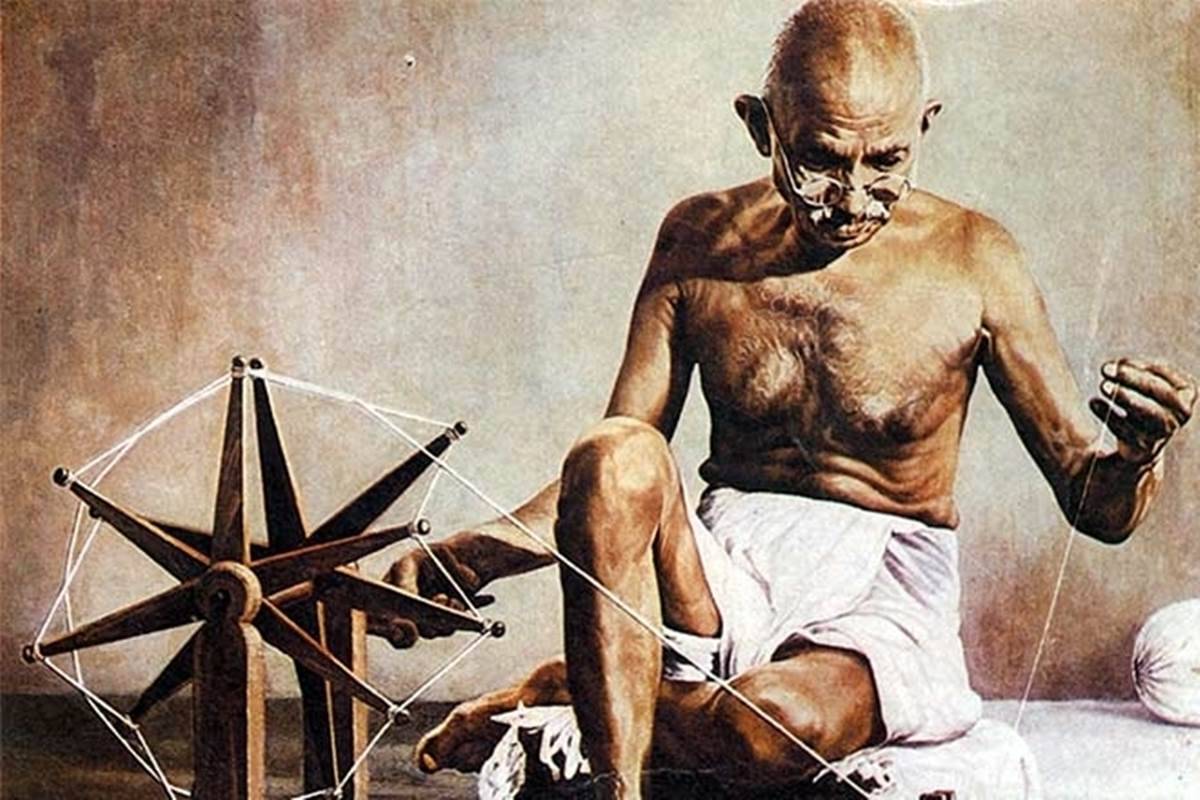
Mahatma Gandhi, who is widely honoured and internationally acclaimed as the Father of the Indian nation, is irrelevant today! Yes, to that section of Indians who choose to ignore that, had it not been for the ‘loincloth-clad’ man’s inspiring the masses and leading them to fight for the nation’s independence, we would have remained enslaved to foreign rule.
The Mahatma is irrelevant to this chunk of the nation foisting Godse, his killer, as a national martyr. The people who belong to this tribe are not a few. With their aggressive political and skewed nationalist agenda they are trying to tell the nation that Gandhi deserved the end he met with at the hands of their ‘Saint Godse.’
Gopal Godse, Nathuram Godse’s brother, revealed Nathuram’s motive in a book published 15 years after the murder. Gopal quotes Nathuram deposing in the court as follows: “Gandhi was ... the main reason for all the atrocities against Hindus during the partition. Gandhi acted in favour of Muslims. His presence will be harmful to Hindus. Hence, by killing Gandhi I did great justice to this nation.”
It is also important to learn that Justice Khosla, who conducted the proceedings in Gandhi’s murder case, was reported to have said that “Godse’s decision to shoot Gandhiji was the end result of a well planned and well executed action in association with so many people.”
Therefore, it is evident that Gandhi was the enemy target of the group who schemed to eliminate him for the principles he stood and worked for.
Gandhi’s principles of ahimsa are a thorn in the flesh of the admirers of Nathuram Godse. They believe in violent methods to propagate religious fundamentalism and to grab political power in order to create a theocratic state.
The Mahatma’s ideal of truth is aberration to those, including the nation’s political windbags, who indulge in hoodwinking the people of the land with perpetrated lies, concocted falsehood, and window-dressing promises.
They can use and abuse the Mahatma as and when they like with opportunistic overtures. They can wax eloquent on a world stage like the UN General Assembly on Gandhi’s 150th Birth Anniversary by singing the paean of the Mahatma’s grandeur. But, back home, they choose to remain blissfully ignorant of a repeat murder of Gandhi by those who stab and burn his effigy in public. They turn a blind eye to the worshippers of Nathuram Godse and may even want to place him alongside Savarkar, face to face with Gandhi, in the Central Hall of the Parliament. Sinister days may not be far-off when Gandhi may be made to disappear from there.
The strident nationalist votaries and advocates construct their own ‘Ram Rajya’ different from that of the Mahatma. Gandhiji’s utopian idea of ‘Ram Rajya’ meant a society revolving around the core ideals of virtue, morality and justice.
In 1929, in Young India, he wrote: “By Ram Rajya I do not mean Hindu Raj. I mean Ram Raj, the kingdom of God. For me, Ram and Rahim are one and the same; I acknowledge no other God than the one God of Truth and righteousness.” On another occasion, he explained that such a Ram Rajya would ensure ‘equal rights to both prince and pauper.’
But, this Gandhi is irrelevant today to those whose Ram Rajya concept does not match with Gandhi’s. As against Gandhi’s ‘Ram Rajya’ concept, the Hindutvawadis are aiming at the rule of Ram. The ‘Ram Rajya’ Gandhiji preached and propagated was one based on ‘dharma’ which meant a realm of peace, harmony and happiness. Therefore, by ‘dharma’ he did not have in mind a religion or Hindu Raj. “By Ram Rajya I do not mean Hindu Raj. I mean by Ram Rajya Divine Raj, the kingdom of God…’ (Young India, Sep.19, 1929).
Love him or hate him, Gandhiji remains the Mahatma, the soul force of India that beckons us to the nobility of truth and fellowship in ‘swarajya.’ For him Ram Rajya was the Swarajya based on the ‘sovereignty of the people and on moral authority’, ‘a democracy in which the meanest citizen could be sure of swift justice without an elaborate costly procedure.’
If Gandhi’s humble clothing was ‘non-violent defiance’ of the mighty British Raj, his noble principles are a threat to the terror-provoking fundamentalist forces backed by the political dispensation.
If his Ram Rajya was a call for a nation of fellowship, truth, justice, and equality for all, today’s pseudo-nation builders are giving a clarion call to forget Gandhi. They attempt to demolish the Constitution based on his ideals of truth, equality, justice and harmony.
If the man who advocated ‘equal rights to both prince and pauper’ under the Ram Rajya were to revisit India, what would he witness? Will he not feel appalled by a scene of ‘grandeur’ showing the nation’s richest capitalists occupying the seats of honour in the national capital and dictating their terms as to how to administer governance according to their tune?
At that point, will not the Mahatma take his place with the army of India’s restless millions who are cashless and jobless, who are afraid to speak up, and whose voice never reaches the guarded precincts of power?
Today, the restoration of India lies in the hands of a humble but tall person like the Mahatma who, winning the confidence of the masses, can stand up, speak up and is courageous enough to bite the bullet of the naysayers of our secular, socialist, and democratic nation.
.jpg)
.jpg)
.png) Jacob Peenikaparambil
Jacob Peenikaparambil

.png) John Dayal
John Dayal
.jpeg)
.png) Joseph Maliakan
Joseph Maliakan

.png) Dr Arnald Mahesh SDB
Dr Arnald Mahesh SDB

.jpg) Jose Vattakuzhy
Jose Vattakuzhy
.png)

.jpg) Isaac Gomes
Isaac Gomes
.png)
.png) Robert Clements
Robert Clements