

.png) M L Satyan
M L Satyan
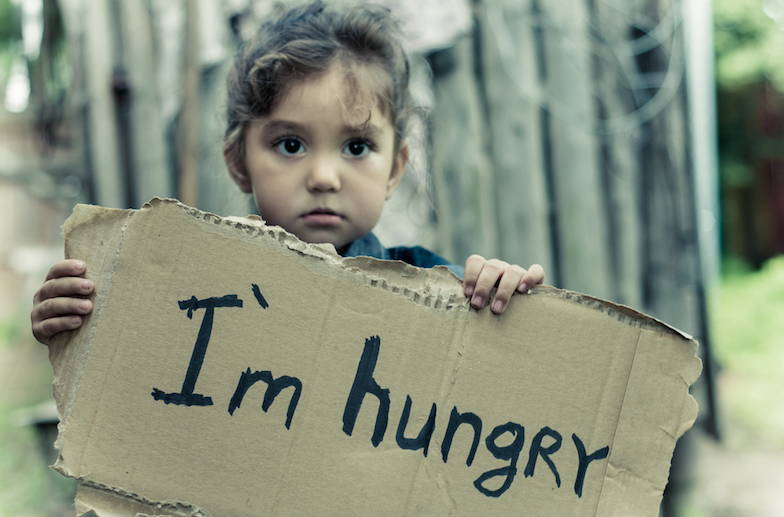
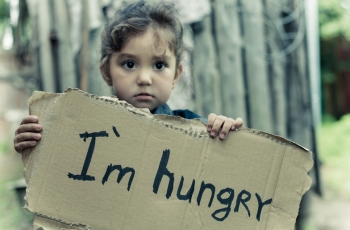
Here is the narrative of an actual sentence pronounced by a Judge in Atlanta, Georgia, USA:
There was a 15-year-old boy in Atlanta. He was caught stealing from a store. On trying to escape from the hold of the guard, a shelf of the store was also broken.
The judge heard the crime and asked the boy,
Judge: Did you steal something, a packet of bread and cheese?
Boy: Yes
Judge: Why?
Boy: I needed them
Judge: You could have bought them
Boy: There was no money with me
Judge: Why did you not take money from the family?
Boy: There is only my mother in the house. She is sick and unemployed. Bread and cheese were stolen to feed her
Judge: Don’t you do any work?
Boy: I used to wash a car. When I took a day off to take care of my mother, I was fired.
Judge: Don’t you ask someone for help?
Boy: Today I had left the house in the morning, went to about fifty people. I never got any help from anyone. Out of desperation I took this step at the end.
When the interrogation ended, the judge began to pronounce the verdict: "The theft and especially the theft of bread is a very shameful crime and we are all responsible for this crime. Every person in the court, including me, is a perpetrator. So, every person present here is fined ten dollars. No one can get out of here without giving ten dollars."
Saying this, the judge took ten dollars out of his pocket and then picked up the pen and started writing: ‘In addition, I fine the store a thousand dollars for handing over a hungry child to the police. If the penalty is not deposited within 24 hours, the court will order to seal the store.’
By giving the full amount of collections to this boy, the judge and the court asked for forgiveness from that boy. After hearing the verdict, tears were pouring from the eyes of the people present in the court. That boy's hiccups were also relentless. The judge came out of the court with tears in his eyes.
Chanakya said that if a hungry person is caught stealing food, then, the people of that country should be ashamed and held responsible. Are our society, systems and courts ready for such a decision? Please look at the below sample incidents of injustice rendered to the voiceless children in India:
Incident-1: An eight-year-old orphan boy living on the footpath stole a biscuit packet from a small shop. The boy was beaten up mercilessly by the shopkeeper and passers-by. Later he was sent to a juvenile home where he was kept for one year.
Incident-2: A ten-year-old girl stole a loaf of bread from a bakery and started running. The bakery owner noticed this and chased her. The girl got into a park. The bakery owner who chased the girl also went into the park. What did he see there? The girl was helping two small hungry kids to eat the stolen bread. The bakery owner took a stick and started beating the girl and the kids. When his anger subsided, he left them by giving a severe warning to the girl.
Incident-3: At a market place a few young children were seen begging in front of a Pizza Hut and a posh Restaurant. A police vehicle passing that way stopped suddenly. A police man came with his stick, started beating the children and chased them away from that place.
The prevalence of malnutrition and its detrimental effects on children in India is alarming. In a report published by UNICEF, it was noted that malnutrition was the cause of 69% of deaths of children under the age of five in India, additionally noting that within the under-five age bracket, every second child suffers from some form of malnutrition (The Economic Times, 2020).
Malnutrition among children in India continues to be an endemic issue despite huge improvements in the past few years. With an abundance of resources and rapidly evolving technology, access to proper nutrients for every child seems like a feasible possibility. Children continue to be the world’s hope for a brighter, safer future and there must be a global effort in eradicating this problem.
The Integrated Child Development Services (ICDS) serves as the most critical instrument in addressing India’s child malnutrition challenge. It focuses on supplementary nutrition, growth monitoring and promotion, nutrition and health education, immunisation, health check-ups and health referrals, as well as pre-school education.
India launched the POSHAN Abhiyaan, a flagship national nutrition mission, to improve nutrition among children, pregnant women and lactating mothers in 2017. What are the end results of the above schemes? It is a million-dollar question.
India is facing an unprecedented nutrition crisis and children are the ones most severely impacted. Even before the multiple shocks caused by the pandemic, India was not on its way to meet the Sustainable Development Goal-2 to end hunger and all forms of malnutrition. To make matters worse, data released from the first phase of the National Family Health Survey 2019-2020 (NFHS-5) indicates reversal of any gains India had made in child malnutrition in the last few decades.
Despite decades of investment to tackle this malaise and attractive nutritional schemes, India’s child malnutrition rates are still one of the most alarming in the world. The Global Hunger Index (2020) -- which is calculated on the basis of total undernourishment of the population, child stunting, wasting and child mortality -- places India at the 94th spot among 107 countries.
Considering the pathetic situation of hungry children in India, we must agree that a grave injustice is being done to the children. Just like the Judge of Atlanta, we need to accept that malnutrition among children is a very shameful evil and we are all responsible for this. Every person in the society, including me, is a perpetrator. Are we ready to stop injustice done to hungry children?
.png) Cedric Prakash
Cedric Prakash
.JPG)
 A. J. Philip
.png) Jacob Peenikaparambil
Jacob Peenikaparambil
.jpg)
.png) John Dayal
John Dayal
.jpg)
 Pachu Menon
.png)
.png)
.png) Robert Clements
Robert Clements