

.png) Dr Suresh Mathew
Dr Suresh Mathew
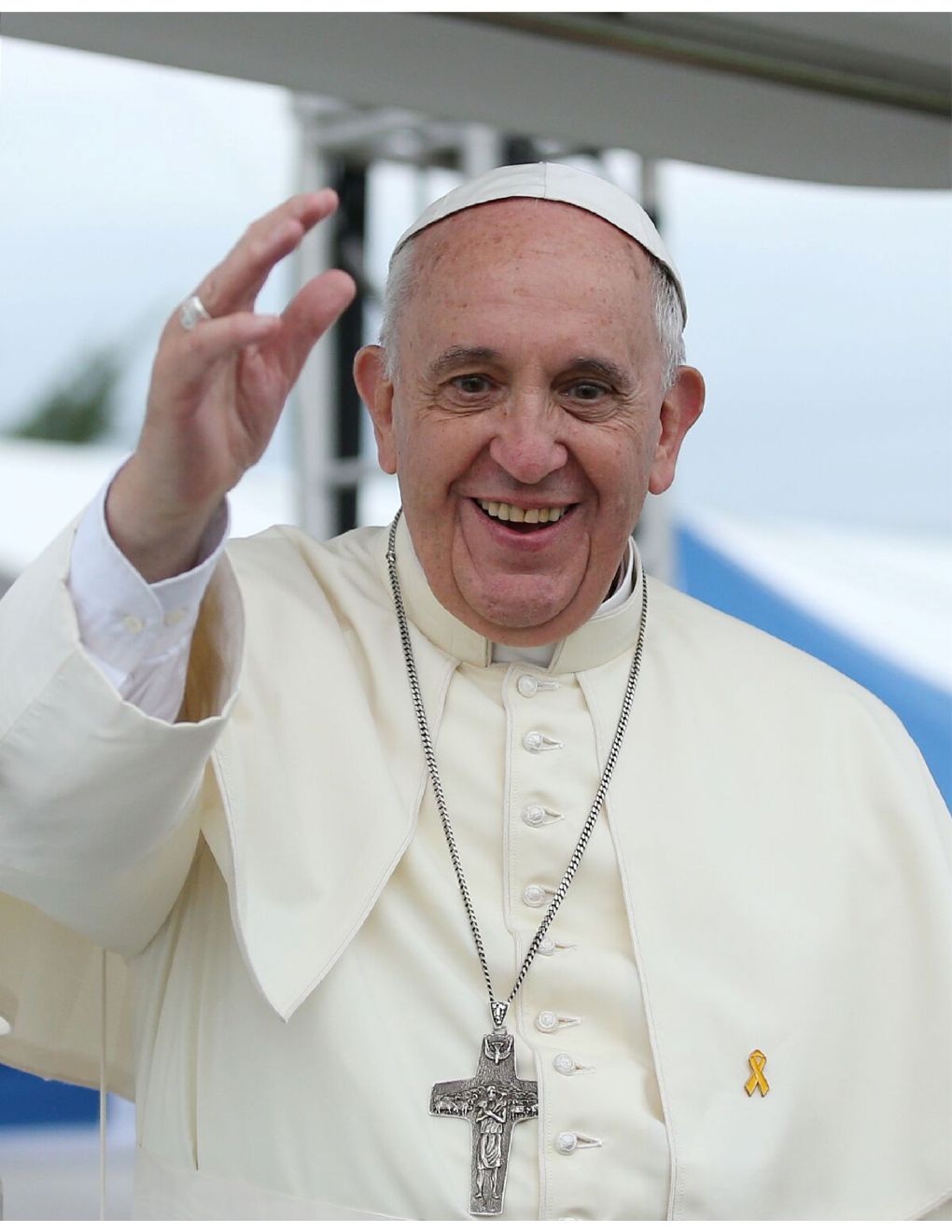
Pope Francis is going all out with his sweeping changes in the Church. He has promulgated a new apostolic Constitution, Praedicate Evangelium (Preach the Gospel), introducing far-reaching reforms in the Roman Curia, the topmost body of administration at the Vatican that assists the Pope in governing the Church.
The momentous provision is the announcement that any baptized lay Catholic, men or women, can head Vatican departments. One can gauge the significance of this declaration from the fact that all these departments were until now headed by Cardinals or bishops. The communique, that would probably create more than ripples in the Church, was released on March 19, the feast day of St. Joseph. Another striking declaration is the renaming and merging of Congregations and Councils into 16 Dicasteries, thereby avoiding the duplication and replication of work.
Pope Francis had initiated reforms in the Roman Curia immediately after his installation in 2013 as he knew that all was not well within the powerful body. A Council of Cardinals was set up in 2014 which came up with a draft Constitution in 2018 and the same was circulated among all Bishops’ conferences and experts across the globe. Praedicate Evangelium is the final text incorporating the suggestions and amendments that emanated from the Church hierarchy and experts.
The most ground-breaking declaration, as mentioned above, is the role of Catholic laity in taking part in the governing of the Roman Curia through Dicasteries, in some cases probably even heading them. The declaration explicitly states the reason behind this thoughtful decision: the laity’s familiarity with ‘family life’ and ‘social reality.’ Above all, it makes no distinction between lay men and lay women. Moreover, the appointments to various posts at the Dicasteries would be for a period of five years, though they can be extended by the Pope. This is a major deviation from the existing practice of some of those appointed remaining in the post for indefinite period. The spirit behind Praedicate Evangelium was visible from the time Pope Francis assumed office.
In 2018, the Pope had disclosed that he had short-listed a woman to head a Vatican economic department but she could not take the job for personal reasons. Later, the Pope for the first time named a woman to the number two position in the governorship of Vatican City, making Sister Raffaella Petrini the highest-ranking woman in the world’s smallest state. Last year, he named Italian nun Sister Alessandra Smerilli to the interim position of secretary of the Vatican’s development office, which deals with justice and peace issues. There were a few more such sweeping changes and appointments in the last couple of years in the Roman Curia. The Apostolic Constitution is the logical culmination of the new thinking and reflection pervading in the Church under Pope Francis.
Now the bigger question is how far the intense churning taking place in the Church, initiated by the Pope, would get reflected practically. Even if some of the decisions enumerated in the Praedicate Evangelium are put into practice in the Roman Curia, will the same be implemented in letter and spirit at lower levels? How far the Pope’s focus on laity would find acceptance at all levels of the Church hierarchy? These are evocative questions, the answers for which would have major impact in the Church in the days ahead.
.jpg)
 A. J. Philip
.jpg)
.png) Jacob Peenikaparambil
Jacob Peenikaparambil
.png) Chhotebhai
Chhotebhai
.jpg) P. A. Joseph
P. A. Joseph
.png)
.png) Robert Clements
Robert Clements
.jpeg) A. J. Philip
A. J. Philip
.jpg) Jacob Peenikaparambil
Jacob Peenikaparambil