

.png) Dr Suresh Mathew
Dr Suresh Mathew
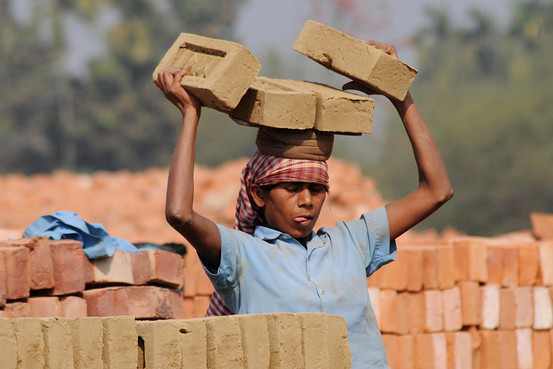
“Do not forget the workers pushed to the margins.” These are strong words coming from Pope Francis whose heart lies with the poor, the downtrodden and the marginalized. Unfortunately, workers are the worst hit in the aftermath of various policy initiatives taken by the government, starting with the economic reforms. The pandemic further pushed the workers to the wall as they lost jobs in droves. In between came the outlandish demonetization, and the workers got hammered ruthlessly.
There are many factors that have led to the plight of the workers. The government policies, instead of coming to the rescue of the working class, push them into the abyss of uncertainties and inequalities. According to the Economic Survey of 2018-2019, “one in every three wage workers in India has fallen through the crack” as they are not covered by the laws meant for the workers. They get no leave, no safety equipment, no medical facility or family welfare support, and there is no limit to their working hours. Hence providing legal and social protection to the workers of the informal sector – as many as 85 to 90 per cent of workers are in the unorganized sectors -- is the biggest challenge in labour reforms. The government has done well in getting rid of many British-era laws and merged several laws to make them fewer in number. Still the reforms are left with major lacunae.
The problems of migrant workers are yet another area which has eluded solution. Most migrants set out on their journeys because they lack prospects to find dignified employment in their place and they hope to find better and fairer working conditions elsewhere.
Unfortunately, they are not aware of their rights like right to equality, right to work, right to get a living wage and a decent standard of life, security scheme, health, right to form association, educational rights, etc. This results in their exploitation in various ways. They were the worst hit during the pandemic and were left to fend for themselves.
The workers are staring at the toughest time in their life. A couple of years back, some of the State governments in Uttar Pradesh, Gujarat and Madhya Pradesh had suspended several labour laws. And they did it taking the brazen Ordinance route. Some of the changes had been extremely harsh on the workers. The working time had been increased from 8 hours to 12 hours per day, a move that can break the spine of workers. Trade unions have termed it a harsh measure with an inhumane face. Another blow to workers’ rights had been inflicted by suspending the Industrial Disputes Act, thereby exempting firms from the obligation of sticking to its provisions.
The latest move by some of the state governments to reserve jobs up to 75 per cent to local people could hit the working population’s movement from one state to another. It is contrary to the constitutional provision for right to work anywhere in the country; it is also against the federal structure of the nation. Real reforms in labour laws mean protecting the interests of the workers, without hitting the employers. Unfortunately, governments have the interests of the employers close to their hearts; for the workers, they have reserved lip service.



.jpg)
 A. J. Philip
.jpg)
.png) Jacob Peenikaparambil
Jacob Peenikaparambil
.png) Chhotebhai
Chhotebhai

.jpg) P. A. Joseph
P. A. Joseph
.png)
.png) Robert Clements
Robert Clements
.jpeg) A. J. Philip
A. J. Philip
.jpg) Jacob Peenikaparambil
Jacob Peenikaparambil