

.png) Dr Suresh Mathew
Dr Suresh Mathew
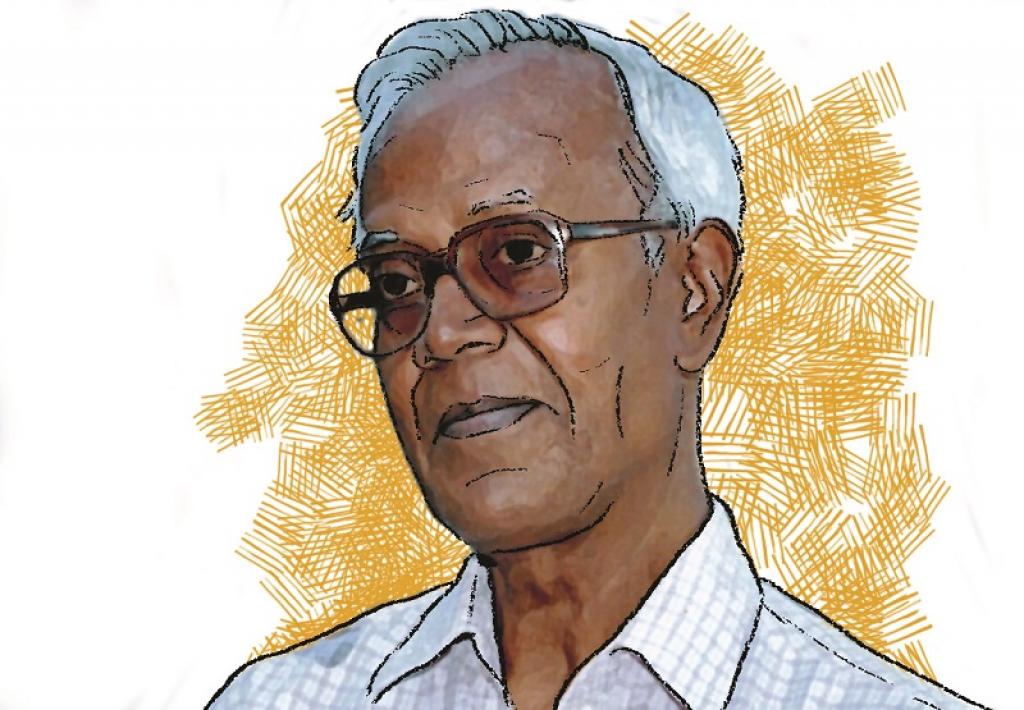
On July 5, it will be one year since Stan Swamy, one of the noblest souls of Indian Church whose heart bled for the Tribals, Dalits and poor, was snatched away from our midst. It was nothing less than custodial death as he was denied bail and kept in jail and hospital until he breathed his last. His was one of the rare cases, in independent India, wherein an innocent man’s life was taken away for being with the people, pleading for their rights, voicing their grouses, and steadfastly opposing the injustices meted out to them. This is the past. But the present is no better, rather darker. Instead of trying to keep alive the fire Swamy lit, those who shed tears on his death seem to have forgotten the cause he held close to his heart; they seem to have conveniently erased from their minds the fact that there were forces that worked overtime to cook up cases against him.
Some of the recent developments in the Church are an affront to what Stan Swamy stood for all his life. He was a paragon of secular values; he brooked no division in the society in the name of religion; he was a silent, peaceful campaigner for the rights of the Tribals whose lives had been rocked and wreaked by corporate houses and their godfathers in the ruling regimes and parties. But he was an eyesore for the Hindutva brigade who saw him as someone trying to convert naïve tribals to Christianity. There have been several attempts in the recent past wherein Church authorities have been seen overenthusiastic to the overtures of the right-wing organisations. A recent speech by a prelate, though he later withdrew it, in which he formulated the view that he sees no difference in the ideology of the RSS and the Church seems to be the ‘new thinking’ at least among a section of the Church leaders. In fact, if he had taken time and pain to read the books of the ideologues of the RSS like M. S. Golwalkar and V. D. Savarkar it would have been painfully known to him that the ideologies of the right-wing and the Church are worlds apart; they are as different as cheese and chalk.
The Sangh Parivar is strenuously working to be seen in the good books of the Church. Recently, a conclave was held, reportedly in a five-star hotel, and the participants were 150 priests, religious sisters and lay leaders who run schools and colleges in Kerala. Though the event looked like an initiative of the Kerala Catholic Bishops’ Council (KCBC), it was, in fact, called by the Bhartiya Janata Party’s State Minority Morcha. It is time to be aware of such traps. Regrettably, there are many in the Church, including clergy, who work overtime to portray the Sangh Parivar as a benefactor, if not protector, in times of need. Messages to this effect fly thick and thin on the social media network.
The RSS envisages majoritarian nationalism. It is an aggressive organization whose founders had visualized second class citizenship for Christians and Muslims in Bharat. How do the values preached by Jesus gel with such ideology and views? The Church leaders should not be so naïve to forget the Sangh Parivar organizations, including the RSS, which had even objected to the very release of Ecclesia in Asia by Pope John Paul II in New Delhi on November 6, 1999 during his visit to India. It is important that the members of the Church hierarchy should be wise as serpents as they have been ‘sent as sheep in the midst of wolves.
.jpeg)
 A. J. Philip
.jpg)
.png) Jacob Peenikaparambil
Jacob Peenikaparambil
.jpg)
.png) John Dayal
John Dayal
.jpg)
 Pachu Menon
.jpg)

.png)
.png)
.png) Robert Clements
Robert Clements
.jpg)