

.png) Dr Suresh Mathew
Dr Suresh Mathew
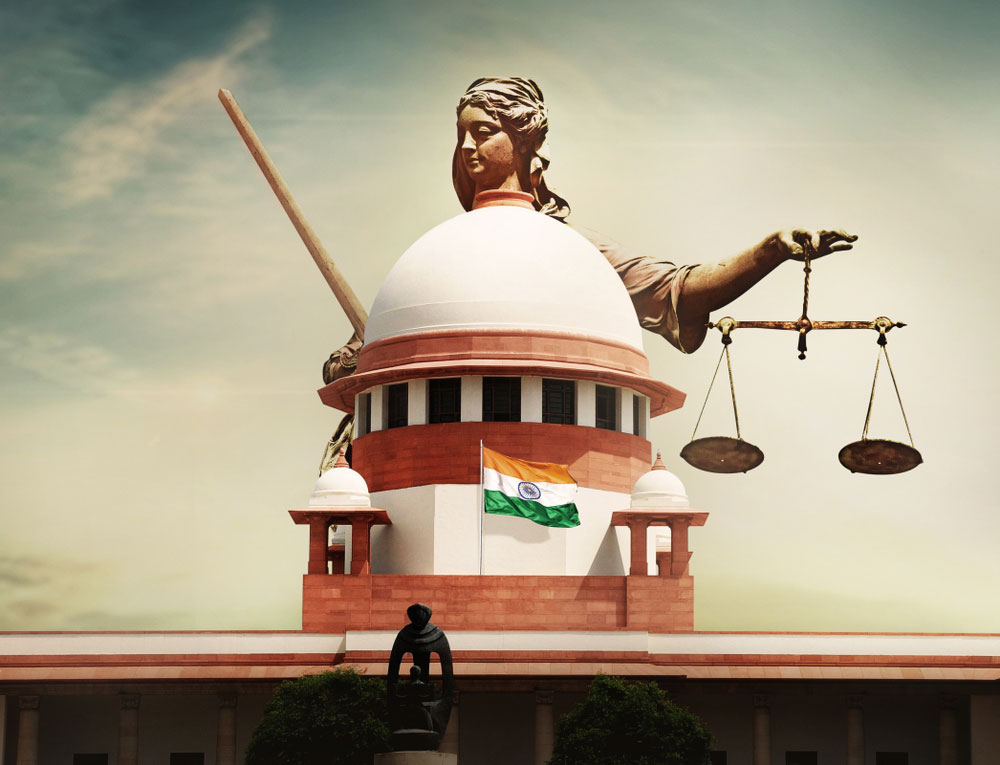
The recent weeks witnessed an avalanche of attacks against the apex court. Significantly, it came not only from the government but from a couple of constitutional bodies too. The appointment of judges to the Supreme Court and the High Courts has always been a matter of tussle between the Central government and the Collegium of the Supreme Court.
There were occasions when the government sent back to the Collegium the names suggested by it for reconsideration. But it usually got solved with the Collegium sending the file again to the government recommending the same names; and the government, without creating a fuss, used to clear it.
It is not so in the Narendra Modi regime. It has become a rule, unlike an exception earlier, for the government to return files, containing the names of probable judges, to the Collegium.
Adding insult to injury, the government sits over even those names which have been reiterated by the Collegium. Reports suggest that there are over 100 recommendations made by the Collegium of high courts pending with the government.
Similarly, there are reportedly the names of 10 judges recommended for elevation which have not got the green signal from the Centre.
Now comes the bolt from the blue. The Union Law Minister Kiren Rijiju has written a letter to the Chief Justice of India stating that the government should have a bigger say in the appointments to the higher judiciary. He has proposed that a government nominee should be included in the search committee which will shortlist names to the High Courts and Supreme Court Collegium.
In other words, the government wants to have its nominees as Judges in the higher courts. The whole effort seems like an overbearing government breathing down the judiciary’s neck. The government has almost achieved its target of having its ‘yes men’ in Raj Bhavans across the country and as heads of many other bodies. It has apparently not achieved its target in the judiciary, and the present efforts are nothing but a bid to tackle it.
As if the efforts from the government are not enough, some constitutional persons too have joined the chorus to take on the judiciary. That is what the Rajya Sabha chairperson Jagdeep Dhankhar and the Lok Sabha Speaker Om Birla did at a conference of all-India presiding officers in Jaipur recently.
Dhankhar even questioned the judicial mandate of ‘non-violation of the basic structure of the Constitution’, stating that the Parliament must have the right to amend the Constitution in whichever way it wants. The Lok Sabha Speaker too remarked that judiciary should respect the sanctity of the legislative body, indirectly hinting at the supremacy of the Parliament.
It seems those holding constitutional posts are dismissive of the basic structure of the Constitution which includes fundamental rights, federal structure of the state, judicial review, etc. If these corner stones are allowed to be trampled upon by elected bodies, democracy would become meaningless.
It is important to take note of what B. R. Ambedkar said: “All of us are aware of the fact that rights are nothing unless remedies are provided whereby people can seek to obtain redress when rights are invaded.” If the supremacy of the Supreme Court is overstepped by any legislative body, who will be there to redress violation of even the fundamental rights of ordinary mortals?
.png) Cedric Prakash
Cedric Prakash
.JPG)
 A. J. Philip
.png) Jacob Peenikaparambil
Jacob Peenikaparambil
.jpg)
.png) John Dayal
John Dayal
.jpg)
 Pachu Menon
.png)
.png)
.png) Robert Clements
Robert Clements