.jpg)


 Fr. Gaurav Nair
.jpg)
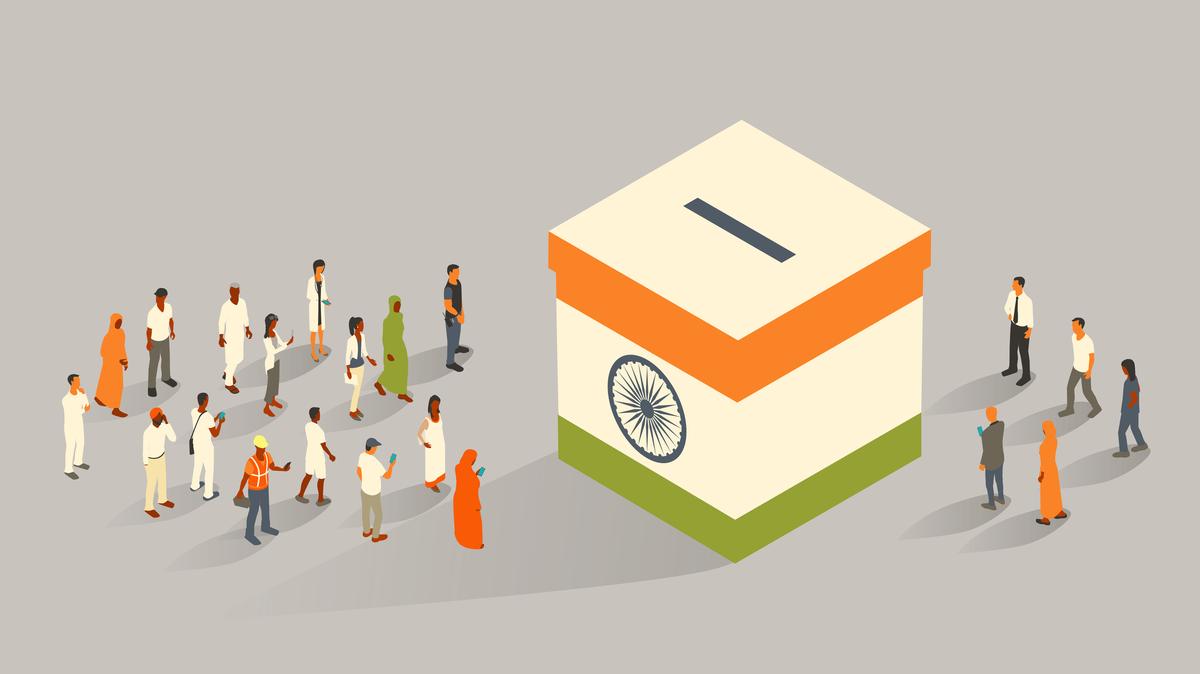
As Prime Minister Narendra Modi embarks on his third consecutive term, there is no discernible shift in his political demeanour. His confrontational stance threatens the purpose of the Parliament. The Parliament is an institution for meaningful dialogue and problem-solving, not for political squabbles.
The 1975 Emergency is undoubtedly a dark chapter in India's democratic history. Regardless of what played behind the scenes, it warrants critical reflection and reminds us of the importance of all parties upholding democratic values and institutions. However, constantly invoking this period to provoke political opponents decades later serves no constructive purpose. Such behaviour suggests misplaced priorities.
President Murmu, PM Modi, and Speaker Dhankhar's repeated references to the Emergency seem more like a political strategy to malign the Congress Party. It is obvious that they are endeavouring to reach what they are apparently condemning. This approach is blatantly divisive. It would have put a dent in the stature of their offices, which should rise above partisan politicking, had it any left. Modi had virtually run the Parliament alone, steamrolling policies in the absence of a Leader of the Opposition. The provocation seems to be partly an ex
The space for rational and informed discussion shrinks when the government views the Opposition as an enemy that needs to be vanquished. This confrontational stance will contribute to the already toxically charged political and communal climate and discourage consensus-building. In India, where diverse views and interests must be reconciled, the prospects for reaching agreements on important policy issues diminish when political discourse is dominated by antagonism.
What India needs at this juncture is statesmanship, not showmanship. PM Modi should have understood this after the nation agreed to disagree with him, showing its displeasure with the considerable loss of independent mandate. He should have adopted a tone of cooperation and inclusivity towards the Opposition, even if to show that he had gained some wisdom after his histrionic meditation at Vivekananda Rock Memorial.
If left unchecked, PM Modi will continue to erode the foundations of India's democratic institutions, as he has for the past decade. While the onus is on the government to create a conducive environment, the Opposition also has a crucial role. They must rise above mere obstructionism. They should stand united in holding the government accountable and participate actively in the legislative process. By doing so, they can help restore the Parliament's focus issues that threaten the nation.
Only by fostering an environment of mutual respect and cooperation can the Parliament fulfil its role as the cornerstone of Indian democracy. Or do the PM and his cronies wish to impose his "godhood" on us through another Emergency, one of their own design this time?
.jpg)
 A. J. Philip
.png) Jacob Peenikaparambil
Jacob Peenikaparambil
.png) John Dayal
John Dayal
.jpg) Jose Vattakuzhy
Jose Vattakuzhy
.jpg) Dr. John Singarayar
Dr. John Singarayar
 P. A. Chacko
.png)
.png) Robert Clements
Robert Clements