

.png) Jacob Peenikaparambil
Jacob Peenikaparambil
Disasters at mega religious gatherings resulting in the death of hundreds of people are not something unusual in India. As per the editorial in The Indian Express on July 3, at least 2000 people have died in stampedes alone over the last 20 years at religious sites and celebrations across India. After each disaster, a judicial enquiry is declared, nominal compensation is paid to the family members of all those who died or got injured, and some officers are transferred. After that, everything is forgotten. Even the report of the judicial enquiry may not see light. No lesson is learned either by people or by the government. It appears that in a country of 140 crore people, human life has no value, especially if the victims of disasters are poor.
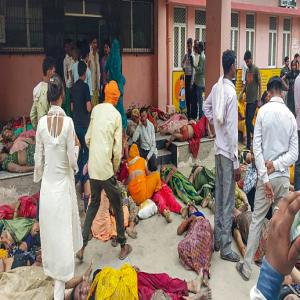
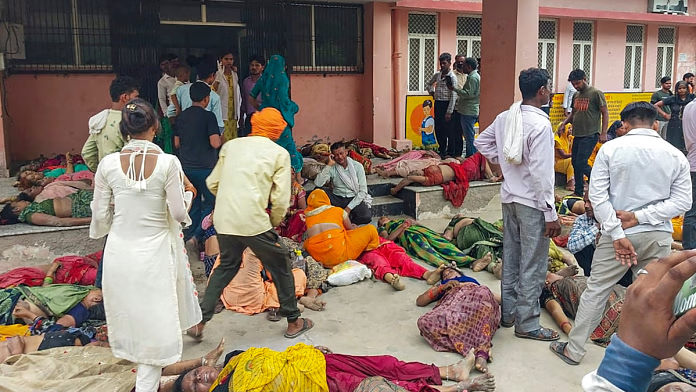
A stampede in Uttar Pradesh's Hathras that took place on July 2 killed 121 people, as per the media reports. The stampede took place at a 'Satsang' addressed by self-styled god-man Suraj Pal, aka Narayan Sakar Hari, whose followers called him Bhole Baba. According to the FIR, the organisers of the 'Satsang' sought permission for a gathering of 80,000-odd people, but a crowd of over 2.5 lakhs turned up.
Uttar Pradesh's CM Yogi Aditya Nath declared Rs 2 lakhs as compensation for the deceased. According to media reports, most of those who participated in the event were men and poor. Yogi Aditya Nath and Congress leader Rahul Gandhi visited the village where the disaster took place and met the family members of some of the deceased. While Yogi Adityanath alleged a conspiracy, Rahul Gandhi demanded higher compensation for the victims of the tragedy.
Media reports have pointed out many lacunae and even negligence on the part of the programme organisers and the administration's failures. It seems that no one has delved into the root causes of disasters happening at huge religious gatherings. The Times of India, on July 5, published an article under the title, "Why Bhole Babas Flourish" by Devdutt Pattanaik, which sheds some light on the root causes. The proliferation of god-men and god-women, their efforts to create a huge number of blind followers by emotionally blackmailing them, and the political patronage the babas get appear to be the root causes.
As reported in different media outlets, at the end of the religious gathering, when the 'god-man' Bhole Baba was leaving, there was a rush among his followers to collect dust from his car's tyre trail, and the volunteers (sevadars) prevented the crowd approaching the Baba. This triggered a killer stampede in which scores of people, including women and children, were trampled. One can only imagine the degree of superstition or blind faith the god-man could create in his mostly poor followers if people started believing that the soil on which the Baba walked or his vehicle rolled had miraculous power.
There has been a mushrooming of god-men and god-women in India during the last few decades. They attracted a massive number of followers and built their own empires. Because of the vast following of god-men, political party leaders find a golden opportunity to form tie-ups with them to create their own vote bank. The god-men, in turn, get support and privileges from politicians. That is how they expanded their empires and amassed enormous wealth. Zee News Bureau on July 4 published the reach and wealth of 9 god-men/god-women: Asaram Bapu - Rs 350 crore; Baba Ram Dev - Rs 1600 crore; Sri Sri Ravishankar, the founder of the Art of Living Foundation - Rs 1000 crore; Mata Amritanandamayi, aka Amma- Rs 1500 crore; Sadhguru Jaggi Vasudev - Rs 18 core; Gurmeet Ram Rahim Singh Insaan - Rs 1455 crore, Acharya Balkrishna owns 97% of Patanjali Ayurveda - 1.6 lakh crore, Paul Dhinakaran - Rs 45 crore.
Some god-men are languishing in jail because of the heinous crimes they committed. For example, high profile guru-Dera Sacha Sauda chief Gurmeet Ram Raheem and Asaram Bapu and his son were convicted of rape, whereas Rampal of Haryana was convicted of murder. Nityananda Swami escaped a similar charge. Despite facing charges of rape and abduction and fleeing India in 2019, he continues to command a global following through social media, even declaring a sovereign "nation" called Kailasa. Bhole Baba, according to media reports, also faces accusations of sexual assault. Other crimes ascribed to god-men and women include murder, kidnapping, land-grabbing and amassing arsenals.
God-men and godwomen are found in all religions. For example, among Christians, some charismatic preachers organise mega-healing conventions. Paul Dinakaran is one among them. In the United States, charismatic preachers have convinced many that Jesus wants them to carry guns, hate homosexuals, and deny women reproductive rights. Some charismatic preachers in India tell people suffering from physical or mental illness to do penance for the sins of their forefathers, as the sins of their forefathers are the cause of their suffering. This is diametrically opposed to the teachings of Jesus because Jesus has taught through various parables and his own example that God's forgiveness is unconditional. The moment a person makes a firm decision not to commit sin again, God forgives them unconditionally.
It can be observed that there are two types of god-men in India. One category caters to the rich and the upper middle class, and the second is famous among the poor people. Bhole Baba belongs to the second category, whereas Sri Sri Ravishankar belongs to the first. Both groups of god-men have tremendous power over their followers. Even after the disaster, the followers of Bhole Baba defend the Baba and find fault with the administration for the disaster. As reported in the Wire, Brijmohan, a worker from Agra, said, "He (Bhole Baba) is not baba. I consider him as paramata (supreme self). I have seen him in that form. He is human only in body". When Gurmeet Ram Rahim was convicted in a rape case, his followers indulged in large-scale violence and riot in which 30 people died and 250 people got injured.
The question is how people become victims of the fictitious god-men? A dangerous cocktail of spiritual vulnerability, economic desperation, excessive religiosity and lack of critical thinking allow false prophets to rise and exploit the gullible. Contrary to the claims made by the BJP government that poverty has been drastically reduced in India during the last ten years, millions of people are victims of multiple inequalities. Economically, they are poor without having the means to meet their basic needs; socially, they are at the bottom of the caste pyramid, being subjected to many discriminations; educationally, they are either illiterate or semi-literate. These people desperately need some kind of solace, especially when they undergo financial or health crises, and the god-men come up with quick-fix solutions, mostly placebos and tout them as miracles. That is how thousands and lakhs of people throng to the satsangs organised by these god-men.
It is not only the poor but also the rich and the super-rich who have problems, albeit different ones. Despite all material comforts, power, prestige, etc., most experience a vacuum. Some god-men come up with illusions as the panacea to fill the vacuum. The rich are ready to donate any amount of money to these god-men, which is how they build their empires. The gurus or babas of both groups command unwavering devotion from their followers to the extent of abandoning reason and disregarding personal safety. Thus, blindness or superstition due to the absence of critical thinking is one of the two root causes of unquestionable faith in the god-men.
Some right-wing groups affiliated with a certain political party promote blind faith and superstitions under the guise of religion for their political benefit. Rationalists like Narendra Dabholkar, Govind Pansare, MM Kalburgi and Gauri Lankesh, who were fighting against superstitions, were murdered in cold blood by the members of certain extreme right-wing groups. These groups also support and promote some god-men and god-women.
The steep rise in religiosity in different religions in the form of rituals, prayers, devotions, building gigantic worship centres, pilgrimages, etc., to the exclusion of spirituality is another root cause of the spread of superstitions. Spirituality is the practice of the core values taught by all religions. Sensitivity, compassion, forgiveness and reconciliation, justice, non-discrimination and respect for all human beings are some of the core values taught by religions.
In an atmosphere of competitive religiosity supported and promoted by religious and political leaders, blind faith and superstitions have grown and flourished in almost all major religions in India; the thin line between faith and blind faith has almost disappeared. As a result, mega religious events organised by religious leaders and god-men, without caring for the security of the participants and inconveniences caused to the public, have increased enormously. Because of the influence of the organisers on the ruling party, often the administration ignores the lapses in security. The result is an increase in disasters.
To counter the spread of blind faith and superstitions, spirituality and critical thinking are to be promoted in different ways, especially through education. As part of the curriculum, the art of questioning, analysing and reasoning must be nurtured. A new generation capable of balancing religious faith with critical thinking is to be groomed. By fostering an environment that encourages open enquiry and evidence-based decision-making, the grip of blind faith can be gradually eroded. The efforts to insert items that have no rational basis under the guise of indigenous knowledge by the ruling BJP are to be resisted. The opposition parties must include the saffronisation of education as one of their priorities.
Against the backdrop of increasing hatred and division in Indian society, inter-faith dialogue and spirituality based on the practice of the core values of all religions must be promoted through nationwide campaigns. Civil organisations and NGOs have to play a lead role in this campaign.
.jpg)
.png) Cedric Prakash
Cedric Prakash
.jpg) Elsa Lycias Joel
Elsa Lycias Joel
.jpg)
 A. J. Philip
 Jacob Peenikaparambil
.jpg)
.png) John Dayal
John Dayal
.jpg)
.jpg)
.png) Joseph Maliakan
Joseph Maliakan
.png)
.png) Robert Clements
Robert Clements
.jpg) Cedric Prakash
Cedric Prakash
 ICPA
ICPA