.jpg)


.png) Joseph Maliakan
Joseph Maliakan
.jpg)
You scratch an Indian, the caste comes out, irrespective of whether the person is a Hindu, Muslim, Christian, Sikh, Buddhist, Jain, agnostic or even an atheist. Community life in India is primarily based on caste, not religion.
The majority of Christian and Muslim converts in India come from the Scheduled Caste and Scheduled Tribe populations. Though most of them or their predecessors converted to escape the caste stigma, the Indian society has refused to treat them differently.
On the ground, the converts continue to experience the discrimination they faced before conversion. This has been proved time and again by numerous sociological studies and statements from converts.
In Tamil Nadu, Andhra Pradesh, Karnataka, and even in Kerala, the Christian converts from the scheduled caste and other backward class populations are treated as lesser human beings. In places, there are even separate churches for Christian converts.
The exclusion of scheduled caste converts to Christianity and Islam from the statutory provisions for the welfare and progress of the scheduled caste populations in the Constitution of India originated from the 1950 Constitution (Scheduled Castes) Order, issued by the President of India under Article 341 of the Constitution, via Clause 3 which introduced a religious dimention stating that no person who professes a religion different from the Hindu religion shall be deemed to be a member of a Scheduled Caste.
This has been upheld by the Supreme Court of India on March 24, 2026, even though several writ petitions challenging constitutional validity of the 1950 Presidential order itself is under challenge in the Supreme Court, (these petitions have been pending in the Supreme Court for the last more than three decades) and several Commissions appointed by the Union government have categorically held that caste discrimination exists within Christianity and Islam in India and the exclusion of Dalit Christians and Dalit Muslims from SC status is unconstitutional.
In 1955, the First Backwards Classes Commission (Kaka Kalelkar Commission) observed that the rigid caste system and the practice of untouchability were widely prevalent among the Indian Christian and Muslim communities.
In 1980, the Second Backwards Classes Commission (Mandal Commission) observed that the Hindu caste stratification and the resultant discrimination and inequalities were common among Indian Christians and Muslims.
On the recommendations of the Mandal Commission, reservations were extended to OBCs across religions, including Christian and Muslim converts. However, the Union government did not do anything to change the SC criteria for Christian and Muslim converts, leaving the most oppressed Dalit converts without statutory protections.
Further, the Hindu-only rule under the 1950 Presidential order was amended twice to include Dalit converts to strictly indigenous religions. In 1956, the first amendment was made by Parliament to include Dalit Sikhs, following socio-political mobilisation by Mazhabi and Ramdasia Sikhs who continued to face severe caste discrimination. This amendment recognised that caste discrimination continued outside the Hindu fold.
In 1990, during the VP Singh government, a second amendment to the 1950 Presidential order extended SC status to Dalit Buddhists while continuing to overlook the demands of the Dalit Christians and Dalit Muslims.
The granting of the SC status to Dalit Sikhs and Dalit Buddhists was done on a rather strange logic that both Sikh and Buddhist religions were indigenous, while Christianity and Islam are "foreign." Mercifully, nobody argued that the Dalit Christians and Dalit Muslims are also foreigners. In the toxic atmosphere under which we live today, one should not be surprised if every Muslim and Christian is called a foreigner.
In this context, it is pertinent to recall the finding of the National Commission for Religious and Linguistic Minorities (the Ranganath Misra Commission) in 2007. The Commission categorically stated that the non - inclusion of Dalit Christians and Muslims in the SC list was a discrimination based on religion and therefore unconstitutional.
The Commission recommended the total deletion of Paragraph 3 of the 1950 Presidential order. Caste, the Commission further pointed out, is a deeply rooted sociological reality in India that transcends all religious boundaries. Successive Union governments, Congress and the BJP have refused to implement this important recommendation, which would have rectified the fault line in the 1950 Presidential Order.
For some inexplicable reason, the Union government is opposed to granting Dalit status to Dalit Muslims and Dalit Christians. On August 3 2021, the Ministry of Social Justice and Empowerment issued a statement, stating that the benefits of Centrally Sponsored Schemes (CSS) meant for the welfare and development of Scheduled Castes cannot be extended to converted Christians from the Scheduled Castes.
In 2022, the Union government filed another affidavit in the Supreme Court, arguing that the socioeconomic disadvantages and the nature of untouchability faced by these converts cannot be equated with the experience of Dalit Hindus, and the 1950 Presidential Order is not unconstitutional.
In October 2022, the Union government appointed a Commission of Inquiry, headed by former Chief Justice of India KG Balakrishnan, to gather contemporary empirical data on the exclusion of Dalit Christians and Muslim converts from SC status.
The SC order of March 24, 2026, has come even as the Supreme Court is awaiting the Justice Balakrishnan Commission report. The term of the Commission has been extended twice, the last in October 2025 for six months.
.jpg)
.png) Cedric Prakash
Cedric Prakash
 ICPA
ICPA
 ICPA
ICPA
 ICPA
ICPA
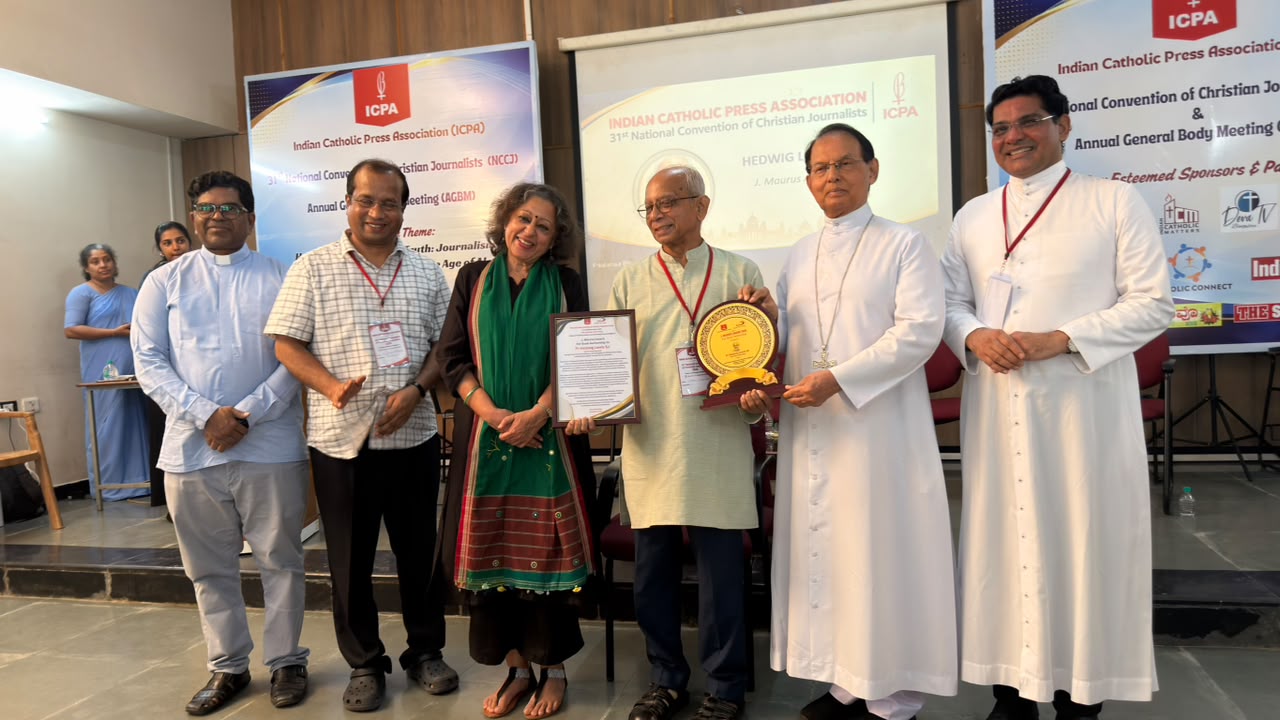 ICPA
ICPA
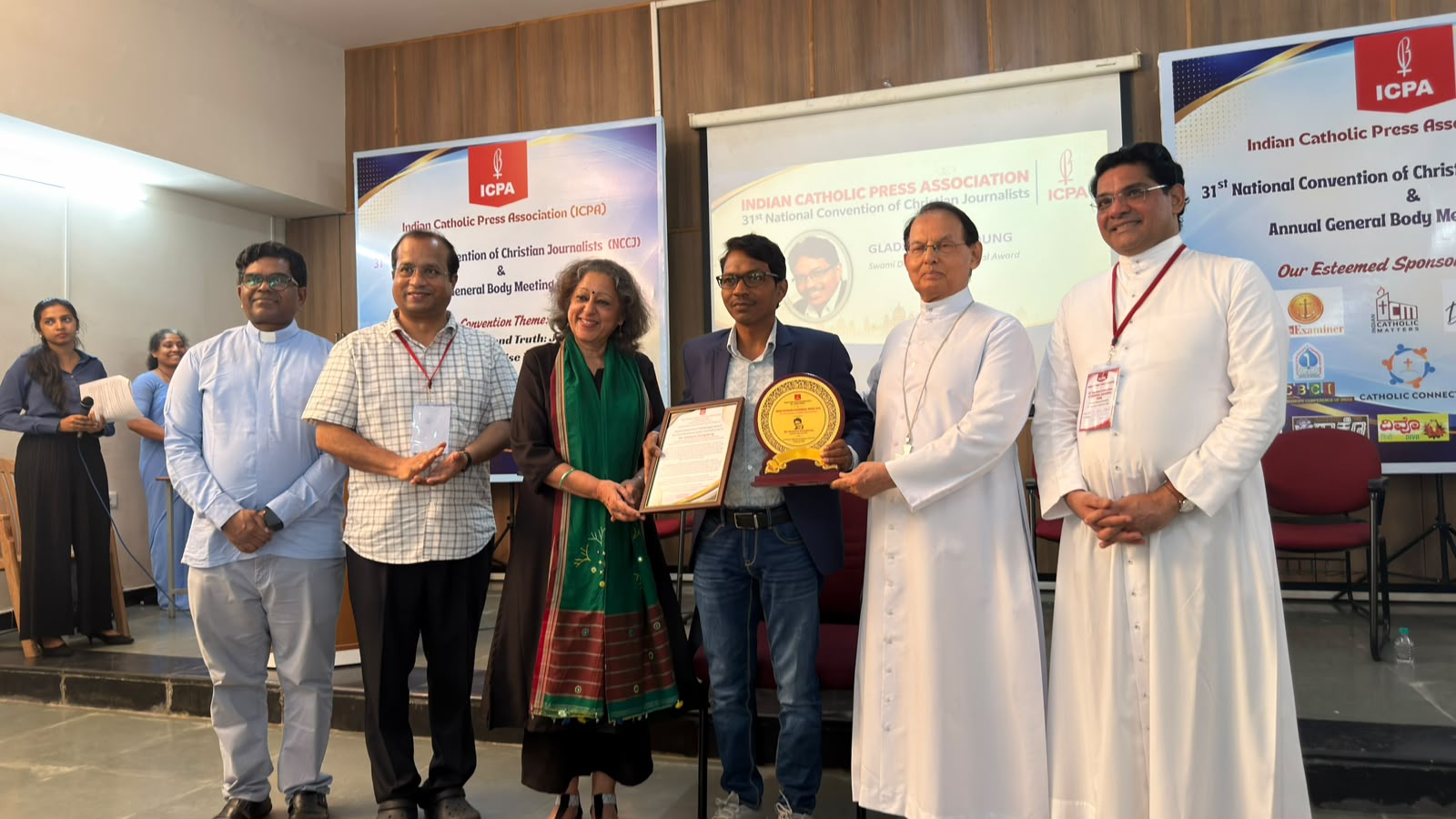 ICPA
ICPA
 ICPA
ICPA
.jpg)
 A. J. Philip
.jpg)
.png) Jacob Peenikaparambil
Jacob Peenikaparambil
.jpg)
.png) John Dayal
John Dayal