

.png) Julian S Das
Julian S Das
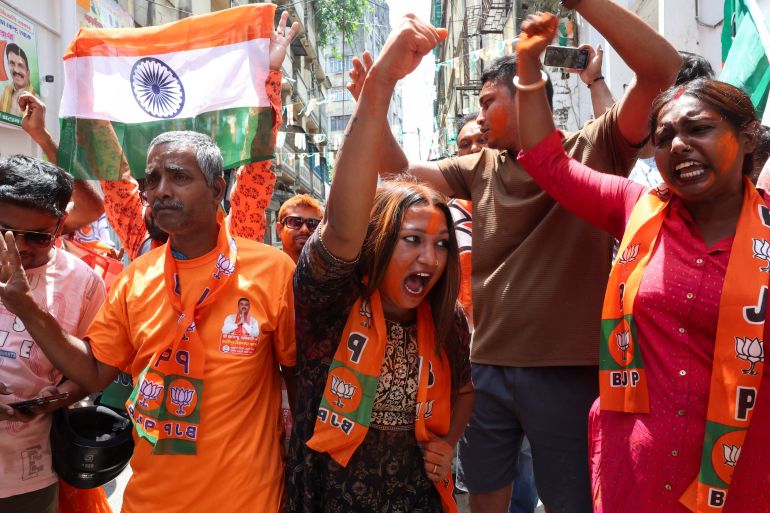
The electoral debacle in West Bengal and Tamil Nadu, as foretold by exit polls, has changed the country's political landscape. The saffron brigade has added West Bengal as one more precious stone to their crown of 22 states ruled by their dispensation, the long-cherished dream for decades, and saw the decimation of a family-ruled Dravidian party of three generations bow down to a newly-emergent actor-turned-politician, Joseph Vijay, in Tamil Nadu.
There have been unprecedented twists and turns during the legislative assembly elections in Assam, West Bengal, Puducherry, Keralam, and Tamil Nadu, thanks to the master-strike by the Bharatiya Janata Party, hitting the jackpot in West Bengal, a dream nurtured since 2014 at last fulfilled. The victory in Assam was a foregone conclusion, as the Congress was quite powerless to fight a national power-backed party.
Indeed, one of the most precious victories that will be etched in golden letters in the annals of the BJP is that of West Bengal. But taking a closer look at the different forces which were at work, not only in demolishing the kingdom of Didi (aka Mamata Banerjee), but also in bringing to power her own former lieutenant and confidante now turned arch-rival, Suvendu Adhikari, as a man to be reckoned with.
Baam-Aam-Ram
Perhaps these three words succinctly summarise West Bengal's recent political history. Baam (in Bengali) refers to the Left, the Communist Party of India (Marxist), who had ruled the state for a whopping 34 years, followed by Aam (aka ma-mati-manush, literally mother-soil-common person) under the leadership of Didi for the past 15 years and now being handed over to Ram (the saffron party that swears by Ram, with Jai Sri Ram as its pre and post poll chant).
But let us look at the way the battle had been fought at the transitions of power from one force to another: It took a woman, a street-fighter par excellence, to bring down the CPI(M) to its knees, when the Left party sold hundreds of acres of agricultural land to Tata to build a Nano car factory at Singur, at the outskirts of Kolkata, and Nandigram in West Midnapore district, now the epicentre of Suvendu Adhikari's political activities.
The recent election in the state witnessed the entire saffron brigade jumping onto the bandwagon to uproot the Trinamool Congress, starting with the 41 days of campaigning by the Prime Minister, Narendra Modi, and his worthy lieutenant and 'Chanakya,' the Home Minister, Amit Shah, and the whole battalion.
But if the ?12 crore spent only on advertisements in the state elections and the rhetoric of the high and mighty were one of the major factors responsible for the landslide victory, on the one hand, on the other hand, was the masterful use of the central machinery and national agencies to decimate the regional party. The Special Intensive Revision (SIR) was perhaps the last nail in the TMC's coffin.
Veni, Vidi, Vici
Can what is famously said of Julius Caesar about his conquest of Pontus be said about Narendra Modi, regarding the conquest of West Bengal, as the icing on the cake? Modi did not merely visit Bengal; he camped in the state, and it is said he spent 41 days campaigning there for his party. Much credit is being given to the charismatic leadership of Modi-Shah for the electoral victory, but there are reasons for the TMC's debacle that have nothing to do with the saffron brigade.
It could be highly consoling to imagine that the promises made by Modi-Shah in the state are more than mere words, or that they have the potential to change the state's fate; this will be seen in the coming months. We know only too well what happened to the mega promises given to the people of Delhi before the legislative assembly elections, and what the reality is today. The women in other states who received promises of financial assistance similar to that given to women beneficiaries in Bengal are not receiving anything.
The Modi-Shah factor is the BJP's biggest treasure trove, and now that Modi is crossing the 75 threshold, we are yet to see who will take his mantle and lead the party to greater heights. For now, the chemistry seems to be working for both the duo and the party, and it is uncertain how long this will hold in the country, where time and tide can easily change the fortunes of even the high and mighty, and Didi is no exception, nor is the BJP.
Perhaps it was not the votes that the people of Bengal had cast, which made the BJP the sure winner, but it appears there is something far more sinister behind their victory; how come Amit Shah was so sure about the number of seats they were going to gain (surely it was not just a guess); and how come Narendra Modi was so confident on April 28 that he would return for the swearing-in for their government's chief minister. Unfortunately, there seem to be too few in the media and press to buy this argument, let alone discuss it. Can there be smoke without fire?
Et tu, Brute?
There are brute allegations from the BJP that the past three terms that Mamata Banerjee's TMC was in power in Bengal witnessed a decline in industry, youth employment, the safety and security of women, and the culture of cut money and the reign of power syndicates. While there is some truth in the allegations, the saffron party cannot be acclaimed as a clean party either, with its central ministers having underhanded dealings with corporate kingpins.
A person revisiting rural Bengal would definitely feel the change; the roads are better, and those who cannot afford to walk long distances to collect ration, are served at their doorsteps; the grievances of the people are addressed at the local level with Duare Sarkar (government at the doorstep), and Didi's dream project, Lakshmir Bhandar is considered by many who are truly pro-people as a fine model of empowering women. This was her flagship project; add to it Kanya Shree, a project to help girls continue their studies despite all odds. Several people in rural Bengal have benefited immensely from the state's special intervention in their lives, especially those on the margins.
The Mamata rout in Bengal raises a serious question: did the people of Bengal ultimately betray Mamata, who, more than a politician, aspired to be their custodian? Of course, the way she handled the horrendous RG Kar murder of a trainee doctor, sending shockwaves throughout the country, had made the people of the state realise how casually Mamata had taken the issue and handled it. It could be that the way she had taken SIR so personally, involving the state machinery to fight the error-prone, discriminatory Election Commission, was part of a larger agenda to bring down her government. It might take quite some time for Mamata to really forgive the people of the state for the pain they had inflicted on her by rejecting her so badly.
Achche din aa gaye!
The Prime Minister had often talked about the 'good times' to come, and several years after his announcement of such golden days, people are still groping in the dark, looking for that day. West Bengal is entering into a new phase in its history, as the anti-minority and radical Hindutva party with an agenda of one nation, one religion, one language, tries to impose its vision on the people; just because they have the majority in Parliament, the state may see signs of saffron overpowering the regional ethos and culture.
It would be sad if the north Indian religious symbols and slogans (such as Jai Sri Ram) are imported into the state and wipe out the rich cultural heritage that the state possesses, and has shared with the nation. No one would object if Vande Mataram or Jai Hind were adopted as slogans to unify the people, but not one that glorifies a deity while undermining others, including those from Bengal's subaltern pantheon, such as Manasa, Sitala, and Bonobibi.
Maybe the future will tell us whether the BJP has received an overwhelming mandate from the people or if it was just a well-orchestrated stage play using the state machinery, with the BJP occasionally raising its voice over the so-called move away from electoral protocol or taking up silly issues to accuse the TMC.
Even as the BJP in Bengal is preparing the podium for the swearing-in of a new chief minister and the launch of a new innings for the saffron party, the red (CPI(M)) and the green (TMC) may be relegated for a while, and time will tell if the new entrant is going to reincarnate in the local soil, or turn Bengal into yet another state of the one nation-one religion-one culture agenda, wiping out the uniqueness of Bengal and her rich socio-cultural legacy.
.jpg)
.png) Cedric Prakash
Cedric Prakash
 ICPA
ICPA
 ICPA
ICPA
 ICPA
ICPA
 ICPA
ICPA
 ICPA
ICPA
 ICPA
ICPA
.jpg)
 A. J. Philip
.jpg)
.png) Jacob Peenikaparambil
Jacob Peenikaparambil
.jpg)
.png) John Dayal
John Dayal