

.jpg) IC Correspondent
IC Correspondent
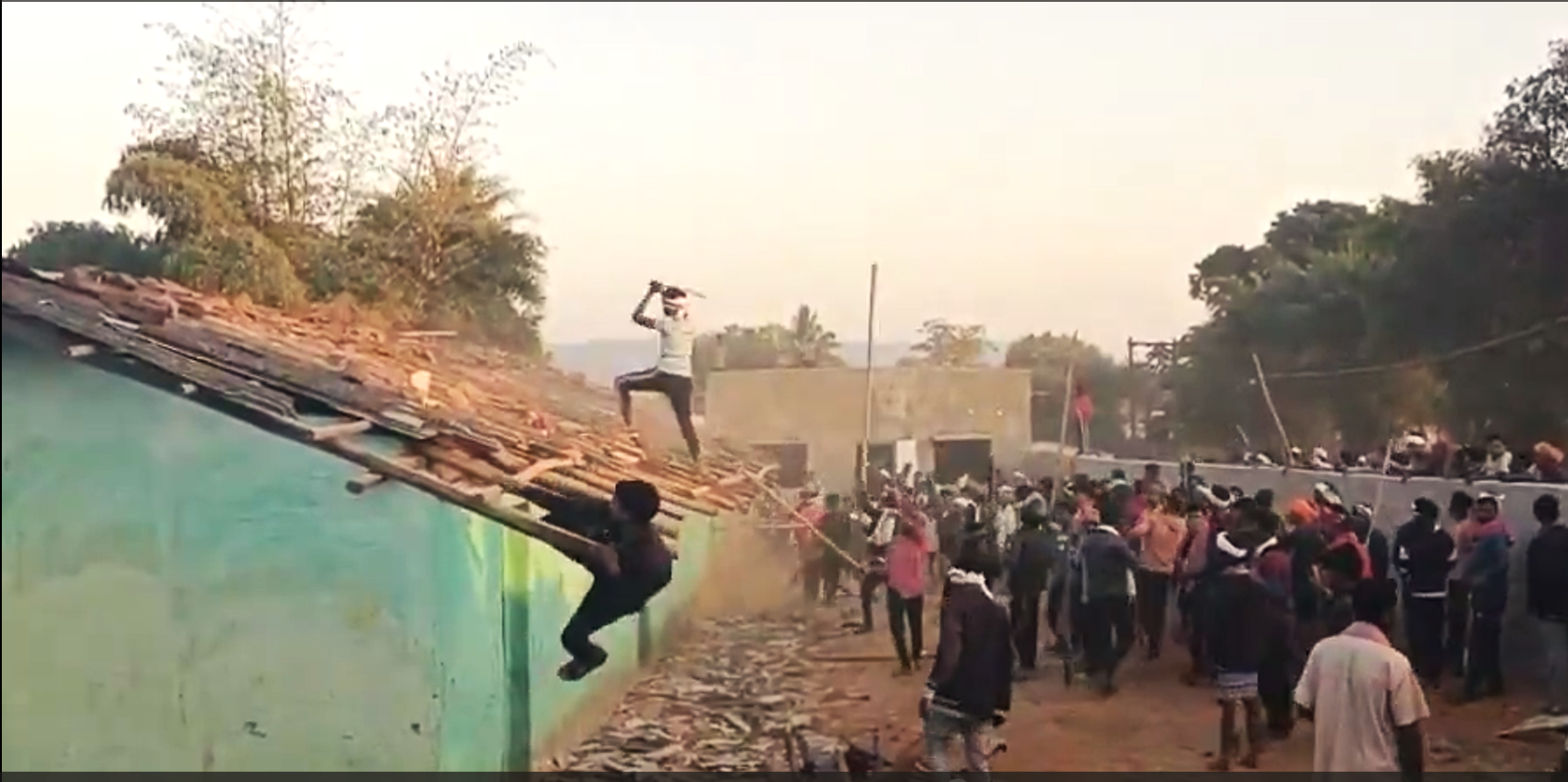
There is hope that Christian graves in tribal villages will not be disturbed anymore in Chhattisgarh. A bench of the Supreme Court of India on February 18, 2026, called a halt to Hindutva village goons and alienated clansmen illegally digging up bodies of village men and women who had converted to Christianity in their lifetime, and had been buried by their families in the traditional burial lands in the village.
Justices Vikram Nath, Sandeep Mehta, and NV Anjaria, responding to a passionate reference by Senior Advocate Colin Gonsalves, issued an interim order for the immediate cessation of exhumations of buried bodies in Chhattisgarh. The Court gave the state government four weeks to reply, adding "in the meantime, no further exhumation of buried bodies shall be permitted."
It is moot if the state administration can actually prevent such a macabre incident from being repeated in the State, given that much of its rural governance machinery has been thoroughly radicalised, and police and others are mute witnesses to various acts of communally targeted violence.
But this significant judicial action represents a vital advancement in protecting the dignity of the deceased while respecting the religious and cultural rights of Christian communities and other minorities in the area, as the United Christian Forum said at a press conference in the national capital, explaining the context in which this case had come to the topmost Court of justice in the land.
The Chhattisgarh Association for Justice and Equality had moved this petition in the Apex Court after banging its head on the doors of the state government. A few months ago, another bench of the Supreme Court considered a similar case, but the two judges differed. The Senior judge insisted the man be buried in his home village, but the government could not help, and the body was interred in a cemetery in another faraway district.
Noted human rights lawyer Colin Gonsalves, representing the petitioners, highlighted the plight of the Christian families in tribal villages where their deceased relatives are being forcibly removed from community burial sites and relocated without consent. He pointed out that these exhumations are not isolated events but reflect a recurring trend throughout southern Chhattisgarh, particularly in tribal regions.
The petition detailed how burial grounds that have traditionally been accessible to all villagers are now being informally restricted to certain religious groups, effectively excluding Christians. Families are often forced to abandon Christian burial customs and adopt the practices of the majority religion as a precondition for interment in their own villages.
The petition poignantly described the cruel and degrading nature of forced exhumations and reburials at distant sites, sometimes over 50 kilometres away, as violations of Articles 14 and 21 of the Indian Constitution.
A particularly alarming case was reported from Benur village in Bastar district, where animosity towards tribal Christians led to the exhumation of a man's remains, which were then cremated and scattered in a desecrating act intended to intimidate the community.
The petition also condemned the actions of local authorities, noting that police frequently failed to safeguard grieving families and occasionally facilitated forced removals. Many pastors assisting with burials, according to families' requests, have faced arrest and imprisonment.
The petitioners sought explicit judicial guidance to prevent State authorities and private individuals from interfering with lawful burials and to affirm the right of all individuals—regardless of religion, caste, or tribal affiliation—to be buried in their home villages. They requested that gram panchayats be directed to allocate burial spaces for all communities without discrimination and urged the State to establish common graveyards to promote social harmony.
The exhumation order emerges against a backdrop of troubling incidents involving Christian burials across Chhattisgarh, Odisha, Jharkhand, and beyond. The United Christian Forum has recorded 23 burial-related incidents in 2025 alone, with the majority occurring in Chhattisgarh. These incidents reveal a systematic pattern of intimidation, violence, and discrimination against tribal Christians, whose burial rights are increasingly challenged and politicised.
Degree Prasad Chouhan, the Petitioner and Convener of the Chhattisgarh Association for Justice and Equality, says the root cause of animosity among the tribals is the cultural invasion of Hinduism on tribal culture. "When a person expresses their faith in any non-Hindu religion and method of worship, then the person is expelled from the village community by this traditional system. People are evicted from their sources of livelihood, market, ancestral land and residence, and the dead bodies of their buried relatives are dug out from the grave and thrown outside the boundary of the village."
The person becomes the victim of mass hunting, and the women of that family become the victims of sexual assault.
The current cry for "de-listing" Tribal Christians to rob them of their land and jobs, demanded by organisations under the RSS umbrella and tacitly supported by the administration, is part of this political strategy.
"The intention is clear that those communities, who have been treated with discrimination on the basis of birth by giving them the status of inferior human beings for centuries, are not able to muster the courage to free themselves from traditional lifestyle and cultural slavery. All these incidents have brought to the fore the issue of the supremacy given to the traditional Gram Sabha through the PESA Act in the Fifth Schedule areas and its communalisation," Chauhan says.
The broader context is a deeply concerning rise in violence against Christians nationwide. From 2014 to 2024, documented incidents surged nearly sixfold, with 4,959 cases reported over the 12 years. In 2025, over 700 incidents have been recorded, disproportionately impacting Dalit Christians, women, and tribal communities. Uttar Pradesh and Chhattisgarh account for nearly half of all violence against Christians.
Despite the scale of this violence, accountability remains largely absent. Only 45 FIRs have been filed against perpetrators of nearly 580 recorded incidents in 2025, leaving 93% of cases unpunished. Conversely, over 230 FIRs have been lodged against Christians, often under anti-conversion laws, leading to wrongful arrests and imprisonment, particularly in Uttar Pradesh and Madhya Pradesh.
.jpg)
.png) Cedric Prakash
Cedric Prakash
 ICPA
ICPA
 ICPA
ICPA
 ICPA
ICPA
 ICPA
ICPA
 ICPA
ICPA
 ICPA
ICPA
.jpg)
 A. J. Philip
.jpg)
.png) Jacob Peenikaparambil
Jacob Peenikaparambil
.jpg)
.png) John Dayal
John Dayal