

.jpg) Jessy Kurian
Jessy Kurian
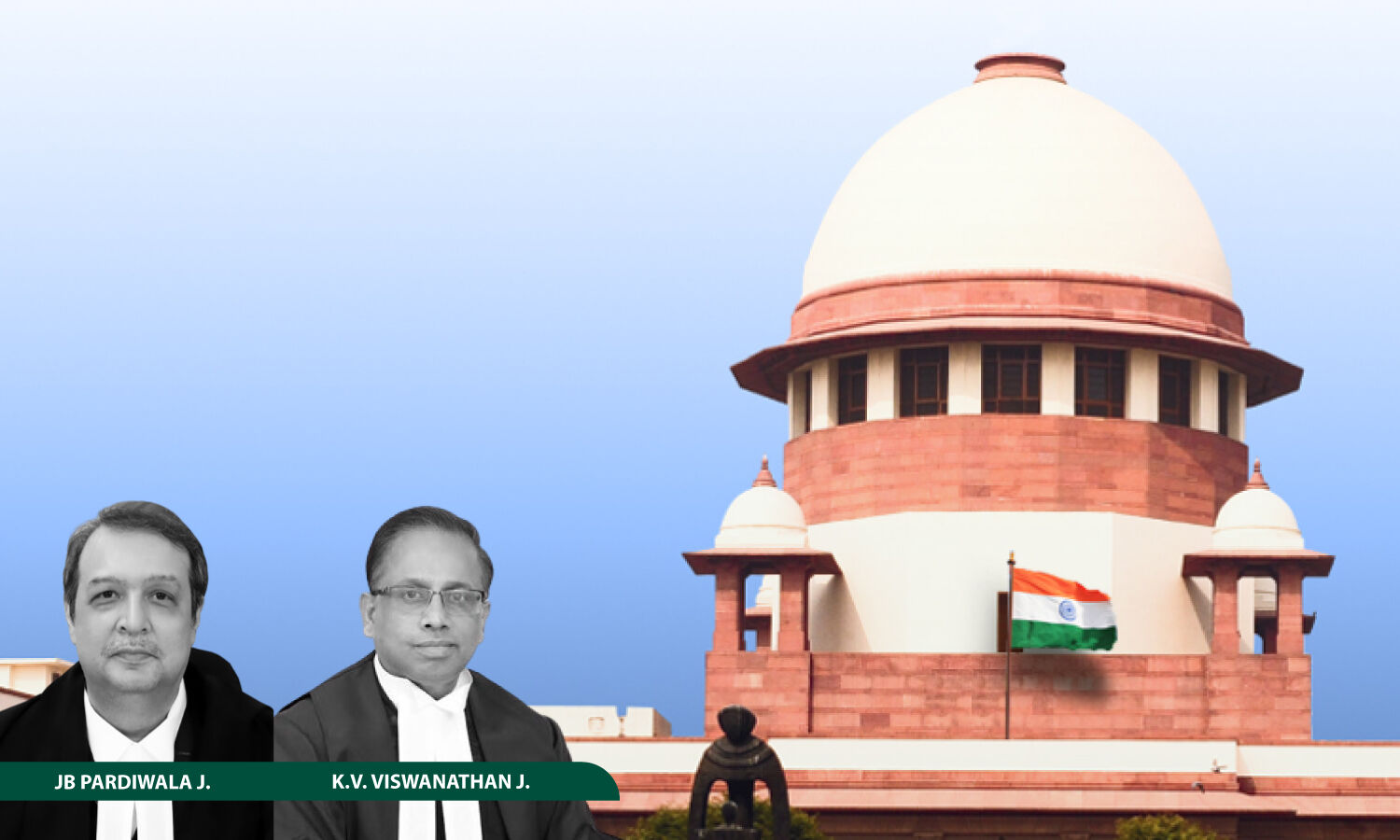
The Supreme Court of India, on March 11, 2026, passed a landmark judgment permitting passive euthanasia. A Bench comprising Justices JB Pardiwala and KV Viswanathan directed that "the medical treatment, including Clinically Assisted Nutrition and Hydration (CANH) being administered to the applicant, shall be withdrawn/withheld." The Court also directed that such a process must be carried out humanely.
At the age of 20 years, while pursuing a B. Tech degree at Punjab University, the applicant Harish Rana met with an unfortunate accident after he fell from the fourth floor of his paying guest accommodation, suffering a diffuse axonal injury. Due to the severity of his condition, he was administered treatment in the form of conservative management, including AED, analgesics, ventilating support, antibiotics, tracheostomy, and feeding through a Ryle's tube (nasogastric tube). Later, the mode of administering CANH came to be switched from Ryle's Tube to a surgically placed Percutaneous Endoscopic Gastrostomy (PEG) tube, which required replacement at a hospital every two months.
It is the first time the Supreme Court allowed the withdrawal of life-sustaining medical treatment for a patient in a persistent vegetative state for 13 years, upholding the right to die with dignity. The Court held that the right to die with dignity is inseparable from the right to receive quality palliative and end-of-life (EOL) care.
Recognising the peculiar facts and circumstances of the present matter, the Court waived the 30-day reconsideration period, as all stakeholders are unanimous in their view that the medical treatment being administered to the applicant should be withdrawn/withheld. However, the Court highlighted, "Our decision today does not nearly fit within logic and reason alone. It sits in a space between love, loss, medicine and mercy. The decision is not about choosing death, but is rather one of not artificially prolonging life."
The Court directed the All India Institute of Medical Sciences (AIIMS) to admit Rana to its palliative care department so that the withdrawal or withholding of his medical treatment, including CAN, can be carried out. AIIMS has also been asked to make all necessary arrangements to shift him from his residence to the department.
The Court emphasised, "AIIMS must ensure that such withdrawal or withholding is carried out through a robust, palliative, and end-of-life care plan which is specifically tailored to manage symptoms without causing any discomfort to the applicant and ensuring that his dignity is preserved to the highest degree."
In 2025, the Supreme Court directed the constitution of a Primary and Secondary Medical Board of Doctors, in accordance with the 'Common Cause' Guideline, to submit a report ascertaining whether life-sustaining treatment for the applicant ought to be withdrawn or withheld.
The reports indicated that continued administration of CANH is required for the applicant's sustenance; however, this may not improve the applicant's condition.
The Medical reports further indicated that the applicant exhibited no evidence of awareness of his environment and was incapable of interacting with others. The applicant remained bedridden ever since the incident, with terrible pain and bedsores, despite receiving the most attentive nursing care from his mother.
The judgement laid down detailed guidelines for passive euthanasia, both in cases where the patient left an "advance directive" or "living will" stating that life support should be withdrawn if they slipped into terminal illness and where no such directive was left behind.
The key guidelines are that the decision to withdraw treatment must be in the 'best interest of the patient,' and that the withdrawal can proceed without prior judicial approval only after a Primary Medical Board (Treating Hospital) and a Secondary Medical Board (Appointed by Chief Medical Officer/Collector), both certify that further treatment is futile and that withdrawal is in the patient's best interest.
The judgment establishes the principle of the "best interest of the patient." The Court requires the decision makers to place themselves, so far as possible, in the position of the patient and to consider, in a patient-centric manner, what that patient would have wanted if they had capacity to do so.
Explaining the "Best Interest" principle, the Court said that it cannot be defined by a single, straight-jacketed test that would fit across all facts and circumstances. The Court opined that the principle of 'Best Interest of the patient' may include, but not be limited to, certain considerations.
The crust of "Best Interest of the Patient" is that, when deciding upon the withdrawal or withholding of medical treatment, the correct question is whether it is in the patient's best interests that life be prolonged by the continuance of the particular medical treatment in question.
In 2018, the Supreme Court, in the 'Common Cause' petition, recognised the right to die with dignity as a fundamental right under Article 21 of the Constitution of India.
The first case of euthanasia the Supreme Court dealt with was in the case of Aruna Shanbaug vs Union of India in 2011, where the Court rejected the plea for active euthanasia for Shanbaug, a nurse who remained in a persistent vegetative state for years after being sexually assaulted by a ward boy in hospital. However, the Court laid down guidelines for passive euthanasia as an interim measure in that matter.
The word "Euthanasia" is derived from the Greek words "eu" and "thanatos," which literally mean "good death." It is commonly described as "mercy killing." Euthanasia refers to the intentional acceleration of the death of a terminally ill patient through active or passive means to relieve the patient from unbearable pain or suffering.
The term appears to have been used in the 17th century by Francis Bacon to denote an easy, painless, and peaceful death, emphasising that it was the physicians' duty to alleviate patients' physical suffering.
According to the Supreme Court of India, 'active euthanasia' is a direct, intentional act to cause death, like lethal injections, and it is illegal and considered culpable homicide. Whereas 'passive euthanasia' is the withdrawal or withholding of life support to allow natural death, and that is legal and permitted, however, following strictly the guidelines laid down by the Supreme Court.
Case: Harish Rana vs Union of India, (14 SCC 131)
.jpg)
.png) Cedric Prakash
Cedric Prakash
 ICPA
ICPA
 ICPA
ICPA
 ICPA
ICPA
 ICPA
ICPA
 ICPA
ICPA
 ICPA
ICPA
.jpg)
 A. J. Philip
.jpg)
.png) Jacob Peenikaparambil
Jacob Peenikaparambil
.jpg)
.png) John Dayal
John Dayal