.png)


 Fr. Gaurav Nair
.png)
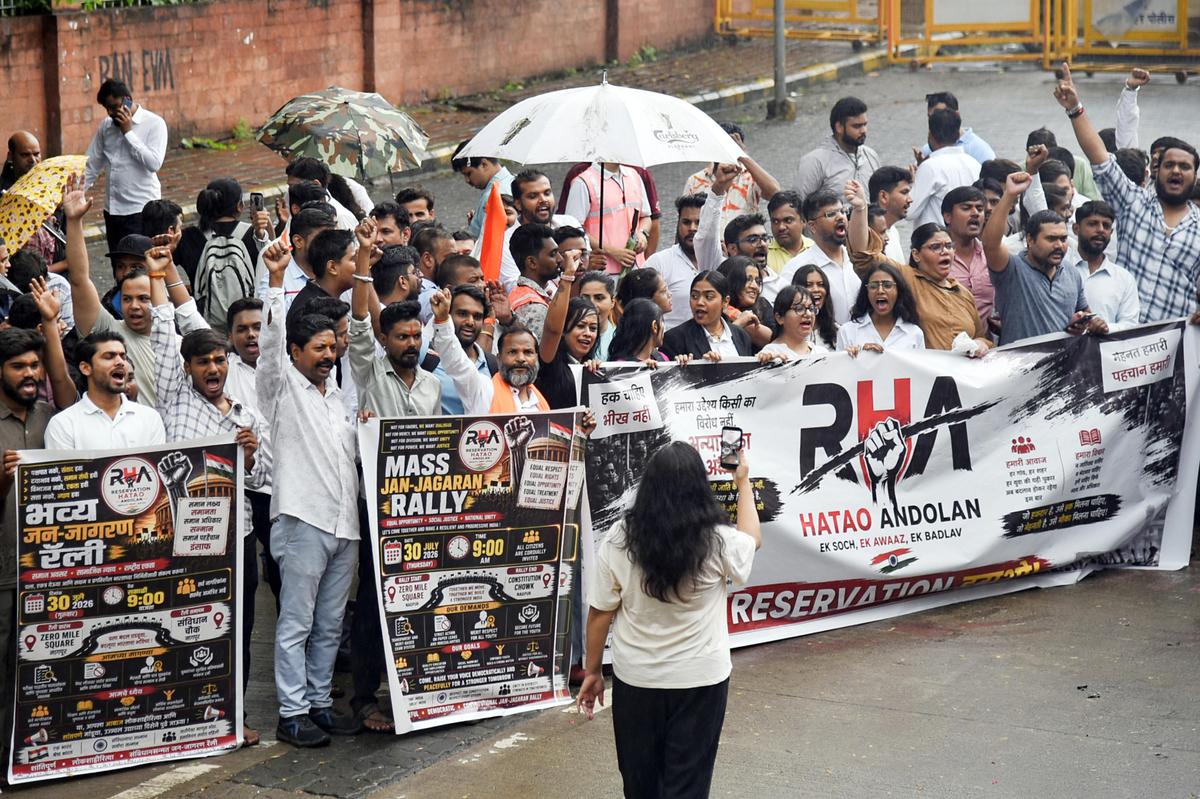
Rarely has anything elicited an unequivocal and united response from all sections of Indian society in recent history as the brutal actions of the Delhi Police, its Special Cell and the Rapid Action Force on July 20. It has well-nigh sent shockwaves rippling across the country, attracting the most rigorous condemnation.
The barbaric actions of the force, lack of identification, lack of uniforms, non-police personnel, molesting women demonstrators, among other details, lead to several questions. There are also several other instances, like the sudden replacement of the Delhi Police Commissioner just days before the march, the presence of a truck conveniently loaded with stones and the police pelting stones at protestors, which raise eyebrows. The Delhi police functions directly under the Union Home Ministry; what message must be gleaned from the episode?
The Chief Justice of India, Surya Kant, who can basically be called the grandfather of the Cockroach Janata Party, since it is his derogatory "cockroaches" comment that led to its inception, refused to review the video footage of the police brutality, dismissing it as a waste of time. If the judiciary refuses to condemn such actions and willingly supports them, who else will? Perhaps the "learned" jurist feels that he is beyond the Constitution, which he has vowed to protect.
Not far behind are the educational institutions. Proving that the BJP-RSS has completely infiltrated them, some of the "premier" institutions of the country have degraded themselves to threatening their students. At IIT-Madras, the students have alleged that the Dean had threatened them with consequences. Others like IIT-Roorkee and Jawaharlal Nehru University, among others, have released "advisories" for their students against joining the protest. The University of Delhi posted on its X handle that "Such activities can also pose serious risks to students' personal safety and significantly impact their academic progress and professional opportunities." This is a blatant threat to a person's life.
The Government may have succeeded in dispersing the protest by arresting students, registering criminal cases against them, and threatening them with planting fake evidence. It may try to delegitimise the protest by misdirecting people through fake news published by its lapdog media and by defending its ministers, whose continuance in office has become a matter of public controversy. But it cannot lathi-charge away genuine grievances.
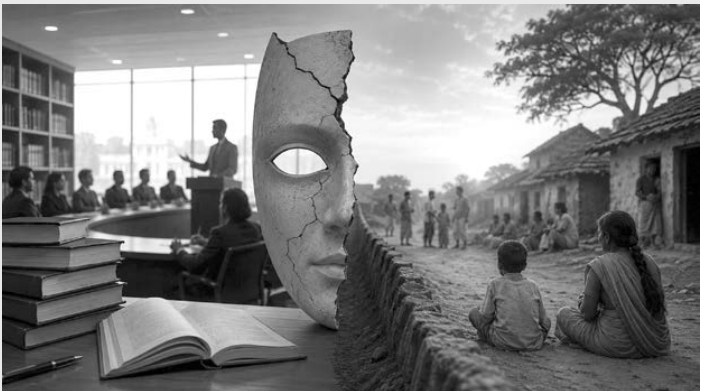
What unfolded on July 20 and its proximate events are far more significant than a simple confrontation between the police and protestors. It was a public exhibition of the State's increased preference for coercion over persuasion. The BJP-RSS has taken over every institution of the country. It has clearly shown that it is unwilling to listen to public concerns. It wants citizens not just to obey the "law" but to internalise obedience.
Democracies are designed on the assumption that power will be divided because every institution distrusts the others. The executive distrusts Parliament; Parliament scrutinises the executive; courts restrain both; universities cultivate independent thought; the press exposes abuse. When these institutions cease checking one another and instead begin reinforcing the same political impulse, the constitutional equilibrium is lost.

.jpg)
.png) Jacob Peenikaparambil
Jacob Peenikaparambil
 A. J. Philip
.jpg)
.png) Cedric Prakash
Cedric Prakash
.jpg)
 P. A. Chacko
.jpg) Thomas Menamparampil
Thomas Menamparampil
.png)
.png) Robert Clements
Robert Clements
.jpg) A. J. Philip
A. J. Philip
 Jacob Peenikaparambil