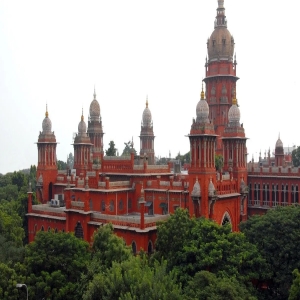


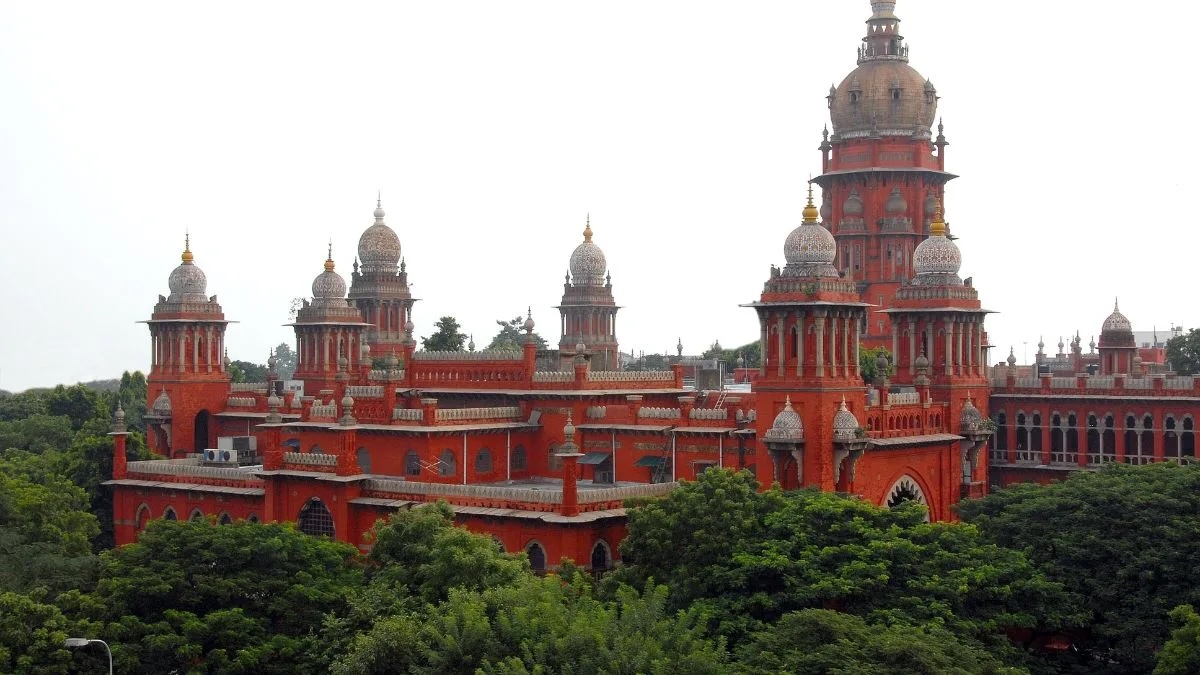
On October 6, a Division Bench of the Madras High Court decided an appeal brought by the Kanzeon Public Charitable Trust, based in Kodaikanal. The Trust runs a Zen meditation centre and applied for registration under the Foreign Contribution (Regulation) Act (FCRA), which regulates how organisations in India receive foreign contributions. Kanzeon had presented itself as non-religious. The Ministry of Home Affairs disagreed, and the Court upheld the Ministry's position.
The legal question was straightforward. Zen is a school of Buddhism, one of the religious categories recognised under the FCRA framework. If Kanzeon was a religious organisation, the Court said it had to disclose that correctly when applying for registration. It also made clear that being religious does not by itself disqualify an organisation from receiving foreign contributions.
The case could have ended there, but it did not.
At one point, the judgement says the Court wondered why a person pursuing Zen should be denied FCRA registration. The government's counsel then drew attention to the person behind the Trust, Rev. Fr. Ama Samy, SJ, an ordained Christian priest in the Jesuit tradition. What followed was extraordinary: Christianity was described as a messianic religion whose mission was to bring everyone into the fold of Jesus Christ. The judgment invoked the saying that "a leopard will not change its spots," contrasted an "inclusive" Hinduism with Abrahamic religions, which it called "inherently exclusive," and said that this created a "nagging doubt" which led the Court to examine the Trust's website.
Later, discussing conversion and foreign funding, the judgment said that "radical Christian Institutions are notorious" for conversion, while immediately adding that it did not accuse this appellant of having such an agenda.
That qualification does not really solve the problem. In some ways it exposes it. If there was no finding that Kanzeon was engaged in conversion, why was the supposed character of Christianity needed to decide the case? That is where a dispute about an FCRA application becomes a much larger argument about religion, culture and belonging. It also touches on an older, unresolved argument in Indian law and public life: when does religion become culture, and who gets to make that transition?
Inclusive and exclusive
I have no difficulty with the proposition that Christianity makes exclusive truth claims. It does. Christians believe things about God, Christ, and salvation that, if true, mean contradictory claims cannot all be true in the same sense. Jews and Muslims make truth claims as well. So do Buddhists, Sikhs and many schools within the vast collection of traditions we call Hinduism. Religions make claims about reality. Otherwise, there would not be much point in believing them.
But what does that tell us about whether their adherents can live with people who disagree with them?
A Christianity that says, "I believe Christ is the way, but you are absolutely free to reject him" is theologically exclusive and constitutionally pluralist. A social order that says, "There are many paths to the ultimate reality, but you cannot enter this temple or marry into that caste" may be metaphysically pluralist and socially exclusionary. Those are not paradoxes. They are different meanings of the word 'inclusive.'
That is why the statement that Hinduism is simply "inclusive" does not survive serious examination as a historical proposition. There are certainly Hindu philosophical traditions capable of remarkable accommodation. Hindu traditions contain many schools, deities, philosophies and paths to liberation, and sometimes a willingness to accommodate apparently contradictory beliefs. But doctrinal plurality is not the same thing as social inclusion. A tradition may be metaphysically pluralistic and socially exclusionary; another may make an exclusive theological truth claim while supporting complete civic equality for people who reject that claim.
Ambedkar saw this differently. His objection to the Hindu social order was not that it lacked philosophical sophistication. His question was what that order did to human beings. In Pakistan or the Partition of India, he warned that a Hindu Raj would be "the greatest calamity for this country" and described Hinduism, in the social order he was attacking, as "a menace to liberty, equality and fraternity" and therefore "incompatible with democracy." His language was severe, but his test was clear. He was asking about power, dignity and equality, not how many theological possibilities a tradition could accommodate.
There is another complication with the language of inclusion. Absorbing another religious tradition into one's own theological universe is not necessarily the same as accepting it on its own terms. The Buddha is a useful example. His incorporation into some Vaishnava traditions as an avatar of Vishnu can be presented as evidence of Hinduism's capacity to include. But Ambedkar did not see it that way, and when he embraced Buddhism, one of his vows explicitly rejected the claim that Buddha was an incarnation of Vishnu. For him, the point of conversion was precisely that he had left Hinduism. That should make us cautious about the word inclusive.
Absorption is not necessarily acceptance in the same way that plurality is not necessarily equality. And inclusion on somebody else's terms can itself be a form of subordination.
None of this proves that Hinduism is "really exclusive" and Christianity is "really inclusive." And I think that a constitutional court has no business ranking entire religions as "inclusive" and "exclusive" in the first place; it is not an argument a constitutional court should be having at all. Courts can examine conduct. They can determine whether an organisation has committed fraud, coercion or an offence. They can decide whether statutory conditions have been met. They are on much less certain ground when they begin assigning civilisational personalities to entire religions.
'Who gets to be' culture?
The more consequential part of the Kanzeon judgement may lie elsewhere. The Court says an organisation primarily engaged in systematically teaching Vedanta, the Bhagavad Gita, the Upanishads, Yoga, and allied "Indian Knowledge Systems" through classes, publications, research, and similar activities cannot be classified as a religious institution. Such activity, it says, belongs under education or culture and organisations disseminating Indian Knowledge Systems stand "on a different footing."
The next paragraph begins by observing that Zen philosophy is of Chinese origin. That is what keeps bringing me back to the sequence, and to one question: why should the origin of Zen matter?
There is absolutely nothing wrong with studying the Bhagavad Gita as philosophy. Likewise, Yoga can be practised without being an act of worship, and Vedanta can be taught academically. But surely the exact same possibilities also exist for other traditions. The Bible can be scripture in a church setting, literature in a university, a historical document in an archive and an object of cultural study in a museum. The Quran can similarly be approached devotionally, historically, linguistically or philosophically. Buddhist texts too can be religious texts in one setting and objects of philosophical study in another.
It is the character of the activity that should determine the classification and not the civilisational pedigree assigned to the text.
The Supreme Court has recognised something close to this distinction before. In Aruna Roy v. Union of India, while distinguishing religious instruction from education about religion, it referred to the study of religions "existing in India and outside India." Philosophy rooted in religion does not cease to be capable of philosophical or academic study just because its religious tradition originated somewhere else.
The current FCRA Rules make the issue even more interesting. The 2026 amendments explicitly recognise religious education, moral instruction, meditation retreats, religious philosophy, faith-based research and religious publications as legitimate religious purposes under the regulatory framework. "Religious," in other words, does not mean forbidden.
So why is it necessary to rescue Vedanta, the Gita, the Upanishads and Yoga from the category of religion at all?
Kanzeon is not the first judgement in which this question arises. And there is an important continuity here: Justice GR Swaminathan, who authored the Kanzeon judgement for the Division Bench, also decided Arsha Vidya Parampara Trust v. Union of India last year. In that case, he described the Bhagavad Gita as "moral science" and part of Bharatiya civilisation, treated Vedanta as philosophy developed by "our ancestors," and rejected the classification of Yoga as religious. I do not think we need to speculate about motive. But the continuity is difficult to miss.
But there is an even longer judicial history behind this move. In the Supreme Court's 1995 Ramesh Yeshwant Prabhoo decision, the Court drew on earlier descriptions of Hinduism as a "way of life" and said that Hindutva could, depending on context, denote Indian culture and ethos rather than necessarily amount to an appeal to Hindu religious fundamentalism. The actual case was far more complicated than the slogan that survived it. The Court upheld findings against communal election speeches and insisted that context mattered. But the phrase "way of life" has acquired a life of its own.
Legal scholars have since pointed to a recurring conflation of three different things: Hinduism, which is a highly diverse family of religious traditions; Hindutva, which is a modern political ideology; and Indianness itself.
Once these begin to merge, something associated with one religious tradition can gradually acquire a broader and apparently religion-neutral identity as culture, civilisation, ethics or national heritage.
This would matter much less if everybody passed through the same door. The difficulty arises when one religious-philosophical inheritance can move from religion into culture, civilisation and education, while another remains associated with foreignness, proselytisation and suspicion.
What exactly is a "way of life"?
This brings me back to that phrase, because I am not sure we have interrogated it enough: "Hinduism is a way of life."
I confess that I have never quite understood what useful legal distinction those words are supposed to make. Christianity is a way of life for Christians, just as Islam is for Muslims and Sikhism for Sikhs. Religion shapes worship, food, family, dress, festivals, marriage, death, moral choices, community, memory and much more. Almost every religion, when lived seriously, becomes a way of life.
So, what exactly is being distinguished?
There is an even more awkward question: If Hinduism, or still more strangely Hindutva, is not merely religion but an Indian "way of life", why is conversion such a civilisational crisis? After all, how does one convert out of a way of life?
A Tamil Hindu who becomes Christian does not stop being Tamil. A Bengali who becomes Muslim does not cease carrying Bengali language, food, literature, and memory. A Naga Christian does not lose the history or culture of the Naga people. Conversion changes a person's religious conviction. It does not magically remove ancestry, mother tongue, cuisine, music, landscape or citizenship.
Religious conversion becomes a departure from an Indian "way of life" only after Hindu life has quietly been made synonymous with Indian life. And this is where the phrase begins doing something more than describing Hindu diversity. It begins to define the nation.
And there is an odd contradiction here. Hinduism is said to be so capacious that it cannot be contained within the ordinary category of religion. And yet when someone leaves it for Christianity or Islam, the boundary suddenly becomes remarkably clear. There is a clear inside and an outside. So, numbers and demography begin to matter, and conversion becomes more than a person's decision about a particular belief or conscience; it becomes a civilisational loss.
That idea has a history outside the courtroom as well. S Gurumurthy has written of "inclusive Hinduism" being wrongly equated with "exclusive faiths that had originated from outside India." Ram Madhav has similarly contrasted religions of Indian origin with religions that came from outside, before moving to the problem of conversion. Rakesh Sinha has spoken of conversion in terms of demographic engineering. Other Hindu nationalist writers have used different formulations of the same basic distinction.
I am not suggesting that the Kanzeon judgement borrowed its reasoning from Gurumurthy, Madhav or Sinha. I have no evidence for such a claim, and there is no need to make it. The words on the page are sufficient. What is more significant is the continuity within Justice Swaminathan's own judicial reasoning, particularly between Arsha Vidya and Kanzeon. The writings outside the courtroom matter because they show that this reasoning participates in a wider and recognisable intellectual grammar: indigenous and foreign, inclusive and exclusive, civilisation and religion, conversion and demography.
Once those categories enter legal reasoning, they do not remain abstract philosophy. They begin deciding who gets to be culture.
Hindu, Hindutva, Indian
The confusion is worth naming because these are not interchangeable things.
Hinduism is an extraordinarily diverse family of religious and philosophical traditions, while Hindutva is a modern political ideology. And India is both an old civilisation and a modern constitutional republic, inhabited and shaped by people belonging to many religious and non-religious traditions.
Conflating those three produces some peculiar results. A Hindu philosophical tradition can become Indian civilisation. Indian civilisation can then become Indian culture. Something presented as Indian culture can then appear secular because it is no longer being described as Hindu. Meanwhile another religion remains marked by its origin outside present-day India and by the missionary or theological claims associated with it.
This is precisely why Kanzeon's reference to the Chinese origins of Zen should trouble us. Geography has begun entering the classification of religious and cultural legitimacy.
But if geography determines civilisational belonging, the exercise quickly becomes incoherent. Buddhism does not become a foreign religion because the Buddha was born in Lumbini, in what is now Nepal. Christianity does not become foreign to India because Jerusalem is outside India's borders. Religious traditions have geographical histories; people have histories, too, and those histories are rarely identical.
There is another Indian way of thinking about this.
In Bhopal in April 1961, Jawaharlal Nehru spoke about complaints being made against Christians in Madhya Pradesh. He reminded his audience that Christianity had existed in India for nearly two thousand years. Christianity, he said, "belongs to the Indian soil." Christians and Muslims were Indian citizens entitled to equal rights.
Then came four words worth remembering:
"They are not outsiders."
Nehru was not pretending Christianity originated in India, but he refused to turn religious geography into a hierarchy of belonging.
To me, that distinction seems important, especially in today's context. Hindu heritage is an immense and indispensable part of India's heritage. But Hindu heritage is not synonymous with Indian culture itself. Buddhism, Jainism, Sikhism, Islam, Christianity, Judaism, Zoroastrianism, tribal traditions, atheistic and rationalist movements, and innumerable regional cultures have also made India what it is.
The Constitution reflects something closer to that complicated reality. In SR Bommai, the Supreme Court spoke of India's "composite culture," enriched by different religious traditions, and insisted upon the secular character of the State. That seems to me a far safer constitutional starting point than asking which religions are sufficiently indigenous to become culture.
Countries are not theological genealogies. The Constitution created citizenship and not a hierarchy of spiritual nativeness.
And that is what troubles me most about the Kanzeon judgment. The case began with a legitimate legal question: had this Trust truthfully described what it was doing? But it ended up raising much larger questions about which traditions are native, which are foreign, which are cultural, which are religious, which are inclusive and which should arouse suspicion.
Those are dangerous questions for the State to answer, and especially for courts to turn into legal categories.
A secular court can ask whether an organisation complies with the FCRA. It can investigate unlawful conversion. It can insist upon honest disclosure and enforce the same law against a church, a temple, a Buddhist monastery or a secular NGO. What it should not do is allow a preferred account of Indian civilisation to determine who gets to be culture and who must remain religion.
Because once that distinction starts doing legal work, the issue is no longer merely how we describe India's past. It is who gets to belong to India in the present.
.jpg)
.png) John Dayal
John Dayal
.jpg)
.png) Jacob Peenikaparambil
Jacob Peenikaparambil
.jpg)
 P. A. Chacko
.png)
.png) Robert Clements
Robert Clements
.png) Cedric Prakash
Cedric Prakash
.JPG)
 A. J. Philip
 Jacob Peenikaparambil