

.png) John Dayal
John Dayal
With defence budgets for both India and Pakistan now public, it is clear that the arms race in the subcontinent is intensifying at a pace not previously anticipated by international security experts.
Both countries are allocating close to a quarter of their budgetary resources to military preparedness—expanding conventional arsenals, investing heavily in artificial intelligence, drones and cyber capabilities, and modernising nuclear stockpiles.
The brief border clash in May 2025—dubbed Operation Sindoor by India and Operation Bunyan-un-Marsoos by Pakistan—demonstrated how quickly tensions can spiral. Triggered by a terrorist attack in Pahalgam, Kashmir, that killed 26 civilians, the confrontation saw four days of drone strikes, missile launches and artillery exchanges before a ceasefire was reached. The guns fell silent, but the rhetoric did not. The underlying tensions remain unresolved.
Rising military expenditure in recent years reflects both security anxieties and modernisation drives. A clear indicator of the pace and scale is the size of the defence budgets. Pakistan unveiled its figures in June, while India's were presented in the Union Budget in February.
According to the Stockholm-based Stockholm International Peace Research Institute (SIPRI), India spent ?7.20 lakh crore ($86.1 billion) on defence in 2024, about 1.9 per cent of GDP. Pakistan's defence budget stood at roughly ?0.85 lakh crore ($10.2 billion), amounting to 2.7 per cent of its economy. While India's spending is nearly nine times higher in absolute terms, Pakistan's higher GDP share reflects its own security compulsions and deepening concerns.
India's 2026 defence allocation projects a 15 per cent increase to ?7.85 lakh crore, with major investments in AI-enabled systems, cyber warfare and unmanned platforms. Pakistan expects a 10–15 per cent rise, pushing its defence outlay to ?0.87–0.93 lakh crore, or PKR 2.8–3 trillion.
While these investments are justified by policymakers as responses to real threats, peace activists warn of the opportunity costs. Every rupee diverted to war preparation is a rupee not spent on education, health or welfare. Both economies remain fragile, and the human cost is immense. Security, they argue, cannot be reduced to weapons alone; it must also come from addressing grievances and building trust. Without that, fear and hostility become self-perpetuating.
The prolonged tension has also weakened peace movements in both countries. In India, some voices still survive, particularly in Delhi and Mumbai. In Pakistan, however, many peace activists now operate from the West or Dubai. The India-Pakistan Peoples' Forum for Peace and Democracy (PIPFPD), once active across states and major cities, has remained dormant for years. Efforts are now underway to revive it amid growing war rhetoric, especially on social media and within political circles.
Economic pressures further complicate the picture. India continues to grapple with a poverty rate of around 10–15 per cent, while Pakistan's exceeds 40 per cent. Defence allocations strain already limited fiscal space, forcing cuts or stagnation in social spending. In Pakistan's case, the situation is particularly acute, with nearly half of the national budget reportedly consumed by debt servicing.
Geopolitically, India's military upgrades—largely shaped by its concerns over China—inevitably prompt responses from Pakistan. This dynamic locks both countries into a cycle of reaction and counter-reaction. Pakistan's defence dependence on China has deepened, particularly in real-time intelligence, drones and fighter aircraft. The United States, meanwhile, continues to supply both India and Pakistan with manned and unmanned aerial platforms. Russia and Israel remain key defence partners for India, while Beijing has pledged additional next-generation fighter aircraft and surveillance systems to Islamabad.
At the core of this rivalry lies the most dangerous element: nuclear weapons. Strategic experts agree that the India-Pakistan nuclear competition has remained one of the world's most perilous for over two decades. Estimates place India's current stockpile at around 180 warheads and Pakistan's at roughly 170, with both sides modernising delivery systems and projecting modest growth by 2026.
India is advancing sea-based nuclear capabilities and MIRV (multiple independently targetable re-entry vehicle) missiles, while Pakistan emphasises short-range tactical nuclear weapons such as the Nasr missile. Both approaches increase complexity and lower thresholds, particularly during crises.
India maintains a declared no-first-use policy, though internal debates on pre-emptive strikes add ambiguity. Pakistan, governed largely by military doctrine, avoids formal policy declarations; senior leaders have repeatedly warned that any Indian "misadventure" could invite a nuclear response.
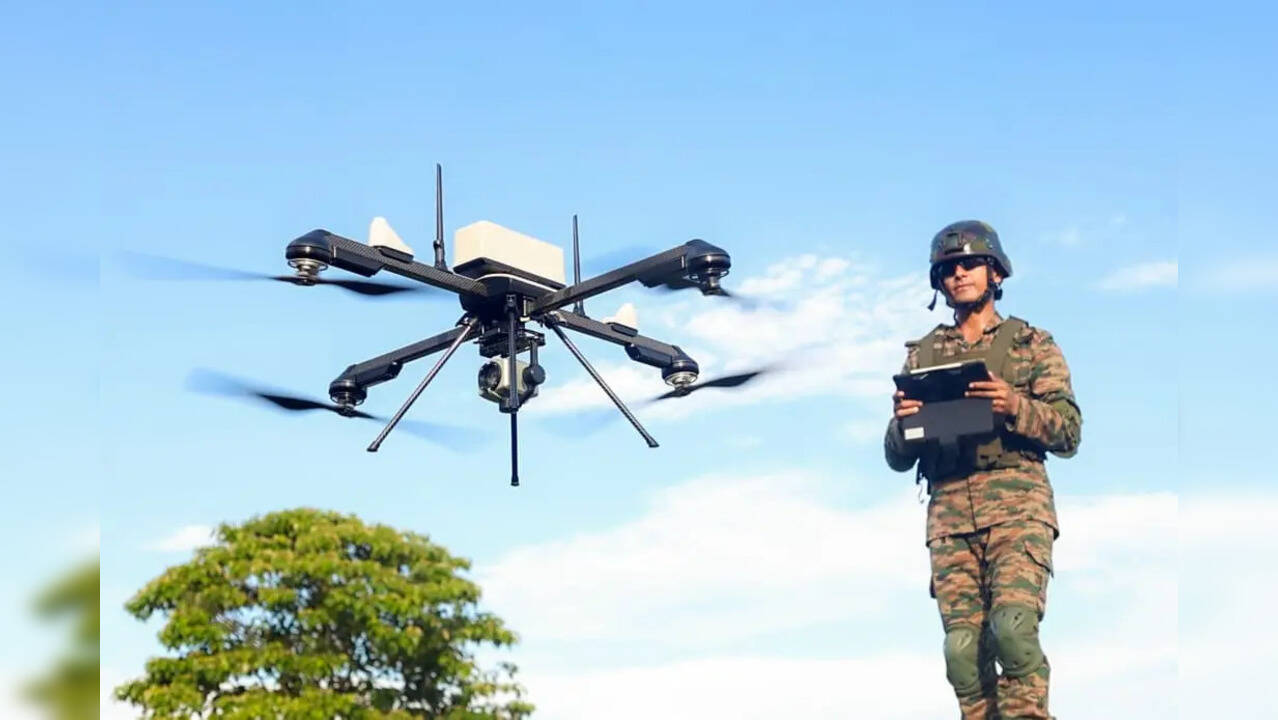
Recent confrontations also reveal a shift in the nature of warfare. The 2025 clash underscored how drones, cyber tools and AI-enabled systems are reshaping conflict dynamics. India deployed Harop and Harpy loitering munitions, while Pakistan used Bayraktar TB2 and Wing Loong II drones. These systems allow precision at relatively lower cost, but they also reduce the political and psychological barriers to escalation.
India now operates an estimated 2,000–2,500 drones, with plans to expand AI-driven swarm technologies and acquire additional MQ-9B platforms. Pakistan is rapidly expanding its own drone capabilities through partnerships with China and Turkey, including stealth platforms and armed UAVs.
While such technologies offer tactical advantages, they also compress decision-making timelines. Unmanned systems increase the risk of miscalculation, misattribution and accidental escalation, especially when domestic politics fuel nationalist posturing. As seen during the first phase of Operation Sindoor, hundreds of incursions were detected within short windows, placing enormous pressure on command structures and political leadership.
Both countries are also embedded in broader strategic alliances. India's participation in the Quadrilateral Security Dialogue aligns it more closely with the United States, Japan and Australia, while Pakistan remains firmly anchored to China through the China-Pakistan Economic Corridor (CPEC).
The late Dr Michael Krepon, a noted US-based South Asia security expert and co-founder of the Stimson Centre's South Asia program, underscored the gravity of nuclear risks in the region: "The India-Pakistan nuclear competition is among the most dangerous in the world because of the proximity of forces, the short decision times, and the lack of formal crisis communication mechanisms. Confidence-building and risk reduction are essential, but so far progress has been limited."
.jpg)
.png) Cedric Prakash
Cedric Prakash

 ICPA
ICPA
 ICPA
ICPA
 ICPA
ICPA
 ICPA
ICPA
 ICPA
ICPA
 ICPA
ICPA
.jpg)
 A. J. Philip
.jpg)
.png) Jacob Peenikaparambil
Jacob Peenikaparambil
.jpg) John Dayal
John Dayal