

.png) Jaswant Kaur
Jaswant Kaur
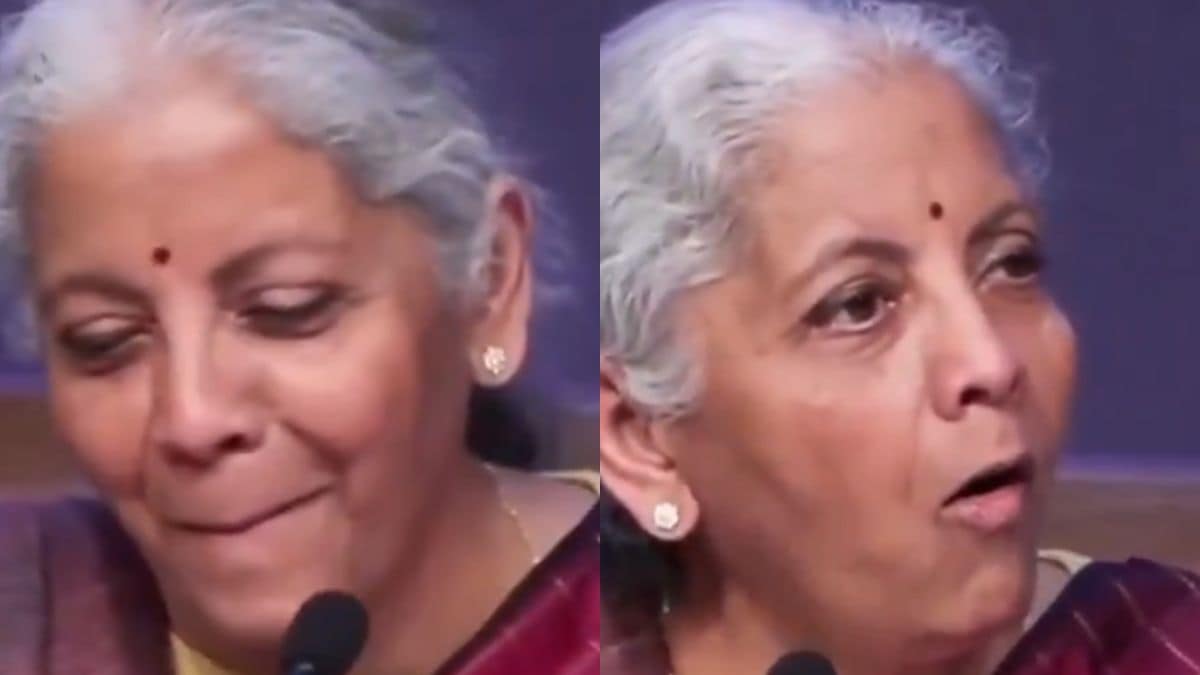
When the Union Budget 2026–27 was presented in Parliament, most television screens carried the same image — the finance minister standing at the podium, calmly listing numbers that ran into lakhs of crores, speaking about several women's hostels that she intends to open.
A few hours later, another clip began to travel across WhatsApp, Instagram, X, and other social media platforms. The clip showed a news anchor bluntly asking, "Madam, what is in this Budget for the middle class?" The finance minister paused for a few seconds, smiled awkwardly, adjusted her papers, and then shifted the conversation to university townships. The clip spread like wildfire, not because it was disrespectful, but because it captured what millions of Indians were quietly thinking: we hear big numbers, but where do we fit in?
That pause in the clip felt familiar to many households. It was similar to the pause a father makes when he has to pay higher school fees every year; a young graduate is compelled to use his bike to make a living despite having a degree to his credit; and perhaps the same pause that a mother makes when she chooses between buying fruits or paying the electricity bill.
On paper, this Budget looks strong, with a certain group praising it to no end. And why should they not? We have a projected government spending of around ?53.5 lakh crore, with the highest-ever capital expenditure (money spent on roads, railways, ports, and infrastructure) of about ?12.2 lakh crore. The government aims to limit the fiscal deficit to 4.3 per cent of GDP (Gross Domestic Product).
The numbers are certainly impressive. We certainly need better roads and railways. They create jobs and connect markets. But are budgets only about bridges and bullet trains? Are they not also about anganwadis, government schools, hospitals, water taps, employment schemes, and the daily lives of ordinary people?
Here is where the story becomes complicated. The government often allocates huge sums for welfare schemes but spends far less than promised by the end of the year. For example, during the last year, rural development had an initial budget estimate of ?2.65 lakh crore, which was revised to ?2.12 lakh crore, a reduction of 20 per cent. There has been a similar reduction in most social welfare schemes, spanning education, health, agriculture, and so on. Even the popular rural employment scheme faced a similar cut.
This is not an issue that can be forgotten; it has real consequences. If less money reaches villages, fewer days of work are generated, reducing villagers' purchasing power and leaving them to struggle to make ends meet. Similarly, it affects the education and healthcare systems.
This year, the Budget has replaced MGNREGA with a new "Viksit Bharat Gramin" framework, allocating about ?95,692 crore. The number sounds huge, but demand for rural work has been high because agricultural incomes are uncertain and prices of essential commodities have increased manifold. For many rural women, this work is their only source of independent income. When allocations are tight or wages are delayed, it directly affects food on the table.
Water is another example. The Jal Jeevan Mission promised piped drinking water to every rural household. This year's allocation is around ?67,670 crore. However, only a fraction of such amounts was actually spent in the previous year. For women who still walk long distances to fetch water, this gap between promise and reality is not abstract. It is a lived reality.
Health is where the disconnect hurts the most. The health budget has risen to about ?1.06 lakh crore, with increased allocations for Ayushman Bharat (PM-JAY), the National Health Mission, and for setting up new district trauma centres. These are positive steps. But India still spends only about 2 per cent of its GDP on public health, well below that of most comparable countries. Government hospitals remain overcrowded.
Many district-level health facilities lack specialists or even diagnostic equipment. For pregnant women, this can mean risky deliveries, and for poor families, it often means selling assets to pay private hospital bills.
While overall health spending has increased, allocations for family welfare, which include maternal care, contraception, and frontline health services, have fallen in revised estimates. At the same time, anganwadis under Saksham Anganwadi and POSHAN 2.0 have received only modest increases, even though India still struggles with child malnutrition. Nearly 35 per cent of children under five are stunted, which means millions of children grow up shorter, weaker, and with lower learning ability.
Frontline workers—be it ASHAs, ANMs, or anganwadi workers—are mostly women from poor or lower-middle-class families. They are the ones who run immunisation drives, visit pregnant women, and deliver nutrition to children. Yet many of them earn far below the minimum wage and have no job security. The Budget did little to improve their pay or working conditions. A country that says "women-led development" but underpays its women workers is speaking two different languages.
Education tells a similar story. The Budget shows higher allocations for schools and higher education, but India still spends less than 3 per cent of GDP on education, far below the long-standing 6 per cent target. In many government schools, classrooms are overcrowded, with fewer teachers and no access to digital facilities.
Now, let us turn to the youth, the largest group in India today. Every year, millions of young people enter the job market. The Budget talks about skill programmes like the PM Kaushal Vikas Yojana and production-linked incentives to create jobs in manufacturing. Yet unemployment among educated youth remains high. Many graduates drive cabs, work as delivery agents, or take short-term contracts with no benefits. They hear about "India's growth story" while struggling to pay rent.
The Budget's big focus on infrastructure may create construction and manufacturing jobs, but these are often temporary or low-paid. What many young Indians want are stable, decent jobs in services, technology, healthcare, and education. That requires stronger public investment in universities, research, startups, and small businesses—areas that do not get the same spotlight as highways or airports.
Then there is the salaried middle class, the group that felt most unsettled after that viral clip. The Budget offered little relief. The income tax slabs remain unchanged.
Food prices have been high. Cooking gas refills are expensive once initial subsidies end. Housing in cities remains out of reach for most young professionals. Even with tax relief, a family in Mumbai or Bengaluru often struggles to save or buy a home.
The Budget also reveals a deeper structural issue. A large share of government spending goes to salaries, pensions, and interest payments on public debt, which now consume more than a quarter of total spending. This leaves less room for welfare schemes. In other words, India is borrowing more, spending more on infrastructure, but not necessarily delivering more welfare where people need it most. Growth without strong public health, education, and social protection can only create shining cities alongside struggling citizens.
For children, the stakes are the highest. A child who misses nutrition, quality schooling, or basic healthcare cannot easily "catch up" later. Budgets that underinvest in early childhood, education, and public health mortgage the future.
That viral clip of the finance minister will be forgotten in a few weeks. But the question behind it remains. What is in the Budget for ordinary Indians—for those waiting for a bed in a government hospital, for the girls walking two kilometres to school, for the young man or woman sending résumés daily without any response, or for the salaried parent juggling EMIs and tuition fees?
Unfortunately, Budget or no Budget, their lives remain the same. Their struggles are rarely captured or understood when deciding on the country's financial trajectory. In fact, with every passing Budget, perhaps their struggles have only increased.
A Budget is not just a financial document. It is a statement of priorities. If India truly wants to be a developed nation by 2047, as our political leadership often speaks of, it must invest as much in its people as in its roads and railways. Otherwise, our growth train may appear to be travelling fast, but too many citizens will be left standing on the platform, watching it pass by.
.jpg)
.png) Cedric Prakash
Cedric Prakash
 ICPA
ICPA
 ICPA
ICPA
 ICPA
ICPA
 ICPA
ICPA
 ICPA
ICPA
 ICPA
ICPA
.jpg)
 A. J. Philip
.jpg)
.png) Jacob Peenikaparambil
Jacob Peenikaparambil
.jpg)
.png) John Dayal
John Dayal