

.jpg) Jessy Kurian
Jessy Kurian
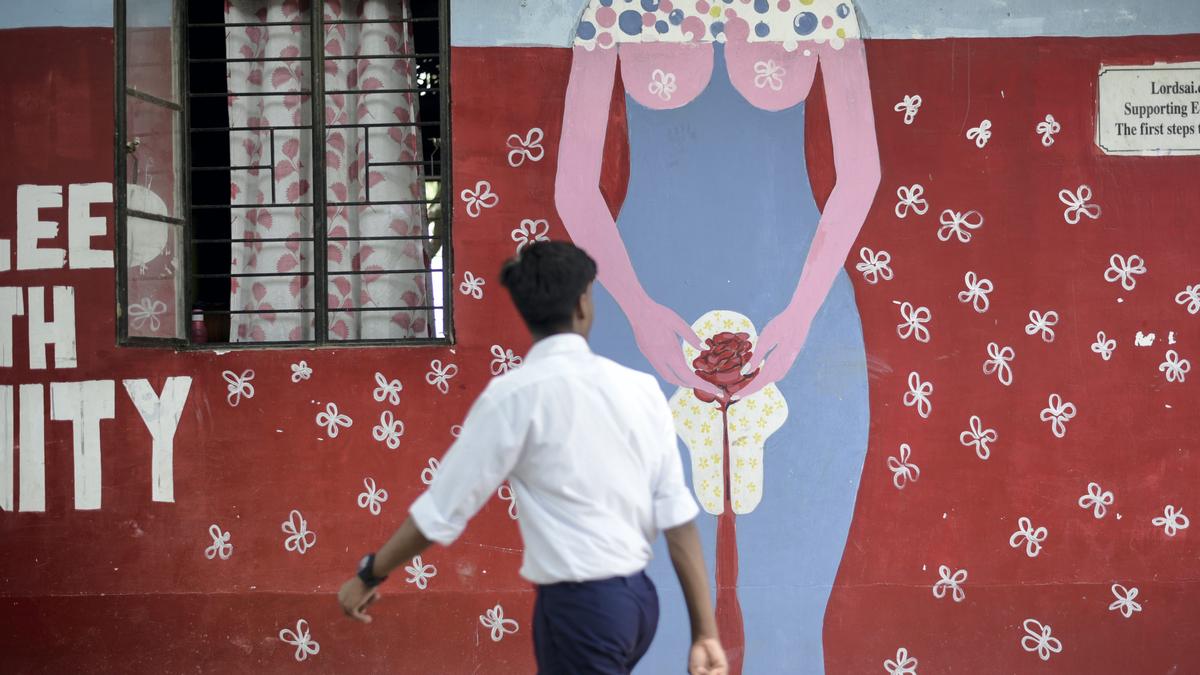
A Supreme Court Bench of Justice JB Pardiwala and R Mahadevan held that menstrual health is a girl's fundamental right, enshrined under Article 21 of the Constitution of India, which ensures the Right to Life and the Right to Live with Human Dignity.
The Court held that the right to education is a multiplier right as it enables the exercise of other human rights. The right to education forms part of the broader framework of the rights to life and human dignity, which cannot be realised without access to education.
Inaccessibility of menstrual hygiene management measures undermines the dignity of a girl child and the right to life under Article 21, as life would include all aspects of ordinary human behaviour, and that includes menstrual health.
In the Court's own words, "access to safe, effective and affordable menstrual hygiene management measures helps a girl child attain the highest standard of sexual and reproductive health. The right to healthy reproductive life embraces the right to access education and information about sexual health."
In this matter, the Court delved into what menstrual poverty or period poverty is. Menstrual poverty refers to the financial burden and obstacles that women face in affording menstrual hygiene, or sanitary products, because they are unable to maintain such expenditure.
The Court identified that the issue of the lack of menstrual hygiene management (MHM) in schools across the country has two-fold dimensions: first, absenteeism, and second, complete school dropout due to the lack of MHM measures.
The right to education is not confined to the physical existence or formal availability of schools. It extends to a child's ability to participate in education in a meaningful, continuous, and non-discriminatory manner.
The Court highlighted that for a menstruating girl child who cannot afford menstrual absorbents, the disadvantage is two-fold. First, vis-à-vis menstruating girl children who can afford menstrual absorbents. Secondly, vis-à-vis male counterparts or non-menstruating counterparts.
A menstruating girl child is also a child with disability; she is not merely facing disadvantages arising from menstrual poverty, but is additionally subjected to disadvantageous consequences flowing from the intersection of gender disability.
The Court said the right to education under Article 21A and the RTE Act comprises free, compulsory and quality education. Free education includes all costs or expenses that would prevent a child from pursuing and completing elementary education.
Regarding the role of Men in menstruation, the Court said, menstruation should not be a topic that is only shared in hushed whispers. It is crucial that boys are educated about the biological reality of menstruation. A boy student unsensitised towards the issue may harass a menstruating girl child, which may discourage her from attending school. Male teachers should be sensitised to the needs of a girl child.
"Time is over ripe that we recognise menstrual health as shared responsibility rather than a woman's issue. Awareness must not be limited to girls, but extends to boys, parents, and teachers. When menstruation is discussed openly in schools it ceases to be a source of shame. It should be seen as a collective effort rather than a constitutional pull."
The Court directed all States and Union Territories to ensure that every school, whether government-run or privately managed, in both urban and rural areas, is provided with functional gender-segregated toilets with usable water connectivity, and that free biodegradable menstrual sanitary pads are provided to girl students in all schools. Such sanitary napkins shall be made readily accessible to them, preferably within the toilet premises through sanitary napkin vending machines or, where such installation is not immediately feasible, at a designated place or with a designated authority within the school premises.
The Court said that all existing and newly constructed toilets in schools shall be designed, constructed, and maintained to ensure privacy and accessibility, including by catering to the needs of children, with hand-washing facilities and soap and water available at all times.
The Court emphasised that, as part of awareness-building, all teachers, male or female, should be adequately trained and sensitised on menstrual hygiene, including appropriate ways to support and assist menstruating students in the classroom/school.
The Court also directed the District Education Officer (DEO) to conduct periodic inspections, preferably once a year, of school infrastructure, particularly toilet and washing facilities, the availability of menstrual absorbents, sanitary waste disposal mechanisms, and the training/awareness measures undertaken by the concerned school.
It is pertinent that, while conducting such periodic inspections, the DEO must mandatorily obtain anonymous student feedback through a tailored survey and ensure that any further action taken pursuant to such an inspection is based on the responses to that survey.
"The Union of India and all the States and Union Territories respectively shall ensure that these directions are strictly complied with, within a period of three months from the date of the pronouncement of this judgement," said the Court.
Thereafter, the Union Government has to apprise the Court of the compliance with the said order in all States and Union Territories.
The Court stated that access to effective and affordable menstrual hygiene management measures helps a girl child attain the highest level of sexual and reproductive health. The right to a healthy reproductive life embraces the right to access education and information about sexual health.
Pursuant to the above, the Court directed the National Council of Educational Research and Training (NCERT) to incorporate gender-responsive curricula, more particularly menstruation, puberty, and other related health concerns (PCOD, PCOS, etc.), with a view to breaking the stigma and taboo associated with menstrual health and hygiene.
The order was passed in "Dr Jaya Thakur vs Govt of India and Ors" (Writ Petition (C) No.1000/2022), a PIL that sought nationwide implementation of the Central Government's Menstrual Hygiene Policy.
The judgment upholds the women's right to live with human dignity and equality. This judgment will surely bring about a sweeping change in the attitude of society towards menstruation/menstruating girls and women. It is a confidence-building judgment, too, that no girl child can be discriminated against on the grounds of menstruation.
.jpg)
.png) Cedric Prakash
Cedric Prakash
 ICPA
ICPA
 ICPA
ICPA
 ICPA
ICPA
 ICPA
ICPA
 ICPA
ICPA
 ICPA
ICPA
.jpg)
 A. J. Philip
.jpg)
.png) Jacob Peenikaparambil
Jacob Peenikaparambil
.jpg)
.png) John Dayal
John Dayal