

.jpg) Isaac Gomes
Isaac Gomes
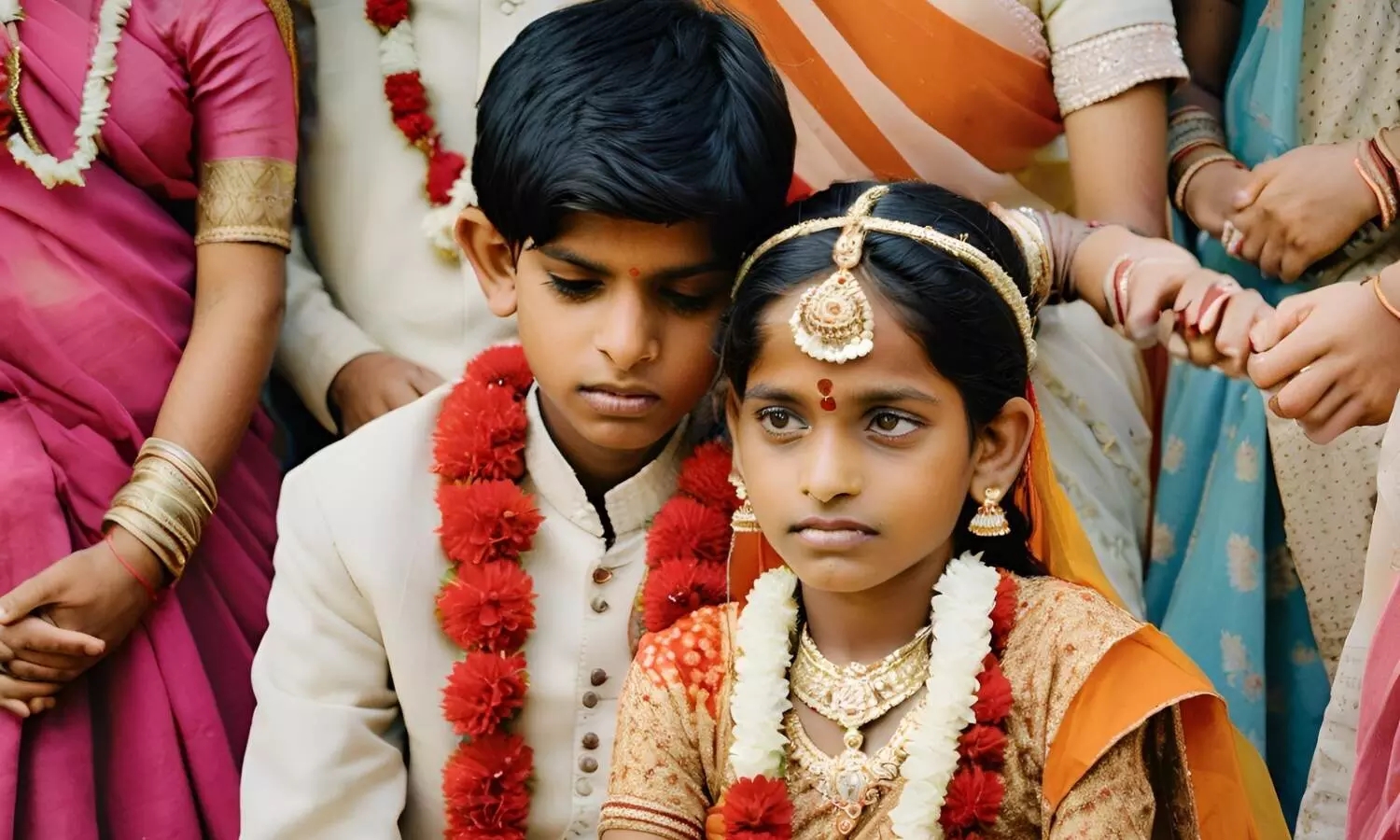
The Society for Enlightenment and Voluntary Action (an NGO) filed a writ petition in the Supreme Court of India. Its grievance was that despite the enactment of the Prohibition of Child Marriage Act 2006 (PCMA), the rate of child marriages in India was still alarming. It urged the apex court to push for effective implementation of the PCMA. The three-judge Bench comprising Chief Justice DY Chandrachud, JB Pardiwala and Manoj Misra laid down comprehensive guidelines in response.
Further, the Court directed the Ministry of Women and Child Development to circulate this judgment to the Chief Secretaries/Administrators of all the States and Union Territories, the National Legal Services Authority (NALSA), and the National Commission for Protection of Child Rights (NCPCR) within four weeks from the date of delivery of the October 18th judgment for strict compliance with the directions.
The NGO sought to address the failure of authorities to prevent child marriages and for stronger enforcement mechanisms, awareness programs, the appointment of Child Marriage Prohibition Officers, and comprehensive support systems for child brides — including education, healthcare, and compensation, to ensure the protection and welfare of vulnerable minors.
The Supreme Court ruled that the Prohibition of Child Marriage Act 2006 cannot be restricted by personal laws/traditions and that marriages involving children violate the free will to choose a life partner. The Court also remarked that child marriage inflicts tangible and lifelong physical and mental injuries to child brides and denies them their Right to Health, which is a fundamental right and vital to lead a dignified life.
The guidelines issued in the Supreme Court's judgment have focused on empowering children about their rights and making village panchayats, school authorities and child protection officers accountable for any child marriage solemnised in their vicinity. The top Court also ruled that a "prevention, protection and prosecution" model should be adopted in enforcing the 2006 Act and asked governments to appoint exclusive Child Marriage Prohibition Officers (CMPOs) in all districts in the country.
The Court mentioned that the legislative intent behind the appointment of the CMPOs is to designate an officer to take tailored action against child marriage in each district. At the same time, the Court highlighted that CMPOs often lack adequate training and are ill-equipped to engage sensitively with children. Noting a study analysing child marriage cases filed nationwide between 2008 and 2017, the Court observed that CMPOs initiated only seven per cent of these cases, which highlights a significant gap in proactive enforcement. Further, the Court directed mandatory training refresher for CMPOs every six months.
The Court also recommended mandatory action against negligent public servants for deliberate neglect of duty concerning child marriage cases within their jurisdiction.
Child Rights Activists lauded the Apex Court judgement and highlighted that India is home to 220 million child brides (those below 18 years). In this context, it must be noted that in a landmark judgment in 2017, the Supreme Court said sex with an underage wife amounts to rape. Yet in 2023-24 alone, over one million (ten lakh) child marriages took place! This translates into at least one million instances of rape in line with the Supreme Court 2017 judgement!!
The alarming rate of child marriage shows our legislators are smug just by passing laws – in this case, the Prohibition of Child Marriage Act, 2006 – without paying much attention to their implementation. Legislation without their implementation is pointless. Section 9 of this Act stipulates: "Whoever, being a male adult above eighteen years of age, contracts a child marriage, shall be punishable with rigorous imprisonment which may extend to two years or with fine which may extend to one lakh rupees or with both."
The report also highlighted the prevalence of child marriages in Bihar, Rajasthan, Jharkhand, Uttar Pradesh, West Bengal, Madhya Pradesh, Andhra Pradesh and Karnataka. Anandabazar Online reported on October 30, 2024, that out of the five districts in India having the highest prevalence of child marriages, three are in West Bengal and two in Bihar. The findings show that in Murshidabad, East Medinipur and West Medinipur, 62-66 per cent of girls get married before age 18.
The National Family Health Survey (2019-21) data showed that 41% of girls in Bengal are married off before the age of 18, which is almost double the national average. From 2015-16 to 2019-20, child marriages increased in ten districts of Bengal, with an increased pregnancy rate of girls aged 15-19 in seven districts. An analysis of the statistics of 707 districts in India shows that in thirteen districts, more than sixty per cent of girls are married before age eighteen. These include nine districts in Bihar and three in West Bengal.
This failure is particularly worrying for West Bengal because the state government has allocated a lot of money to prevent child marriage. The Kanyashree Scheme spent more than Rs 8,000 crore between 2013 and 2020, and the Rupashree project was launched in 2018 with an annual allocation of Rs 1,500 crore. It is becoming increasingly clear that these two projects have not been able to reduce child marriage and premature motherhood.
Poverty is one reason, but it may not be the only reason for child marriage, as indicated by district-wise surveys in Bengal, which showed that the rate of child marriage has increased in relatively well-off Purba Medinipur, Purba Burdwan, Hooghly, Kolkata. At the same time, it has decreased in poorer districts, namely Purulia and Uttar Dinajpur.
It is clear that this problem is not being solved by simply giving government grants to families. There are several other factors. First, most male family heads are reluctant to allow their daughters/sisters to choose their life partners, so they marry them off early. Also, with no honest income/livelihood opportunities in sight, cases of minor girls running away from their homes and getting married are increasing. Secondly, the incidence of school dropouts (girls) is rising alarmingly. Therefore, the focus should shift from girls somehow reaching the legal marriageable age (18 years) to unearthing and nurturing their talents. This requires a multidimensional/multi-pronged approach for which NGOs are best suited. However, how many NGOs can afford to take up this groundbreaking task with the union government cancelling the FCRA registration of several leading Christian NGOs?
.png) Cedric Prakash
Cedric Prakash
.JPG)
 A. J. Philip

.png) Jacob Peenikaparambil
Jacob Peenikaparambil
.jpg)
.png) John Dayal
John Dayal
.jpg)
 Pachu Menon
.png)
.png)
.png) Robert Clements
Robert Clements