

.png) Jacob Peenikaparambil
Jacob Peenikaparambil
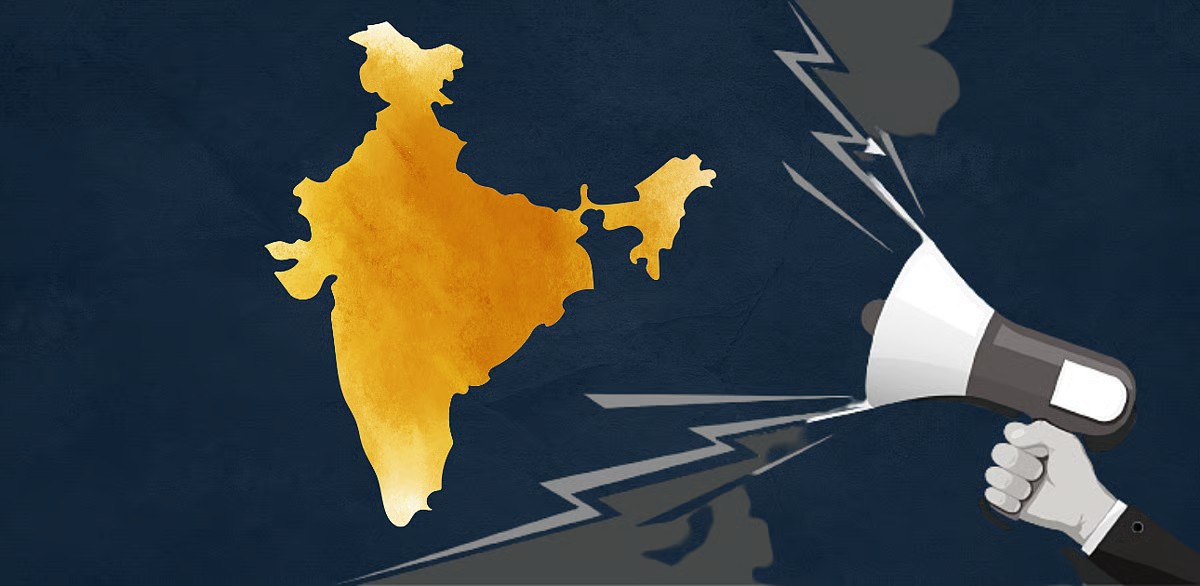
"Man is indeed God, but he is also a monkey," goes a well-known saying. It suggests that human beings possess many divine qualities while still retaining certain animal instincts. Among the strongest of these instincts are hatred and the desire for revenge. To become truly human, one must rise above these impulses. Anyone who indulges in hate speech or hateful actions diminishes their humanity and moves toward incivility. Likewise, no country can become truly great by fostering hatred against particular communities or groups of people.
The path to overcoming hatred and becoming genuinely human lies in spiritual growth. This is why most religions uphold love, compassion, and kindness as antidotes to hatred. True spirituality, like true patriotism, is rooted in the growth of love and the transcendence of hatred.
1. "Hatred does not cease by hatred, but only by love; this is the eternal law." — Dhammapada.
2. "Love your enemies, bless those who curse you, do good to those who hate you, and pray for those who mistreat you." — Jesus Christ.
3. The Quran encourages believers to respond to evil with goodness, teaching that such conduct can transform an enemy into a close friend.
4. Hinduism teaches that the same spirit (Atma) resides in all beings, thereby calling upon us to treat others as ourselves.
Religious practices and rituals alone do not make a person spiritual; what truly matters is living in accordance with the moral and human values taught by religion. Religious leaders who engage in hate speech or hateful acts therefore betray their own faith. They become hypocrites, using religion as a cloak for manipulation and exploitation.
Similarly, political leaders and organisations that use hatred and revenge as tools for mobilisation and electoral gain inflict immense harm—not only on their own countries but on humanity as a whole. Unity is essential for the prosperity and progress of any society. Hatred and revenge divide people, erode social harmony, and ultimately weaken national well-being.
Unfortunately, since 2014, reports have indicated a significant rise in religion-based hate speech and hate-related incidents in India, often involving political and religious leaders and particularly targeting Muslims and, increasingly, Christians. The India Hate Lab reported 1,318 hate speech incidents in 2025, representing a 13 per cent increase from 2024, with 98 per cent of the incidents targeting Muslims.
A report released by The India Hate Lab in 2025 also stated that hate speech surged during the 2024 elections, with senior BJP leaders, including Prime Minister Narendra Modi, Amit Shah, and Yogi Adityanath, identified as contributors to divisive rhetoric.
The recent Assembly elections in West Bengal also witnessed a rise in hate speech, with little visible action from the Election Commission, despite its constitutional responsibility to enforce the Model Code of Conduct. BJP leader Suvendu Adhikari allegedly declared that the BJP would "physically throw Muslim MLAs out of the assembly" if the party came to power. He was also accused of referring to his opponent as "Begum" and describing a rival party as a "Muslim/Mollah government."
The BJP's campaign appeared designed to create fear among Hindus to polarise votes along religious lines. Following instability in Bangladesh in early 2024, the BJP reportedly used accounts of violence against Hindus there to strengthen the narrative that "Hindus are in danger" within West Bengal. The campaign prominently featured rhetoric surrounding "illegal Bangladeshi infiltrators," portraying the Trinamool Congress government as a threat to local security and demographic balance. This messaging sought to alarm Hindu voters, particularly in border districts.
According to several election analyses, this strategy contributed to significant Hindu consolidation in favour of the BJP, enabling the party to win seats even in constituencies with substantial Muslim populations. As a result, the 2026 elections witnessed a dramatic ideological shift, with the BJP making notable gains in West Bengal.
The BJP and its supporters have also promoted narratives and conspiracy theories such as "love jihad"—the claim that Muslim men deliberately seduce Hindu women to convert them to Islam; "thook jihad"—the allegation that Muslims intentionally contaminate food; and "vote jihad"—the assertion that Muslims vote as a bloc to weaken Hindu political power. Films such as The Kashmir Files and The Kerala Story Parts I and II were widely criticised for promoting hostility against Muslims. These films were actively supported by the BJP governments both at the Centre and in several states.
Stringent anti-conversion laws and cow protection laws enacted by BJP-led governments have also contributed to increased hostility and violence against minorities.
Some Hindu religious leaders have openly called for violence against Muslims without facing significant legal consequences. During a religious gathering in Haridwar, Uttarakhand, several Hindu leaders publicly called for the "cleansing" and killing of Muslims to turn India into a "Hindu nation."
Fundamentalist and narrow-minded religious and political leaders must recognise that history offers no example of a society or nation that prospered through the spread of hatred. On the contrary, history repeatedly shows that hatred leads to atrocities, violence, and even genocide, destroying human capital and social trust—the very foundations of a healthy economy and stable society.
Research indicates that when hatred becomes a political tool, it slows economic growth, wastes human potential, and diverts resources away from productive development. The Nazis, for instance, relied heavily on antisemitism and anti-Slavic hatred to consolidate power. Yet this strategy ultimately led to catastrophic war, economic collapse, and the destruction of German cities.
History consistently demonstrates that hatred may serve as a short-term political weapon, but it can never become a sustainable path to prosperity. It is an unproductive "investment" that destroys rather than creates value.
A cursory survey of countries around the world reveals that many of the poorest nations are those ravaged by civil war and violence. South Sudan, the Central African Republic, Yemen, Sudan, Somalia, and the Democratic Republic of Congo are among the most striking examples. Hatred toward particular groups and the desire for revenge lie at the root of many of these conflicts.
At a time when vigorous attempts are being made to turn India into an ocean of hatred, some glimmers of hope can still be seen in the recently concluded Assembly elections. In Kerala, the BJP reportedly attempted to create divisions between Muslims and Christians, who together constitute nearly 45 per cent of the state's population. Some Christian religious leaders appeared to fall into this trap.
However, the people of Kerala—especially members of minority communities—were able to recognise the political motives behind such attempts, as reflected in the election results. The fact that the LDF and the NDA failed to secure seats in Christian-dominated districts such as Kottayam, Idukki, and Ernakulam, as well as the Muslim-majority district of Malappuram, indicated a consolidation of minority voters against communal politics.
Some reports also suggested that the Pinarayi Vijayan-led LDF government sought to appease sections of the majority community to strengthen its electoral prospects. For instance, on the issue of women's entry into Sabarimala, critics argued that the government's later position represented a form of "soft Hindutva" aimed at regaining support from voters alienated by its earlier stance.
The meeting between the new Chief Minister of Tamil Nadu, Joseph Vijay, and former Chief Minister MK Stalin, along with his son Udhayanidhi Stalin, where they greeted each other cordially, is an inspiring example of democratic maturity. It clearly shows that in politics there are no permanent enemies, only opponents — and opponents, too, can maintain friendship and mutual respect. Unfortunately, for the Bharatiya Janata Party, any political opponent is often portrayed as an enemy of the nation and therefore "anti-national."
What, then, is the way forward for building the pluralistic and inclusive India envisioned in the Preamble to the Indian Constitution? Strong and sustained efforts are needed to counter the venom of hatred spread by communal organisations and political parties. The dissemination of constitutional values and their inculcation in young minds are essential first steps. Minority communities in India, in particular, must continue to promote constitutional ideals while also strengthening interfaith cooperation and harmony.
Education—especially value-based education—is one of the most effective means of encouraging young people to overcome hatred with love. The opening line of the UNESCO Constitution is especially relevant in this context: "Since wars begin in the minds of men, it is in the minds of men that the defences of peace must be constructed." The desire for revenge fuels conflict; therefore, hatred must be overcome through love and understanding.
"An eye for an eye only ends up making the whole world blind," Mahatma Gandhi famously said. Those who instil hatred in young minds commit a grave injustice by sowing seeds of destruction. May all who spread hatred come to recognise the harm they inflict—both upon themselves and upon society—and choose the path of love, peace, and mutual understanding instead.
.jpg)
 A. J. Philip

.png) Cedric Prakash
Cedric Prakash
.jpg)
 P. A. Chacko
.jpg)
.jpg)
.jpg) Thomas Menamparampil
Thomas Menamparampil
.png)
.png)
.png) Robert Clements
Robert Clements
.jpg)
.png)
.png) Chhotebhai
Chhotebhai