

 Cedric Prakash
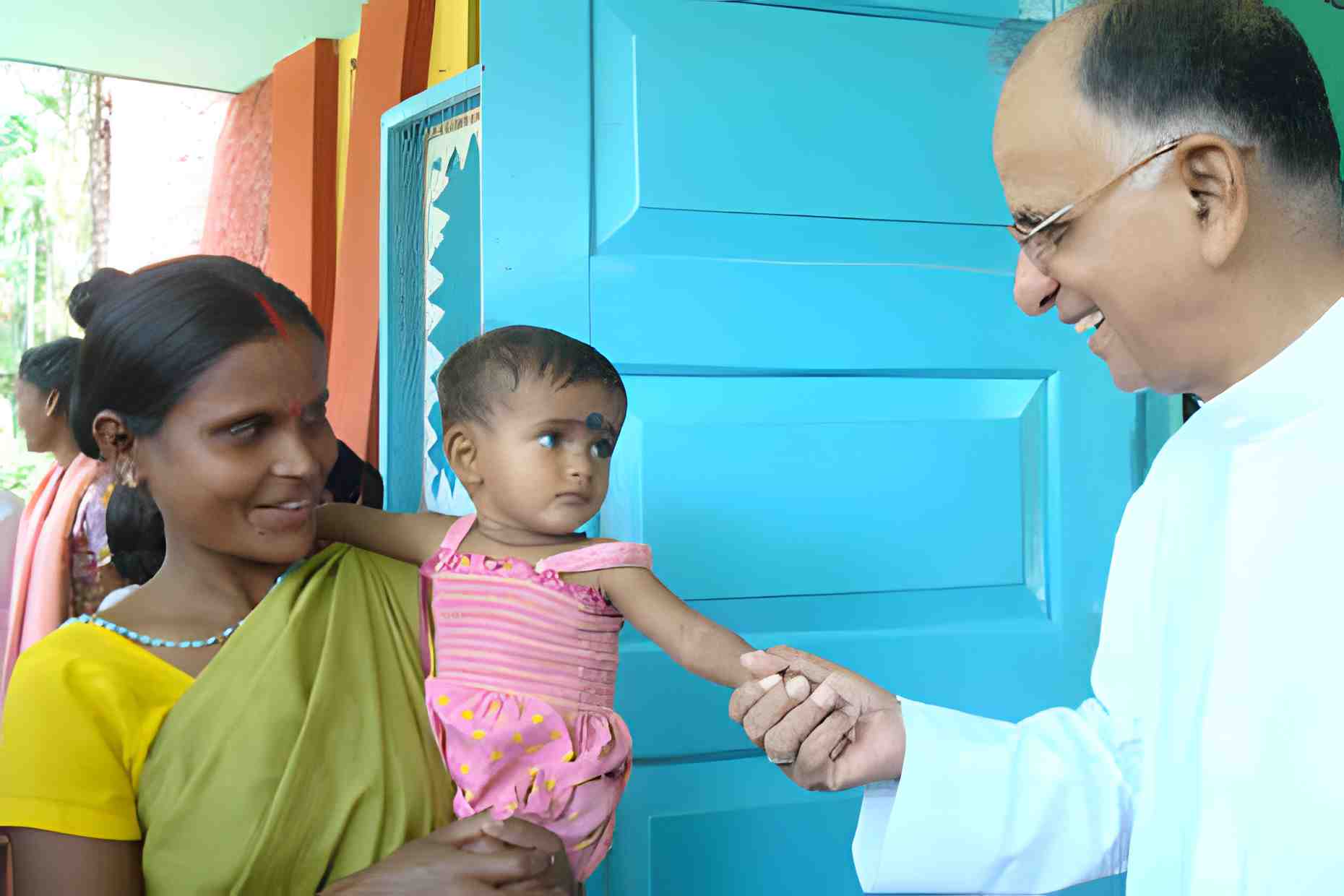
Archbishop Thomas Menamparampil was called to the eternal reward on November 25, at the ripe age of ninety. His death has left a void which will never be filled. He leaves behind a rich legacy marked by profound impact on both the Church and the country. His contributions have few parallels among the country's clergy and religious, and even fewer among the hierarchy. He was visible and vocal, articulate, and forthright on several critical issues; he minced no words when it came to taking a stand. He was a prolific writer and a scholar. As a person, Archbishop Thomas encapsulated several sterling qualities. He was a Priest, Pastor, Pilgrim, Prophet, Peacemaker and much more, all rolled into one.
Priest: As a Salesian Priest, Archbishop Thomas lived his priesthood to the fullest. Like St John Bosco, he was among the youth when he was ordained a priest in May 1965. He proved his mettle as headmaster and warden. Wherever he was appointed, the youth and the people knew he was available and had a listening heart. Several will readily testify today that they could come to him with their woes and return with solace and comfort. In the early days of his priesthood, he was engaged in the educational apostolate, and he brought education to those who needed it most.
Pastor: One can easily picture Archbishop Thomas in that traditional image of Jesus the Good Shepherd, with that lost sheep on his shoulder. He was a pastor through and through, in the extraordinary sense of the word. He was made Bishop in 1981, and throughout his episcopate he made it clear, through word and deed, that he was a missionary Bishop. He began in Dibrugarh, then in Guwahati. Even after his retirement at the age of seventy-five, he was appointed Archbishop emeritus and Administrator of the Jowai diocese. Wherever he was, pastoral care was his primary responsibility, and he carried it out with cheerfulness and the flair that characterised him.
Pilgrim: Long before Pope Francis ushered in the Synodal Journey of communion, participation and mission, Archbishop Thomas was walking the talk. He was a true pilgrim, who accompanied the people, particularly the poor and the marginalised, the excluded and the exploited, for a fuller and more meaningful life. He left no stone unturned to realise this. His writings—books and numerous articles—his preaching, and his witness, through positive, concrete, and substantial actions, testify to this. He strongly believed that life on this earth was a pilgrimage. As a pilgrim, he had to accompany all women and men (irrespective of their tribal, ethnic, or religious background) as fellow pilgrims.
Prophet: Archbishop Thomas epitomised the totality of a prophet: he had no qualms about denouncing all that was wrong and evil in society to announce the good news. In the style of Archbishop Oscar Romero (now a Saint), he took on the most powerful of the land. He spoke truth to power, and he did so fearlessly. Something which all of us should learn from him, particularly most of the Indian hierarchy and clergy. It is certainly not easy to take on a fascist and fundamentalist regime, more so if they are vengeful. Archbishop Thomas, however, had his heart, mind, and soul in the right place. He demonstrated this with prophetic courage.
Peacemaker: Fitting a multi-faceted person like Archbishop Thomas into a particular mould is impossible. However, if one has to single out one overwhelming trait of his that will perhaps never be forgotten, it is that of 'peacemaker.' He was convinced that peace was the only way forward, provided it was grounded in, and within the framework of, truth, justice, and reconciliation. His efforts covered the full range of work: from immediate relief for affected victims to long-term sustainable peace. Innumerable instances in his life demonstrate this.
In 1996, there was a serious ethnic clash in the Kokrajhar area. More than five hundred people lost their lives, and a further 2,50,000 Bodos and other Adivasis (especially Santhals) fled to fifty refugee camps. Archbishop Thomas initiated relief efforts for the victims. More importantly, perhaps, he initiated efforts to bring together leaders of the two conflicting communities to negotiate peace, supported by other Christian Churches and the local government administration. This significant initiative was widely welcomed by all.
In 1999, the Kukis and the Paites clashed in the region of Churachandpur in Manipur, in which more than 400 people died, and an equal number of villages were burned. Other Church leaders invited Archbishop Thomas to help. Through dialogue with leaders from both groups, they reached a settlement, and peace has not been disturbed since. Archbishop Thomas was able to intervene again during the Dimasa-Hmar conflict near Haflong (100 dead) and Kuki-Karbi clashes near Diphu (46 dead). Peace has returned to both places. In August 2003, all the churches of Northeast India set up a Joint Peace Team, with Archbishop Thomas as convener. Several recent peace initiatives in the region, launched by the Social Forum, Don Bosco Youth Services, and Northeast Health Associations, have been inspired by him.
It is common knowledge that when a fresh outbreak of violence broke out in Manipur in May 2023, Archbishop Thomas, despite his age and failing health, went to Manipur and did his best to bring peace between the Kukis and Meiteis.
His many books and articles reflect his peace-building efforts. He once said that "Peace among people and communities comes from the love of peace that lives in every human heart. This love must be awakened, nurtured, and allowed to grow. Peace can then become a reality, like a miracle." This was his Magna Carta, his forte, his way of proceeding. Peace for Archbishop Thomas always began with a listening heart, one which is compassionate and without prejudice, a heart which sought to heal the brokenness, to make people whole again, to build bridges and work for a sustainable future, for all.
Archbishop Thomas was truly a prophet of peace. He once said, "The path to peace is long and difficult, but believers (meaning, Christians) must always remain hopeful and never give up." He has left us all a path, and he challenges us to follow it. As we celebrate his memory and his life here on earth, we thank God for the gift of him to the Church and the country.
Archbishop Thomas was truly a man of God who lived his mission on earth as a priest, pastor, pilgrim, prophet, and peacemaker. He was a person of the Beatitudes who internalised and lived out Jesus' words: "Blessed are the peacemakers, for they will be called children of God." And as he entered his heavenly abode on November 25, Archbishop Thomas would certainly have heard those warm, loving words of welcome: "Well done good and faithful servant ..."
Cedric Prakash
.jpg)
 John Dayal
.jpg)
 A. J. Philip
.jpeg)
 Jacob Peenikaparambil
.jpg)
 Joseph Maliakan
 Jose Vattakuzhy
.png)
 Robert Clements
.jpg) Cedric Prakash
.jpg) A. J. Philip