

 Jose Vattakuzhy
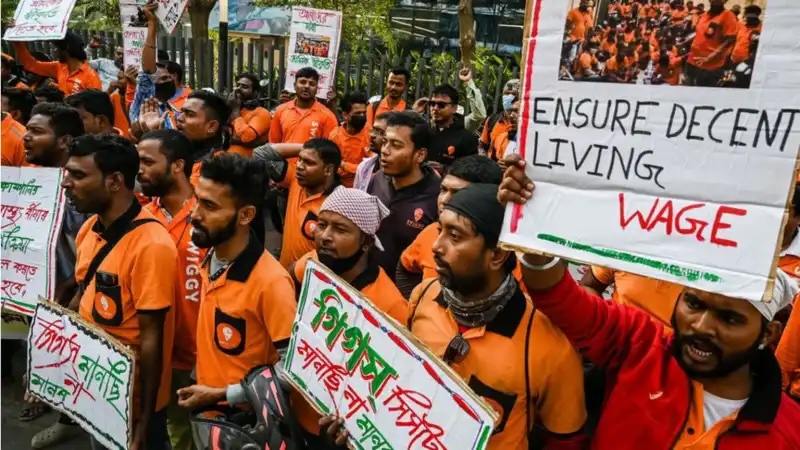
The enactment of the Telangana Platform-Based Gig Workers (Registration, Social Security and Welfare) Act, 2026 (Act No. 21 of 2026), marks an important step toward establishing a dedicated legal framework for gig workers' welfare. It also highlights stakeholders' responsibility to ensure that legal recognition translates into meaningful implementation.
The Code on Social Security, 2020, which came into force on November 21, 2025, formally recognises gig and platform workers and provides a statutory framework for extending social security benefits to them. It also facilitates their registration through the e-Shram portal, enabling them to access relevant welfare schemes. However, the e-Shram card is a registration identity document, not a social security benefit in itself. The benefits depend on the applicable welfare schemes and eligibility conditions.
In addition to Telangana, states such as Rajasthan, Karnataka, Bihar, and Jharkhand have taken initiatives to address gig workers' concerns through legislation, welfare schemes, or other policy measures. Several other states have also introduced supportive initiatives or are considering similar legal frameworks to strengthen their social security and welfare.
Despite these developments, significant challenges remain in translating legal provisions into effective execution. Across India, gig workers continue to demand fair and predictable wages, accident insurance, healthcare coverage, pension benefits, transparent payment mechanisms, and safeguards against arbitrary account deactivation. Their lived experiences reveal a persistent gap between legal recognition and the actual delivery of social security.
The New Face of the Unorganised Workforce
Gig workers represent a rapidly expanding segment of the workforce in the Fourth Industrial Revolution, driven by digital technologies, online platforms and changing employment patterns.
In the Indian context, the Code on Social Security, 2020, defines gig workers as people who work in arrangements and earn from activities outside the traditional employer–employee relationship. This category includes both platform-based and non-platform-based workers. In practical terms, a gig worker earns a livelihood by undertaking individual assignments or providing services without necessarily having a permanent employment relationship.
The gig economy covers a broad range of occupations across transportation, delivery, logistics, domestic services, digital professions and personal care. These include Ola and Uber drivers, auto-rickshaw operators, bike-taxi riders, and delivery partners associated with Swiggy, Zomato, Blinkit and Zepto. It also encompasses a wide range of workers, from courier personnel, cleaners, and electricians to photographers, caterers, artists, musicians, and commission-based sales representatives.
Significantly, gig work is not limited to those registered with digital platforms; many individuals get assignments through personal networks, direct customer relationships, and informal arrangements.
The expansion of this workforce is reflected in national and international estimates. According to NITI Aayog's 2022 report, 'India's Booming Gig and Platform Economy,' India's gig workforce was estimated at approximately 7.7 million in 2020–21 and projected to reach 23.5 million by 2029–30. Similarly, the World Bank's 2023 report, 'Working Without Borders: The Promise and Peril of Online Gig Work,' estimates the global online gig workforce at 154-435 million.
However, the expansion of employment opportunities has not necessarily ensured decent working conditions. Irregular earnings, limited bargaining power, occupational hazards, employment uncertainty and inadequate social security remain common concerns. The flexibility associated with this form of work often conceals the economic and social vulnerabilities of those who depend on it for their livelihood.
Hidden Struggles of Gig Workers
In the initial stages of the platform economy, gig workers received little recognition as a distinct category within the labour market. Digital platforms generally described them as independent partners or aggregators, rather than employees or workers, placing them outside many conventional employment relationships and associated labour protections. Consequently, their working conditions attracted relatively limited attention from trade unions, policymakers, legislators and academic researchers.
However, as app-based services have become increasingly integrated into everyday economic life, these workers have emerged as an indispensable part of the smart or OTP service economy. The COVID-19 pandemic further demonstrated their importance, particularly when delivery personnel and other platform workers continued providing essential services during lockdowns.
One of the most significant difficulties concerns the uncertainty of earnings. Unlike regular employees, many gig workers do not receive a guaranteed monthly salary. Their income depends on assignment availability, platform-set rates, distance travelled, customer demand, and the incentive structures in place. Changes in payment policies, reductions in per-task rates and the withdrawal or modification of incentives can directly affect their daily earnings. Consequently, workers often have little control over their actual take-home income despite spending long hours on the job.
Another less visible challenge arises from the platform-based systems used to allocate and monitor work. Performance ratings, grading systems, order acceptance rates and customer feedback can determine a worker's access to assignments and incentives. A decline in ratings or failure to meet prescribed performance standards may affect future work opportunities. Similarly, account suspension or deactivation can suddenly interrupt a worker's livelihood, sometimes without adequate explanation or an effective opportunity to challenge the decision.
Competition for work further intensifies these pressures. In sectors such as food delivery and transportation, access to preferred working slots, higher-value assignments and additional incentives may depend on performance indicators and platform-defined eligibility conditions.
Workers are often expected to maintain particular grades, acceptance rates and availability levels to remain competitive. Thus, although they may have the freedom to decide when to log in, they exercise considerably less control over the distribution, quality and remuneration of available work. In such circumstances, flexibility can become conditional on continuous compliance with changing platform requirements.
The financial risks associated with gig employment begin even before a worker receives the first assignment. Entering this sector may involve registration and onboarding expenses, buying a vehicle, acquiring a smartphone or computer, arranging internet connectivity, and, in certain occupations, setting up a suitable workspace. In addition, recurring costs for fuel, vehicle repairs, insurance, mobile data, and equipment maintenance continue to burden workers.
Workers generally make these investments from personal savings or borrowed money, without any assurance of a minimum number of assignments or a stable monthly income. As a result, workers assume much of the financial risk of their employment, while platforms retain considerable influence over work allocation, performance evaluation and payment arrangements.
Indicators of Vulnerability in Platform Work
The difficulties workers face are not limited to income insecurity and platform management. Occupational safety and the absence of adequate social protection are equally serious concerns. Delivery riders and app-based transport workers spend considerable time on roads, often under strict delivery deadlines and performance pressures. This exposes them to traffic accidents, injuries, physical exhaustion and other work-related risks.
India does not yet have a comprehensive, publicly accessible national database documenting occupational accidents and deaths specifically among gig and platform workers. Nevertheless, available surveys and media reports indicate the seriousness of the problem. A 2025 survey of 1,000 platform workers across ten cities reportedly found that 27 per cent had experienced traffic accidents while working, while 62 per cent had encountered near-miss road accidents.
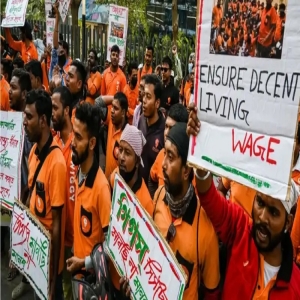
Another important indicator of their vulnerability is the growing frequency of collective protests and strikes. Dissatisfaction over declining earnings, incentive structures, unreasonable working conditions and inadequate social protection has gradually developed into organised resistance. What began with protests by Ola and Uber drivers in 2017 has expanded into broader collective action involving transportation and delivery workers across states.
The nationwide protests reported on December 25 and 31, 2025, and February 7, 2026, illustrate platform workers' growing ability to organise around common demands, despite their fragmented employment arrangements. According to the VV Giri National Labour Institute, India has documented 143 protests by platform workers over approximately a decade.
Such collective mobilisation matters because platform-based employment often separates workers and limits opportunities for conventional trade union organisation.
Making the Gig Economy a Space for Decent Work
Legal recognition is an essential first step, but its value ultimately depends on effective implementation. Governments, labour departments and platform companies must work towards fair remuneration, transparent work-allocation systems, occupational safety, comprehensive social security, accessible grievance-redressal mechanisms and freedom of association. Welfare measures must also reach workers at the grassroots level, not remain confined to policy announcements and registration processes.
Ultimately, the success of India's gig economy must be assessed by whether those who sustain it can earn a dignified livelihood, enjoy adequate social protection, and exercise their fundamental rights as workers. The transition from legal recognition to social justice must therefore become the central objective of India's gig economy.
.jpg)
 John Dayal
.jpg)
 A. J. Philip
.jpeg)
 Jacob Peenikaparambil

.jpg)
 Joseph Maliakan
Jose Vattakuzhy
.png)
 Robert Clements
.jpg)
 Cedric Prakash
.jpg) A. J. Philip
.jpg) Jacob Peenikaparambil