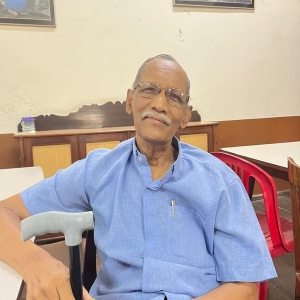


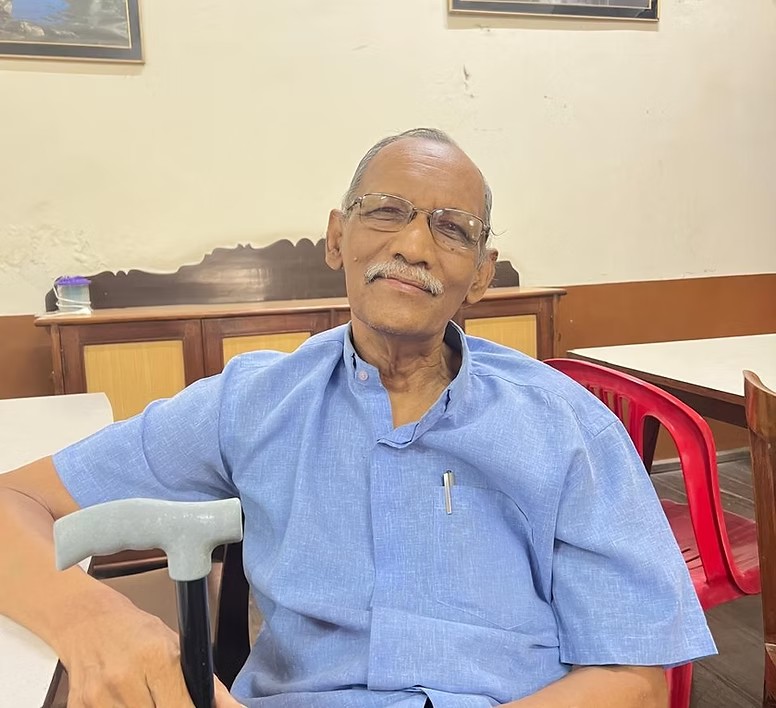
Fr. Myron J. Pereira, SJ, who peacefully returned to the Lord on September 30, 2026, at age 80, was far more than an accomplished educator and journalist—he was a gentle harbour for the human spirit. For three decades at the Xavier Institute of Communications (XIC), Mumbai, including his impactful tenure as Director, he shaped the landscape of media education. Yet, his true legacy lies in the quiet, profound ways he touched individual lives. He lived by a simple, beautiful philosophy: to create a space where each person could truly be themselves, free from the pressure of expectations.
Born on November 24, 1945, in Bombay's Bandra suburb, Fr. Myron was raised in a traditional, pious Catholic family where the evening rosary was the norm. After tenth grade, he followed his calling and joined the Society of Jesus in 1961. He later earned a degree in Philosophy from the Pontifical Athenaeum (Jnana Deepa Institute of Philosophy and Theology) in Pune, and a theology degree from Vidyajyoti College of Theology in New Delhi. Recognising the growing power of media, he completed his Master's in Mass Media at Fairfield University, CT, USA, in 1978, having been ordained a priest a few years prior in 1975.
Fr. Myron's brilliance as a communicator took him across the globe. He became a prominent pillar of JESCOM (Jesuit Communication) and contributed internationally, including a tenure at the Centre for the Study of Communication and Culture (CSCC) in London.
Despite his international footprint, he never forgot his roots and dedicated his priestly ministry to empowering people across India. He pioneered initiatives like Public Relations for Educationists in Khandala (1980), communications courses in Delhi (1982), and community development with the Maharashtra Prabodhan Seva Mandal in Nashik (1985–86). In 1986, he led a transformative teacher-training programme on Media and Values in Pune. Ever creative, Fr. Myron even utilised repertory puppetry performances to merge education with serendipitous entertainment.
At XIC, his heart belonged to the students and the community. He was immensely fond of the social outreach programme, Aastha, which connected media students with real-world social causes. Beyond his academic duties, he was a pioneering priest-cartoonist who used gentle wit to critique and enlighten the Indian Church, and a brilliant editor who elevated the Jesuit monthly magazine Jivan to new heights. Amidst this whirlwind of leadership, he always found his greatest joy in pastoral outreach and conducting Bible classes for the laity.
Formally appointed as Director of XIC on December 24, 1998, Fr. Myron led the institution into the new millennium with vision, compassion, and an unwavering belief in human potential. Fr. Myron J. Pereira's deep-rooted association with the Xavier Institute of Communications (XIC) dates back to 1975–76, when he first began teaching journalism at the Institute. He left no stone unturned, and no space was redesigned without his foresight, as he personally guided the Institute through extensive structural updates and renovations.
During his tenure as Director, Fr. Myron introduced transformative institutional shifts. In the 1998–99 academic year, he modernised the curriculum by introducing the credit system and formal attendance mandates. Committed to continuous growth, he established professional training sessions for faculty and staff and introduced tailored media awareness workshops for students and parents. Under his leadership, the XIC newsletter Network was rebranded as Xcell, publishing its inaugural issue in October 1998. That same year, Fr. Myron inaugurated a state-of-the-art, air-conditioned computer lab equipped with ten computers, internet and email access, and three dedicated printers (laser, dot-matrix, and colour).
By the time XIC celebrated its 30th Anniversary milestone, Fr. Myron had significantly expanded the Media Resource Centre (now the CGMRC) to house over 6,000 specialised media books, alongside meticulously filed newspaper clippings and video cassettes. This landmark era also marked XIC's entry into the digital space with the launch of its official website, www.xaviercomm.org, on April 30, 1999. During this period of creative synergy, Journalism (JR) and Public Relations (PR) students collaborated to produce the current XIC institutional song.
Fr. Myron's guidance also paved the way for numerous national collaborations, seminars, and conferences that earned accolades across multiple disciplines and helped students excel in their specialisations. To streamline institutional planning, he initiated the very first Head of Department (HOD) meeting on October 6 to chart the road ahead. His commitment to student and graduate success culminated in July 2001 with the launch of 'Xpress,' a dedicated placement service designed to open new career opportunities for both graduating students and alumni. The Institute expanded its footprint on July 1, 2005, by opening new premises on the school campus. Later that year, on November 22, 2005, Fr. Myron inaugurated the new 32-track and 16-track sound studios.
During his tenure at XIC, Fr. Myron dedicated his time to teaching, organising, and producing development-focused small media through the Astha department. As Project Director and Producer, he drove tremendous organisational change. Following his years of service at XIC, he joined the UCA News Service in Bangkok in 2010. An accomplished author, he published several works on communication and culture, including Our Second Skin (1994), Not Quite the Last Word (1998), Afterwords (2003), and Khichdi (2021), as well as a book of cartoons titled Don't Make Me Laugh (1998).
In 2014, he edited The Early Jesuits in the Province of the North, an illustrated historical volume marking the bicentennial of the Jesuit restoration. A prolific writer, he penned three novels—Mission to Sabarkantha (2018), Fadderbaba (2018), and Bandra Boy (2022)—along with a book on cartoons and three short story collections. His first two collections, The Girl from Calangute (2018) and Speaking to Sushila (2019), were followed by a third that explores a perennial theme: how women are changing globally and transforming the societies they live in. Whether through his meticulously chosen fonts, sharp eye for formatting, or compelling illustrations that perfectly matched his words, his creativity and attention to detail were always impeccable.
A rare and multi-talented soul, Fr. Myron was a pioneering priest-cartoonist, an insightful columnist for UCA News, and a progressive thinker who never lost his bright sense of humour. He looked far beyond titles and backgrounds, treating everyone he encountered with unwavering, radical dignity. As the Indian Church and his countless students mourn his passing, they celebrate a life defined not by authority, but by pure humanity, respect, and a deep, enduring love for community.
.jpg)
 John Dayal
.jpg)
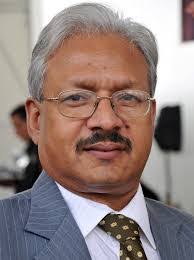 A. J. Philip
.jpeg)
 Jacob Peenikaparambil
.jpg)
 Joseph Maliakan
 Jose Vattakuzhy
.png)
 Robert Clements
.jpg)
 Cedric Prakash
.jpg) A. J. Philip
.jpg) Jacob Peenikaparambil