
 Joseph Maliakan
.jpg)
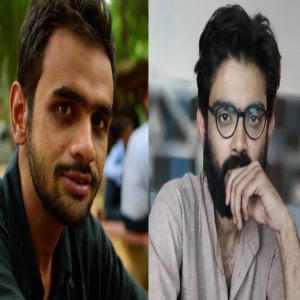
Although several High Courts and the Supreme Court itself have categorically and unambiguously held that delay in trial can be a ground for granting bail even under the draconian Unlawful Activities (Prevention) Act, 1967 (UAPA), the Supreme Court on Wednesday, November 25, 2026, denied interim bail to Umar Khalid and Sharjeel Imam, who have been arrested and incarcerated in Tihar Jail for more than six years. Both were ironically arrested in connection with the 2020 North-East Delhi riots and charged in the larger conspiracy case relating to the riots!
In June 2021, the Delhi High Court granted bail to three student activists in State of NCT of Delhi v. Devangana Kalita and Others, who were charged in the North-East Delhi riots UAPA case. The High Court distinguished actual evidence from inferences drawn by the prosecution. The Supreme Court did not interfere with the Delhi High Court's bail order, even though the Delhi Police appealed.
In June 2026, the Delhi High Court granted bail to activist Khurram Parvez in a UAPA terror-funding case, overturning a trial court order denying him bail. In September 2026, the Delhi High Court granted bail to Mohammed Saqib, an accused in a UAPA case, after he had spent eight years in custody, observing that the trial was unlikely to conclude soon.
In May 2026, the Calcutta High Court granted bail to Mansur Ali after more than two years and eight months in custody, despite the stringent provisions of Section 43D(5) of the UAPA. The High Court cited the slow progress of the trial, missing witnesses and the improbable timeline for its completion as grounds for granting bail.
In early 2021, the Kerala High Court granted bail to KA Najeeb, holding that his prolonged incarceration violated his fundamental right to life and personal liberty under Article 21 of the Constitution. While granting bail, the High Court did not discuss the restrictions on bail imposed by Section 43D(5) of the UAPA. When the matter reached the Supreme Court in February 2021, it held that the provision did not oust the power of constitutional courts to grant bail in cases involving violations of fundamental rights under Part III of the Constitution.
Under Section 43D(5), bail is generally denied if there are reasonable grounds for believing that the accusation against an accused is prima facie true. However, following the Supreme Court's landmark ruling in Union of India v. KA Najeeb (2021), High Courts, as constitutional courts, can grant bail when a trial is inordinately delayed and is unlikely to conclude anytime soon.
KA Najeeb was one of the accused, along with other members of the now-banned Popular Front of India, in the case relating to the 2010 attack on a Malayalam professor in Kerala. A group of attackers cut off the professor's hand and hurled bombs at bystanders. They believed the question paper the professor set for a college examination was blasphemous and offensive to Prophet Mohammed.
Najeeb, who had been absconding, was arrested in 2015. His bail applications were rejected between 2015 and 2020. In early 2021, the Kerala High Court granted him bail, as he had already spent four years in custody as an undertrial. The speedy-trial mandate under the National Investigation Agency Act, 2008, had not been met.
In its appeal before the Supreme Court, the State argued that the Kerala High Court was wrong to grant bail to Najeeb. The Additional Solicitor General contended that the normal standards for granting bail under criminal law would not apply to offences under the UAPA.
Najeeb's counsel submitted that most of the co-accused in the case had been acquitted. Even those who were found guilty had not received sentences exceeding eight years. Najeeb had been kept in prison for more than five and a half years without trial. His counsel argued that this violated his fundamental right to a speedy trial and access to justice.
The Supreme Court examined whether the Kerala High Court had erred in granting bail to Najeeb. The five and a half years he had spent in prison as an undertrial became a crucial factor in the decision. The Court invoked Shaheen Welfare Association v. Union of India and held that gross delay in trial violates the right to life and personal liberty guaranteed under Article 21.
The Court further held that a violation of fundamental rights could constitute a ground for granting bail. Even under stringent criminal legislation, including anti-terror laws, prolonged delay in trial necessitates the consideration of bail. The Court also observed that only under "cogent and overwhelming circumstances" should the Supreme Court interfere with a lower court's bail order.
In fact, several High Courts have relied on the Supreme Court's Najeeb judgment to grant bail in UAPA cases.
Under these circumstances, one wonders why the Supreme Court, instead of deciding the interim bail applications of Umar Khalid and Sharjeel Imam, chose to constitute a three-judge Bench to examine whether delay in trial could constitute a ground for granting bail under the UAPA.
The ostensible reason is the conflicting rulings recently delivered by different Supreme Court Benches on whether delay in trial can be a ground for granting bail in UAPA cases.
On January 5, 2026, a Bench comprising Justices Aravind Kumar and PB Varale denied bail to Khalid and Imam, observing that they stood on a "higher footing in the hierarchy of participation" in the alleged conspiracy.
However, on May 18, 2026, a Bench comprising Justices BV Nagarathna and Ujjal Bhuyan, while granting bail to an accused in a narco-terrorism case, expressed serious reservations about the January 5 ruling of the Bench comprising Justices Aravind Kumar and PB Varale.
The Nagarathna-Bhuyan Bench held that violations of fundamental rights, including the right to a speedy trial, could justify granting bail even under stringent laws such as the UAPA.
Unfortunately, differing rulings by different Benches of the Supreme Court have resulted in the continued incarceration of Umar Khalid and Sharjeel Imam. The golden dictum that "bail is the rule and jail the exception" appears to have lost its constitutional force when applied to those accused under stringent anti-terror laws.
.jpg)
 John Dayal
.jpg)
 A. J. Philip
.jpeg)
 Jacob Peenikaparambil
 Joseph Maliakan
 Jose Vattakuzhy
.png)
 Robert Clements
.jpg)
 Cedric Prakash
.jpg) A. J. Philip
.jpg) Jacob Peenikaparambil